
Panther Facts for Kids
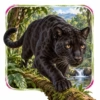
“Panther” is a common name with several meanings, not the scientific name of one animal species. Most people who say black panther mean a black-coated leopard from Africa or Asia or a black-coated jaguar from the Americas. Both cats still have rosette patterns beneath the dark pigment, and each keeps the body shape, behavior, habitat, and conservation status of its actual species.
Quick Panther Facts
- Scientific Identity: No single panther species
- Black Panthers: Usually melanistic leopards or melanistic jaguars
- Animal Type: Mammal and big cat
- Known For: Very dark fur with rosettes still visible in suitable light
- Range: Black leopards occur in parts of Africa and Asia; black jaguars occur in the Americas
- Habitat: Varies by species, especially forests and other habitats with sufficient cover and prey
- Diet: Carnivore
- Conservation: Follows the actual species; leopards are Vulnerable and jaguars are Near Threatened
What You’ll Learn
Explore 10 fascinating panther facts for kids about what the name means, dark coats, hidden rosettes, big cats, and camouflage, with a quiz, glossary, and activity
Clear explanations make them fun for children, families, teachers, and young nature explorers.
10 Fun Panther Facts for Kids
1. A Panther Is Not One Species
The word panther may refer to different big cats in different places. In everyday wildlife use, a black panther is normally a melanistic leopard or jaguar, while North Americans sometimes call a cougar or puma a panther.
Kid Decode: Before learning about a panther, ask which cat the speaker means.
2. Black Leopards Live in Africa and Asia
A black panther photographed in Africa or Asia is a leopard, Panthera pardus. Melanistic leopards are recorded especially often in some humid forests of South and Southeast Asia.
Kid Decode: Africa or Asia plus a black coat usually points to leopard.
3. Black Jaguars Live in the Americas
A wild black panther in Mexico, Central America, or South America is a jaguar, Panthera onca. It has the same powerful build and behaviors as other jaguars.
Kid Decode: Americas plus a black coat points to jaguar.
4. Melanism Creates the Dark Coat
Melanism is an inherited increase in dark pigment. Genetic changes produce the black form differently in jaguars and leopards, showing that the two types of black panther did not come from one black-panther species.
Kid Decode: Similar dark coats can arise through different genetic instructions.
5. Their Rosettes Do Not Disappear
Black leopards and jaguars keep the same patterned fur as spotted members of their species. The rosettes can appear as faint shadow markings when sunlight, flash, or infrared illumination hits the coat.
Kid Decode: A black panther carries secret spots in plain sight.
6. Jaguars and Leopards Have Different Builds
Jaguars are generally stockier, with broad heads and powerful jaws. Leopards are usually lighter and more slender, with longer tails that help them balance while climbing.
Kid Decode: The continent, body shape, and rosettes help reveal which cat is underneath.
7. They Are Skilled Ambush Hunters
Both jaguars and leopards use camouflage, patience, powerful muscles, sharp claws, and strong jaws to approach and capture prey. The exact prey and hunting method depend on species and habitat.
Kid Decode: A shadowy coat belongs to a hunter that already knows how to vanish.
8. Most Adults Travel Alone
Jaguars and leopards are generally solitary outside mating and motherhood. They use scent, scratches, calls, and other signs to communicate across overlapping landscapes.
Kid Decode: The forest message board is made of scents, sounds, and claw marks.
9. Mothers Can Have Spotted Cubs
Black coat color is inherited, and a black leopard or jaguar does not necessarily produce only black young. Depending on the parents’ genes, litters can include normally colored cubs.
Kid Decode: A dark-coated mother can raise kittens wearing brighter rosettes.
10. Protection Depends on the Real Species
There is no separate black-panther conservation category. Jaguars are globally Near Threatened and leopards are Vulnerable, with habitat loss, prey decline, conflict, roads, and illegal killing affecting populations.
Kid Decode: To save a panther, conservationists must first know whether it is a jaguar, leopard, or another cat.
The Weirdest Panther Fact
A black panther is not truly patternless. Shine suitable light across its coat and the rosettes emerge like a hidden picture because the fur has both a dark background and even darker markings.
Try This Panther Activity
Reveal the Hidden Rosettes
Draw a leopard on one side of black paper and a jaguar on the other using a slightly lighter or glossier black crayon. Give the leopard smaller rosettes and a slimmer build; give the jaguar a stockier body and larger rosettes, some with central dots. Tilt the paper under a lamp to reveal both patterns. Label the continents where each cat lives.
Quick Panther Quiz
- Is a black panther its own species? Answer: No.
- What species is a wild black panther in Africa or Asia usually? Answer: A leopard.
- What species is a wild black panther in the Americas usually? Answer: A jaguar.
- What is melanism? Answer: An inherited increase in dark pigment.
- Do black panthers still have rosettes? Answer: Yes, the patterns can be visible in suitable light.
Mini Glossary
- Melanism: Inherited dark coloration caused by increased pigment.
- Rosette: A ring-like coat marking found on cats such as leopards and jaguars.
- Common Name: An everyday name that may not match one exact scientific species.
- Ambush Predator: A hunter that approaches secretly or waits before making a sudden attack.
- Species: A scientific group of organisms that share a distinct evolutionary identity.

 Numbat Facts for Kids
 Crayfish Facts for Kids
 Buzzard Facts for Kids
 Toxodon Facts for Kids
More Animal Facts for Kids
Visit the full animal facts library or explore a focused animal group.
More Extinct Animal Facts for Kids
Discover dinosaurs, Ice Age giants, prehistoric sea creatures, recently extinct species, and other animals from the past.
Fact check note: Fact checked against the IUCN Cat Specialist Group accounts for leopard and jaguar; peer-reviewed PLOS ONE research on melanism in leopards; genetics research on melanism in jaguars and leopards; San Diego Zoo Wildlife Alliance big-cat materials; and authoritative natural-history references. The page treats panther as an ambiguous common name, identifies black panthers as melanistic leopards or jaguars according to geography, and preserves each species’ separate body traits and conservation status. Hidden rosettes and inheritance claims were cross-checked.

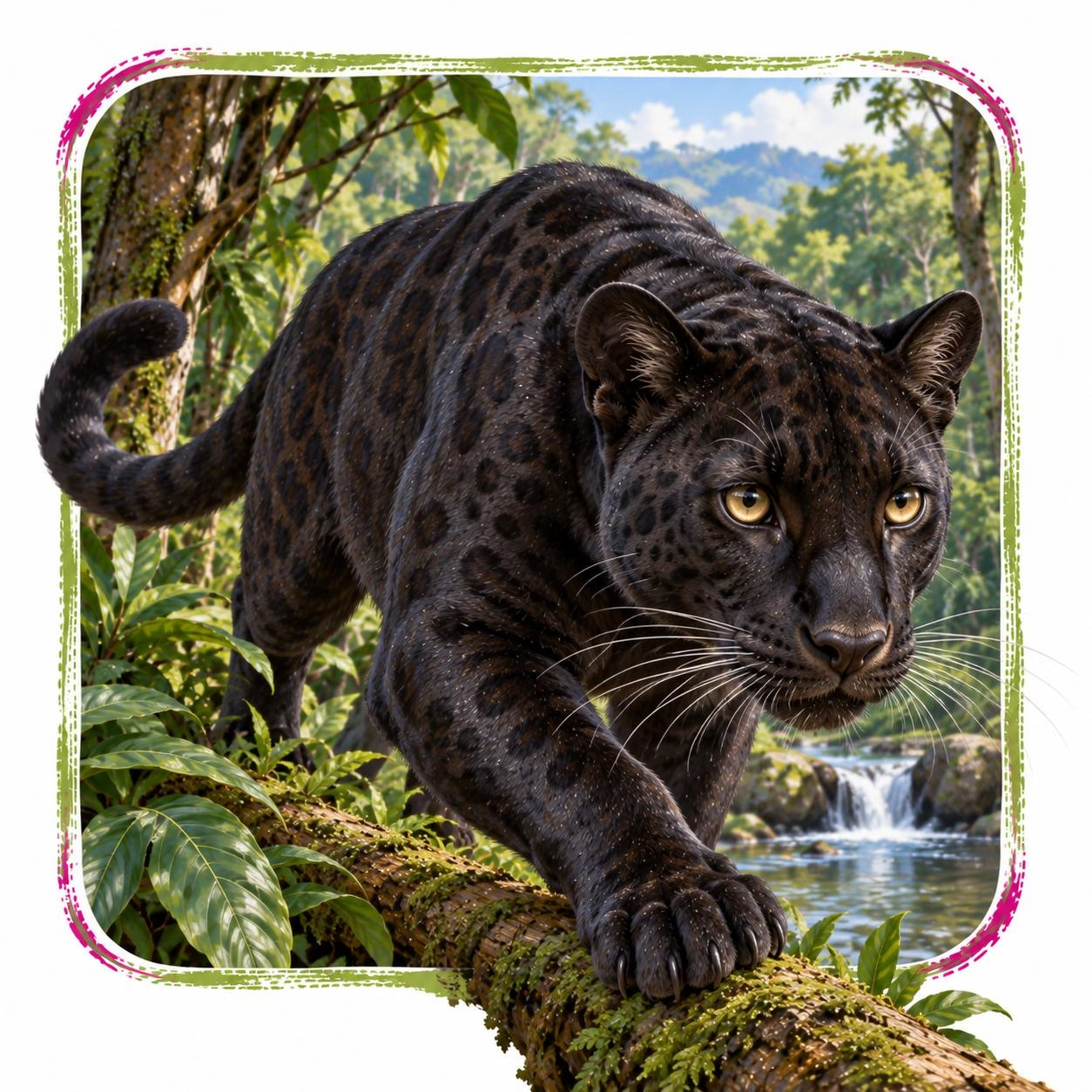
Panther in its natural Forests, wetlands, savannas, scrublands, and mountains used by leopards or jaguars, depending on which cat is called a panther habitat