
Pill Bug Facts for Kids
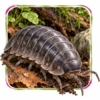
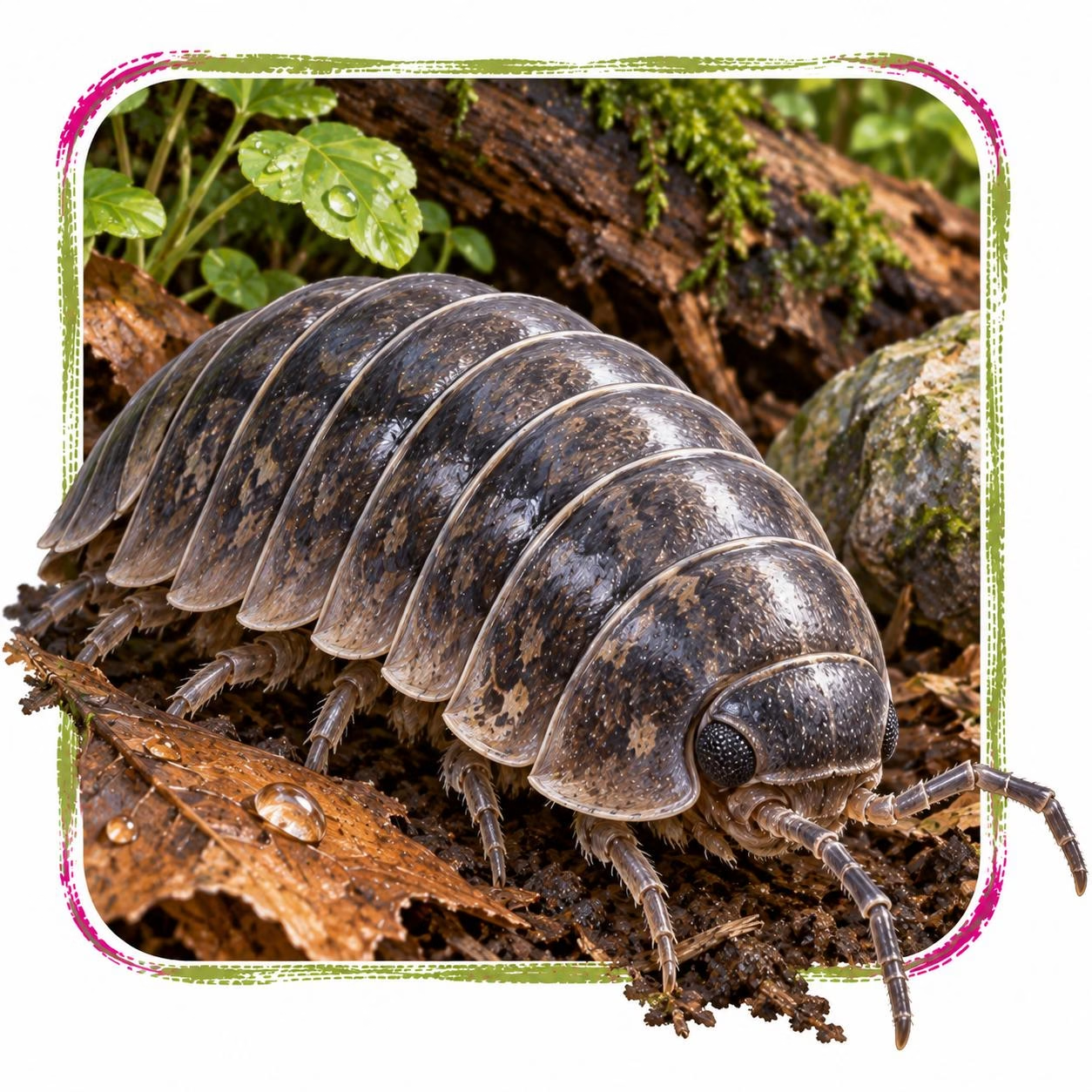
A pill bug, often called a roly-poly, is a tiny land-dwelling crustacean rather than an insect. This page focuses on the common pill bug, Armadillidium vulgare. Its overlapping armored plates allow it to roll into a tight ball, while its modified breathing structures keep it tied to damp, sheltered places under leaves, logs, stones, mulch, and flowerpots.
Quick Pill Bug Facts
- Scientific Name: Armadillidium vulgare for the common pill bug featured here
- Animal Type: Terrestrial isopod crustacean
- Other Names: Roly-poly, woodlouse, and potato bug in some regions
- Size: Usually under 2 centimetres long
- Legs: Seven pairs in an adult
- Habitat: Damp leaf litter, soil, compost, mulch, and spaces under logs, rocks, bark, or pots
- Diet: Mostly decaying leaves, wood, fungi, and other dead plant material
- Range: Native to parts of Europe and now widespread in many regions
- Conservation: Common and widespread; no global threatened category is normally assigned
What You’ll Learn
Explore 10 surprising pill bug facts for kids about rolling into balls, armored bodies, many legs, moisture, and their crustacean relatives, plus a quiz, glossary, and activity
These simple facts are written for kids, parents, teachers, and curious young animal lovers.
10 Fun Pill Bug Facts for Kids
1. A Pill Bug Is Not an Insect
Pill bugs are isopods, a group of crustaceans related to animals such as crabs and shrimp. Unlike adult insects with six legs, an adult pill bug has fourteen walking legs arranged in seven pairs.
Kid Decode: A roly-poly is a land crustacean hiding in plain sight.
2. Armor Covers Its Segmented Body
Hard overlapping plates form the pill bug’s exoskeleton. The plates protect its body while allowing the many segments to bend enough for walking and curling.
Kid Decode: Its back works like a tiny suit of jointed armor.
3. It Can Roll Into a Ball
When disturbed, Armadillidium vulgare tucks in its head, antennae, underside, and legs and curls into a tight sphere. This behavior is called conglobation and helps reduce attack and water loss.
Kid Decode: The animal becomes its own round armored hiding place.
4. Damp Air Helps It Breathe
Pill bugs use modified appendages on the underside of the abdomen for gas exchange. These gill-like structures must remain moist, so dry air and hot sunshine are dangerous.
Kid Decode: Its crustacean breathing equipment explains the love of damp corners.
5. Most Activity Happens in Darkness
Pill bugs avoid bright, dry conditions and are often most active at night. By day, they gather beneath objects or inside moist leaf litter where evaporation is slower.
Kid Decode: Turn over a damp log and you may uncover their daytime shelter.
6. They Recycle Dead Plants
Common pill bugs mainly chew decaying leaves, soft rotting wood, fungi, and other dead plant material. Breaking this material into smaller pieces helps decomposers and returns nutrients to the soil.
Kid Decode: A mouthful of old leaf can become part of the garden’s recycling system.
7. Two Pairs of Antennae Sense the World
Like other crustaceans, pill bugs have two antenna pairs, although one pair is tiny and difficult to see. The large antennae help them explore through touch and chemical cues.
Kid Decode: The obvious feelers are only half of the antenna story.
8. They Molt in Two Main Steps
A growing pill bug cannot stretch its hard exoskeleton, so it sheds the old covering. The rear half usually molts first and the front half follows later, leaving a two-toned animal between stages.
Kid Decode: A pill bug changes its armor pants before changing its armor shirt.
9. Mothers Carry a Watery Nursery
A female forms a fluid-filled brood pouch called a marsupium beneath her body. Eggs develop and hatch inside this protected pocket, which keeps the young from drying out too soon.
Kid Decode: Baby pill bugs begin life in a miniature portable pool.
10. Youngsters Add Their Final Legs Later
Newly released young, called mancae, resemble pale miniature adults but initially have six pairs of walking legs. After early molts, they gain the final body segment and seventh leg pair.
Kid Decode: A newborn roly-poly has not finished adding all fourteen adult walking legs.
The Weirdest Pill Bug Fact
A pill bug molts in sections instead of slipping out of its whole exoskeleton at once. The rear half is shed first and the front half later, so a growing pill bug can briefly look as if it is wearing two differently colored suits of armor.
Try This Pill Bug Activity
Test a Roly-Poly Shelter
Make a choice chamber from two connected covered cups: line one side with barely damp paper towel and the other with dry paper towel. With an adult’s help, briefly place two or three locally found pill bugs in the center and watch from shade for five minutes without touching them. Record which side they visit, return every animal exactly where found, discard the towels, and wash your hands. Never flood the chamber or leave the animals in sunlight.
Quick Pill Bug Quiz
- Is a pill bug an insect? Answer: No, it is a terrestrial crustacean.
- How many pairs of walking legs does an adult have? Answer: Seven pairs.
- Why does it need a damp habitat? Answer: Its breathing structures must stay moist.
- What is conglobation? Answer: Rolling the body into a protective ball.
- Where do the eggs and newly hatched young develop? Answer: In the female’s fluid-filled brood pouch.
Mini Glossary
- Crustacean: An arthropod in the group that includes crabs, shrimp, and isopods.
- Isopod: A crustacean with a flattened segmented body and similar walking legs.
- Exoskeleton: A hard outer covering that supports and protects an animal.
- Conglobation: Curling the body into a ball.
- Marsupium: The fluid-filled brood pouch beneath a female pill bug.
 Terrapin Facts for Kids
 Sea Urchin Facts for Kids
 Blue Tang Facts for Kids
 Canadaspis Facts for Kids
More Animal Facts for Kids
Visit the full animal facts library or explore a focused animal group.
More Extinct Animal Facts for Kids
Discover dinosaurs, Ice Age giants, prehistoric sea creatures, recently extinct species, and other animals from the past.
Fact check note: Fact checked against the University of Florida IFAS pillbug account; Animal Diversity Web’s Armadillidium vulgare species profile; New South Wales Field of Mars Environmental Education Centre fact sheet; and peer-reviewed work on pill bug cuticle, molting, brood development, and soil ecology. Classification, legs, conglobation, moisture needs, diet, antennae, molting, brood pouch, young, range, and ecological role were cross-checked.

Pill Bug in its natural Damp leaf litter, topsoil, compost, mulch, and sheltered spaces under logs, rocks, bark, pots, and other ground cover habitat