
Insect Facts for Kids
Insects are six-legged invertebrates in the class Insecta and form the most species-rich animal group known. Scientists have named about one million species, while research suggests several million more may remain undescribed. An adult insect typically has a head, thorax, abdomen, one pair of antennae, three pairs of legs, an exoskeleton, and compound or simple eyes. Many adults have wings, but fleas, lice, worker ants, and numerous other insects are wingless. Insects occupy almost every land and freshwater habitat and perform essential jobs as pollinators, decomposers, predators, prey, soil engineers, and plant eaters.
Quick Insect Facts
- Animal Type: Invertebrate
- Group: Six-legged arthropods in the class Insecta
- Known For: Head-thorax-abdomen body plan, six adult legs, one antenna pair, exoskeletons, enormous diversity, powered flight, molting, metamorphosis, and almost every imaginable ecological role
- Habitat: Forest, grassland, desert, tundra, caves, soil, freshwater, farms, cities, animal nests, plants, and the bodies of other organisms
- Diet: Plants, nectar, pollen, fungi, wood, blood, dung, carrion, microbes, other animals, or stored food depending on species and life stage
What You’ll Learn
Learn 10 broad insect facts for kids about six legs, antennae, body sections, life cycles, wings, and the incredible variety of insects, plus a quiz, glossary, and activity
These simple facts are written for kids, parents, teachers, and curious young minds.
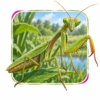
10 Fun Insect Facts for Kids
1. Adults Have Six Legs
The defining adult insect body carries three leg pairs, all attached to the thorax. Spiders have eight legs, while centipedes, millipedes, and many crustaceans have more than six.
Kid Decode: Counting to six opens the first door in the insect identification puzzle.
2. The Body Has Three Main Regions
The head concentrates senses and mouthparts, the thorax powers movement, and the abdomen contains much of digestion, breathing openings, and reproduction. Some insects disguise the boundaries with armor, hairs, or narrow waists.
Kid Decode: One tiny animal divides its control room, engine room, and living room into three sections.
3. An Exoskeleton Must Be Molted
The tough outer cuticle supports muscles, limits water loss, and protects the body but cannot expand continuously. A growing insect forms a new covering underneath and sheds the old one.
Kid Decode: Growing means climbing out of yesterday’s armor.
4. Most Breathe Through Tubes Instead of Lungs
Air enters openings called spiracles and travels through branching tracheae and tracheoles directly toward tissues. Aquatic species may use gills, air bubbles, breathing siphons, or surface visits.
Kid Decode: The body contains an upside-down tree of air pipes reaching toward its cells.
5. Wings Belong to the Thorax
When present, insect wings attach to the second and third thoracic segments. Some have two pairs, flies have one functional pair, and many insects lost wings during evolution or only certain castes and sexes fly.
Kid Decode: Six legs are the rule, but wings are optional equipment.
6. Mouthparts Became Many Different Tools
Related structures evolved into chewing jaws, piercing stylets, coiled siphons, sponging pads, lapping tongues, and combinations of these. Diet and mouth design often reveal each other.
Kid Decode: One ancient mouth kit became pliers, straws, needles, mops, and drinking tubes.
7. Metamorphosis Can Rebuild the Whole Animal
Butterflies, beetles, flies, bees, and many others pass through egg, larva, pupa, and adult. Grasshoppers and true bugs develop through nymphs, while silverfish change more gradually.
Kid Decode: An insect life story may include a complete renovation behind the sealed door of a pupa.
8. Insects Communicate in Many Languages
Pheromone trails, wing vibrations, songs, flashes, colors, dances, drumming, touch, and plant-borne vibrations carry messages about mates, food, danger, territory, and colony needs.
Kid Decode: The miniature world speaks through perfume, light, rhythm, dancing, and trembling leaves.
9. Their Ecosystem Jobs Are Enormous
Insects pollinate plants, recycle dead material, move soil, control other insects, disperse seeds, and feed countless animals. Others eat crops, transmit disease, or alter forests, making their effects both helpful and harmful.
Kid Decode: Remove the six-legged workers and many ecosystems lose pollinators, cleaners, hunters, and food.
10. Most Species May Still Be Unknown
About one million insect species have been named, while a major modern estimate suggests roughly 5.5 million may exist. Tropical forests, tiny parasitic groups, soils, and overlooked regions contain much undiscovered diversity.
Kid Decode: Humanity may know only the first chapters of Earth’s largest animal library.
The Weirdest Insect Fact
A caterpillar and the butterfly it becomes can have different bodies, diets, senses, and habitats even though they are two life stages of the same individual animal.
Try This Insect Activity
Build an Insect Diversity Museum
Draw an adult grasshopper as the basic body-plan model and label head, thorax, abdomen, one antenna pair, compound and simple eyes, mouthparts, six legs, wings, spiracles, and exoskeleton. Add comparison boxes for a wingless flea, a two-winged fly with halteres, a beetle with hardened forewings, a butterfly with scaled wings, an ant worker, an aquatic dragonfly nymph, and a caterpillar. Show incomplete and complete metamorphosis, chewing and sucking mouthparts, molting, pollination, decomposition, predation, social colonies, and food-web connections.
Quick Insect Quiz
- How many legs does a typical adult insect have? Answer: Six.
- What are the three main body regions? Answer: Head, thorax, and abdomen.
- Do all adult insects have wings? Answer: No.
- How do most insects breathe? Answer: Through spiracles connected to internal tracheal tubes.
- Are all insects bugs? Answer: No; true bugs are only the order Hemiptera.
Mini Glossary
- Entomology: The scientific study of insects.
- Exoskeleton: A strong outer covering that supports and protects the body.
- Thorax: The middle body region bearing the legs and, when present, wings.
- Spiracle: An external opening connected to an insect’s breathing tubes.
- Metamorphosis: A major change in body form during development.


 Duck Facts for Kids
 Armadillo Facts for Kids
 Python Facts for Kids
 Tanystropheus Facts for Kids
More Animal Facts for Kids
Visit the full animal facts library or explore a focused animal group.
More Extinct Animal Facts for Kids
Discover dinosaurs, Ice Age giants, prehistoric sea creatures, recently extinct species, and other animals from the past.
Fact check note: Fact checked with the Catalogue of Life and GBIF classification of Insecta, Smithsonian National Museum of Natural History resources on six legs, three body regions, antennae and exoskeletons, and peer-reviewed global diversity estimates suggesting roughly one million described insect species and about 5.5 million total species. Development, breathing, flight, communication, sociality, feeding, and ecological roles were checked across entomological reviews and museum resources, with major exceptions stated explicitly.

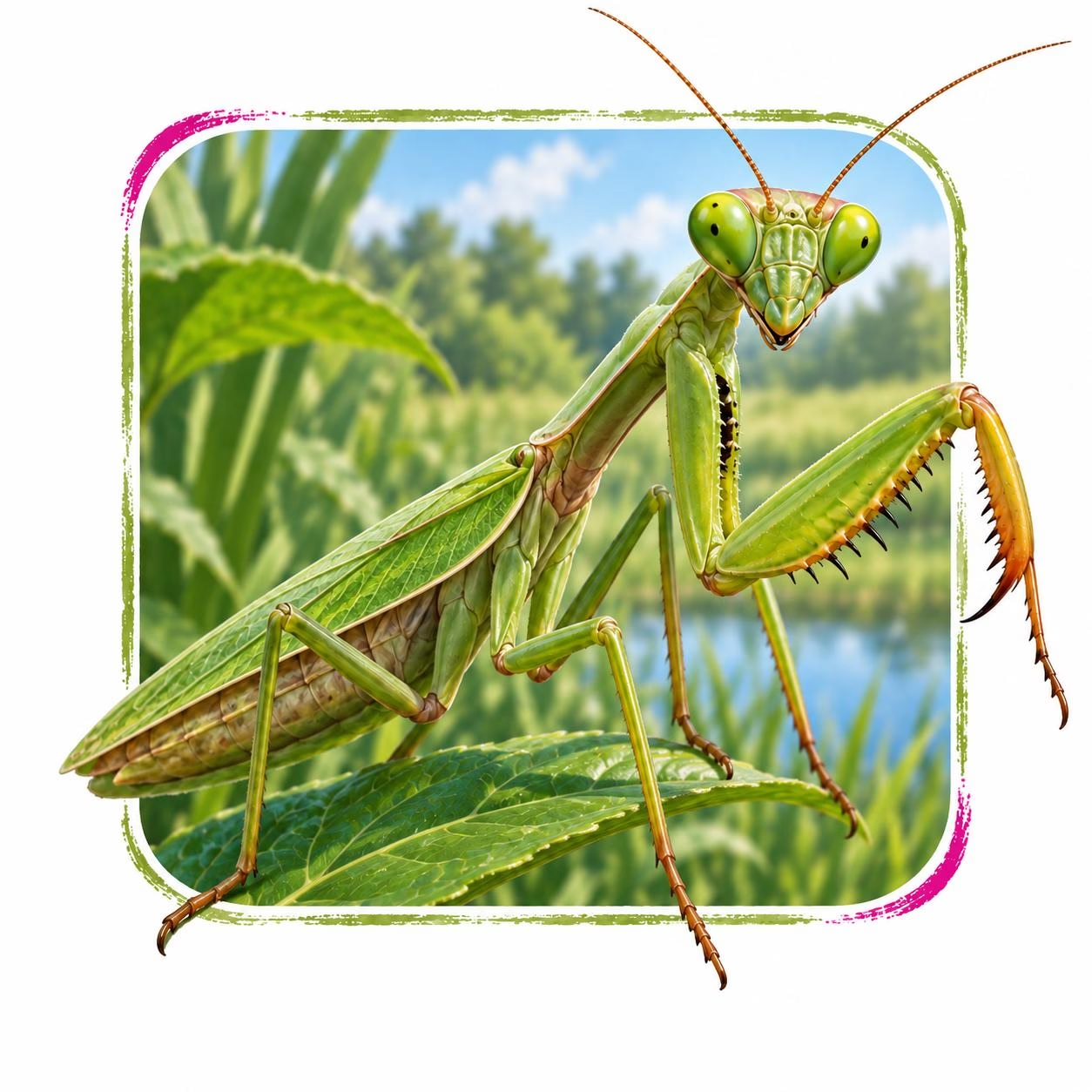
Insect in its natural Nearly every terrestrial and freshwater habitat worldwide, including forests, grasslands, deserts, tundra, caves, soils, rivers, ponds, farms, cities, plants, nests, and other organisms habitat