
Polecat Facts for Kids
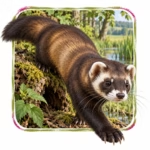
The European polecat is a secretive mustelid with dark brown fur, a pale undercoat, white-edged ears, and a mask-like face. It hunts mostly after dark across woodlands, wetlands, fields, and farm edges. Polecats are close relatives of domestic ferrets and can release a powerful smell when threatened, but they are not skunks despite the nickname “polecat” sometimes being used for skunks in North America.
Quick Polecat Facts
- Scientific Name: Mustela putorius
- Animal Type: Mammal and mustelid
- Size: Body about 32–45 centimetres, plus a 12–19-centimetre tail
- Known For: Dark bandit mask, pale underfur, nocturnal hunting, and strong scent
- Range: Much of Europe into western Russia, plus the Rif Mountains of North Africa
- Habitat: Woodlands, wetlands, river valleys, grasslands, farmland, hedgerows, and rural buildings
- Diet: Rodents, rabbits, frogs, birds, eggs, reptiles, and other small animals
- Conservation: Least Concern globally, although declining or recovering regionally
What You’ll Learn
Learn 10 fascinating polecat facts for kids about dark masks, scent defenses, hunting, burrows, and European habitats, plus a quiz, glossary, and activity
These facts are written simply for kids, parents, teachers, and curious young fact-finders.
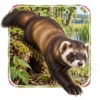
10 Fun Polecat Facts for Kids
1. The Page Covers the European Polecat
Several mammals have polecat in their names, including steppe and marbled polecats. This page focuses on the European or western polecat, Mustela putorius.
Kid Decode: The common name needs a scientific label so we know which masked hunter we mean.
2. Polecats Are Mustelids
They belong to the weasel family Mustelidae with otters, badgers, martens, minks, stoats, and ferrets. A low body and short strong legs help them follow prey through dense cover and burrows.
Kid Decode: The masked polecat belongs to one of nature’s busiest predator families.
3. Their Faces Look Masked
Typical European polecats have dark fur around the eyes and muzzle, with paler patches on the cheeks, forehead, and ear rims. Long dark guard hairs reveal a lighter cream or yellowish undercoat.
Kid Decode: Its natural bandit mask is made entirely of fur.
4. A Strong Scent Provides Defense
Scent glands near the tail produce a pungent secretion used in communication and released when the animal is frightened. Unlike a skunk, a polecat is not specialized for accurately spraying over a long distance.
Kid Decode: The emergency smell says “please leave this polecat alone.”
5. They Hunt Mostly at Night
European polecats are commonly nocturnal and use smell, hearing, and close-to-ground searching to find prey. They often travel alone through a home range containing several resting sites.
Kid Decode: After sunset, the hedgerows become a polecat hunting network.
6. Their Menu Changes With Habitat
Polecats eat rodents, rabbits, frogs, toads, birds, eggs, reptiles, and other small prey. Amphibians can be especially important near wetlands, while rabbits and rodents matter in drier countryside.
Kid Decode: Dinner depends on whether the trail leads toward pond, field, or rabbit warren.
7. Dens Can Be Borrowed Homes
They rest in rabbit warrens, abandoned fox or badger burrows, hollow banks, log piles, haystacks, sheds, and other sheltered places. Rural buildings may be especially useful during cold weather.
Kid Decode: A polecat often renovates a ready-made hideaway instead of digging from scratch.
8. Baby Polecats Are Kits
Females usually give birth in spring or early summer to several blind, deaf kits in a protected den. The mother feeds and defends them until they become independent later in summer.
Kid Decode: A den full of pale newborn kits soon becomes a group of masked explorers.
9. Domestic Ferrets Are Close Relatives
The domestic ferret was descended mainly from European polecat ancestors after thousands of years of domestication. Ferrets and polecats can interbreed, but a wild polecat is not a lost pet.
Kid Decode: Ferrets are domestic cousins, not simply polecats that moved indoors.
10. Some Populations Have Recovered
European polecats are globally Least Concern, but persecution, poisoning, roads, trapping, wetland loss, and prey changes have caused regional declines. After nearly disappearing from Britain, they expanded again from strongholds in Wales.
Kid Decode: A recovering species can still need safer roads and kinder countryside.
The Weirdest Polecat Fact
In North America, people sometimes call a skunk a polecat, but European polecats and skunks belong to different mammal families. Both use strong smells for defense, which is probably why the names became tangled.
Try This Polecat Activity
Map a Polecat’s Night
Draw a countryside map with woodland, hedgerows, pond, field, rabbit warren, stream, haystack, and safe road tunnel. Use different symbols for food, dens, water, scent messages, and dangers. Create a route that lets a polecat hunt after dark while staying under cover and crossing the road safely. Do not use food or scent to attract real wildlife.
Quick Polecat Quiz
- Which polecat does this page describe? Answer: The European or western polecat.
- What animal family does it belong to? Answer: The mustelid or weasel family.
- When does it usually hunt? Answer: At night.
- What are baby polecats called? Answer: Kits.
- Is a North American skunk scientifically the same animal? Answer: No, skunks belong to a different family.
Mini Glossary
- Mustelid: A member of the weasel family, such as a polecat, otter, badger, or ferret.
- Nocturnal: Mainly active at night.
- Scent Gland: An organ that makes a chemical smell used for defense or communication.
- Home Range: The area an animal regularly travels through and uses.
- Domestication: Genetic and behavioral change across generations as animals adapt to living with people.

 Sloth Bear Facts for Kids
 Sea Krait Facts for Kids
 Marten Facts for Kids
 Megalodon Facts for Kids
More Animal Facts for Kids
Visit the full animal facts library or explore a focused animal group.
More Extinct Animal Facts for Kids
Discover dinosaurs, Ice Age giants, prehistoric sea creatures, recently extinct species, and other animals from the past.
Fact check note: Fact checked against The Wildlife Trusts European polecat profile; Vincent Wildlife Trust status reviews and polecat-ferret identification resources; peer-reviewed research on the species’ European decline; IUCN Red List assessment; and Game & Wildlife Conservation Trust ecology summaries. Scientific name, size, facial pattern, scent defense, nocturnal activity, habitat, diet, den use, kits, ferret relationship, British recovery, and regional threats were cross-checked. The page explicitly distinguishes European polecats from North American skunks and other polecat species.

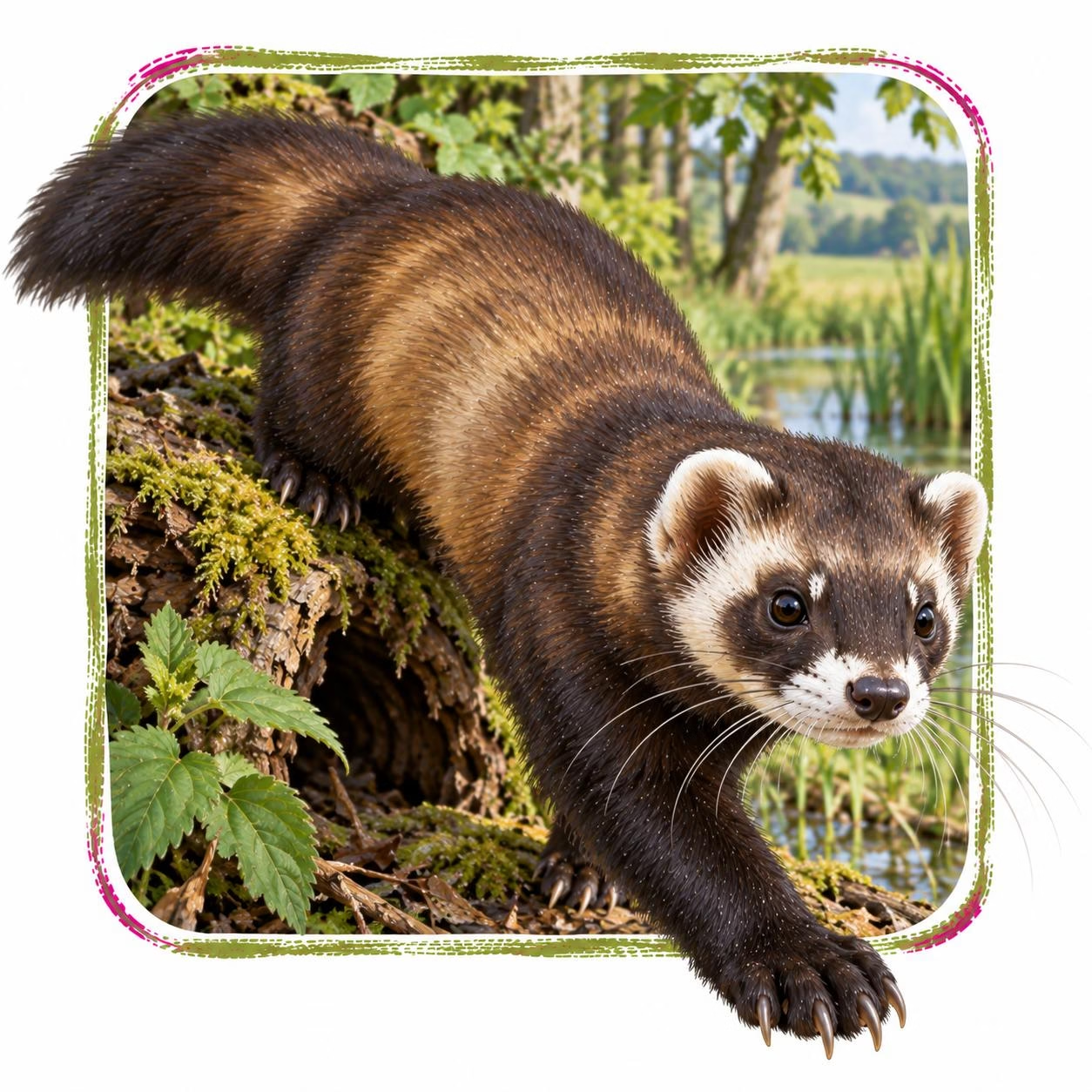
Polecat in its natural Woodlands, wetlands, river valleys, hedgerows, grasslands, farmland, rabbit warrens, and sheltered rural buildings habitat