
Pudu Facts for Kids
Pudus are tiny South American deer with compact bodies, short legs, rounded ears, and shy forest habits. Current mammal taxonomy recognizes three living species: the southern pudu, northern pudu, and Peruvian Yungas pudu. They occupy very different regions, from cool temperate rainforest in Chile and Argentina to high Andean cloud forest, páramo, and Yungas habitat farther north.
Quick Pudu Facts
- Scientific Group: Deer family Cervidae; genera Pudu and Pudella
- Living Species: Three in current taxonomy
- Species: Southern pudu, northern pudu, and Peruvian Yungas pudu
- Animal Type: Mammal and true deer
- Size: Roughly 32–45 centimetres at the shoulder, varying by species
- Known For: Tiny size, compact body, short legs, secretive behavior, and short male antlers
- Habitat: Temperate rainforest, bamboo thickets, Andean cloud forest, Yungas, páramo, and other dense mountain vegetation
- Diet: Leaves, shoots, herbs, flowers, fruit, bark, and fallen plant material
- Young: Usually a single spotted fawn
- Conservation: Varies by species; the southern pudu is Near Threatened, while revised northern species need updated assessments
What You’ll Learn
Discover 10 tiny pudu facts for kids about small antlers, forest hiding, short legs, plant diets, and South American habitats, with a quiz, glossary, and activity
Clear explanations make them ideal for children, families, teachers, and little fact-hunters.
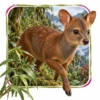
10 Fun Pudu Facts for Kids
1. Three Pudu Species Are Recognized
A 2024 scientific revision separated the northern forms into the northern pudu, Pudella mephistophiles, and the newly described Peruvian Yungas pudu, Pudella carlae. The southern pudu remains Pudu puda.
Kid Decode: The tiny-deer family gained a newly named member in the twenty-first century.
2. They Are the Smallest True Deer
Pudus stand only around knee height to many adults, depending on species and individual. Mouse-deer can be smaller, but they belong to a different mammal family and are not true deer.
Kid Decode: A pudu carries the deer family plan in a remarkably compact body.
3. Short Legs Fit Dense Vegetation
A low, stocky build lets a pudu slip beneath branches, bamboo, shrubs, and tangled mountain plants. Individuals create and reuse narrow paths through cover instead of traveling across open ground whenever possible.
Kid Decode: A leafy tunnel that looks tiny to us can be a perfect pudu highway.
4. Coarse Fur Provides Camouflage
Brown to reddish-brown coats blend with bark, dead leaves, shadow, and soil. The southern pudu’s coarse hairs are hollow, helping insulate the animal in cool, rainy forest conditions.
Kid Decode: A warm bark-colored coat helps a little deer vanish into a wet woodland.
5. Males Grow Simple Spike Antlers
Adult males usually carry short, unbranched antlers rather than the wide branching racks of larger deer. Like other deer antlers, they are made of bone and are shed and regrown on a cycle.
Kid Decode: A pudu wears two small spikes instead of a giant antler crown.
6. Pudus Browse Many Plants
They nibble leaves, tender shoots, herbs, flowers, fruit, bark, and other plant foods available in their habitat. A small muzzle and compact body help them feed among dense low vegetation.
Kid Decode: Pudu dinner can be collected one hidden leaf and fallen fruit at a time.
7. Food Gets Chewed Twice
Pudus are ruminants with a multi-chambered stomach. After swallowing plant material, they can bring partly digested food back to the mouth as cud and chew it again to extract more nutrients.
Kid Decode: A pudu can turn yesterday’s quick bite into today’s careful second chew.
8. They Are Usually Secretive and Solitary
Pudus commonly travel alone outside breeding and mother-fawn relationships. Scent glands, droppings, rubbed vegetation, and sounds help individuals communicate without staying in a large herd.
Kid Decode: A pudu may leave scented messages where another deer never sees the writer.
9. Fawns Begin Life With Spots
A mother generally gives birth to one small fawn. Rows of pale spots break up the youngster’s outline among flecks of forest light and gradually fade as the coat changes toward adult coloring.
Kid Decode: A pudu fawn starts with a dotted hiding pattern painted across its back.
10. Roads, Dogs, and Forest Loss Are Threats
Habitat clearing and fragmentation reduce shelter and feeding areas. Free-roaming dogs, vehicle collisions, hunting, livestock disease, and introduced predators can also harm populations, with pressures differing across the range.
Kid Decode: Protecting a tiny deer also means protecting safe forest paths between habitats.
The Weirdest Pudu Fact
In 2024, scientists described the Peruvian Yungas pudu as a separate species and restored the genus Pudella for it and the northern pudu. It was the first living deer species formally described in the twenty-first century.
Try This Pudu Activity
Build a Pudu Forest Tunnel
Draw a side view of dense South American forest with fallen logs, bamboo, shrubs, ferns, fruit, and a road. Cut a paper pudu about one-third the height of a nearby drawn adult human’s knee and guide it through a narrow covered route. Add a second safe wildlife corridor across the road, then label food, camouflage, shelter, and two dangers.
Quick Pudu Quiz
- How many living pudu species does current taxonomy recognize? Answer: Three.
- Are mouse-deer true deer? Answer: No.
- What kind of antlers do male pudus usually grow? Answer: Short, simple spikes.
- What is cud? Answer: Partly digested plant food brought back up and chewed again.
- Name two threats to pudus. Answer: Examples include forest loss, roads, vehicles, free-roaming dogs, hunting, disease, and introduced predators.
Mini Glossary
- Cervid: A member of the deer family Cervidae.
- Antler: A bony growth that is normally shed and regrown.
- Ruminant: A hoofed mammal that digests plants using a multi-chambered stomach and chews cud.
- Páramo: Cool, wet, high-elevation grassland and shrub habitat in the tropical Andes.
- Fragmentation: The splitting of continuous habitat into smaller isolated pieces.
 American Robin Facts for Kids
 Cockatiel Facts for Kids
 Butterflyfish Facts for Kids
 Laysan Rail Facts for Kids
More Animal Facts for Kids
Visit the full animal facts library or explore a focused animal group.
More Extinct Animal Facts for Kids
Discover dinosaurs, Ice Age giants, prehistoric sea creatures, recently extinct species, and other animals from the past.
Fact check note: Fact checked against the American Society of Mammalogists Mammal Diversity Database; the 2024 Journal of Mammalogy revision describing Pudella carlae; IUCN information for previously assessed pudu taxa; Oakland Zoo, Los Angeles Zoo, Chester Zoo, and Animal Diversity Web southern pudu profiles; and South American conservation research. Species count, genera, size, antlers, coat, habitat, diet, rumination, behavior, fawns, range, and threats were cross-checked.

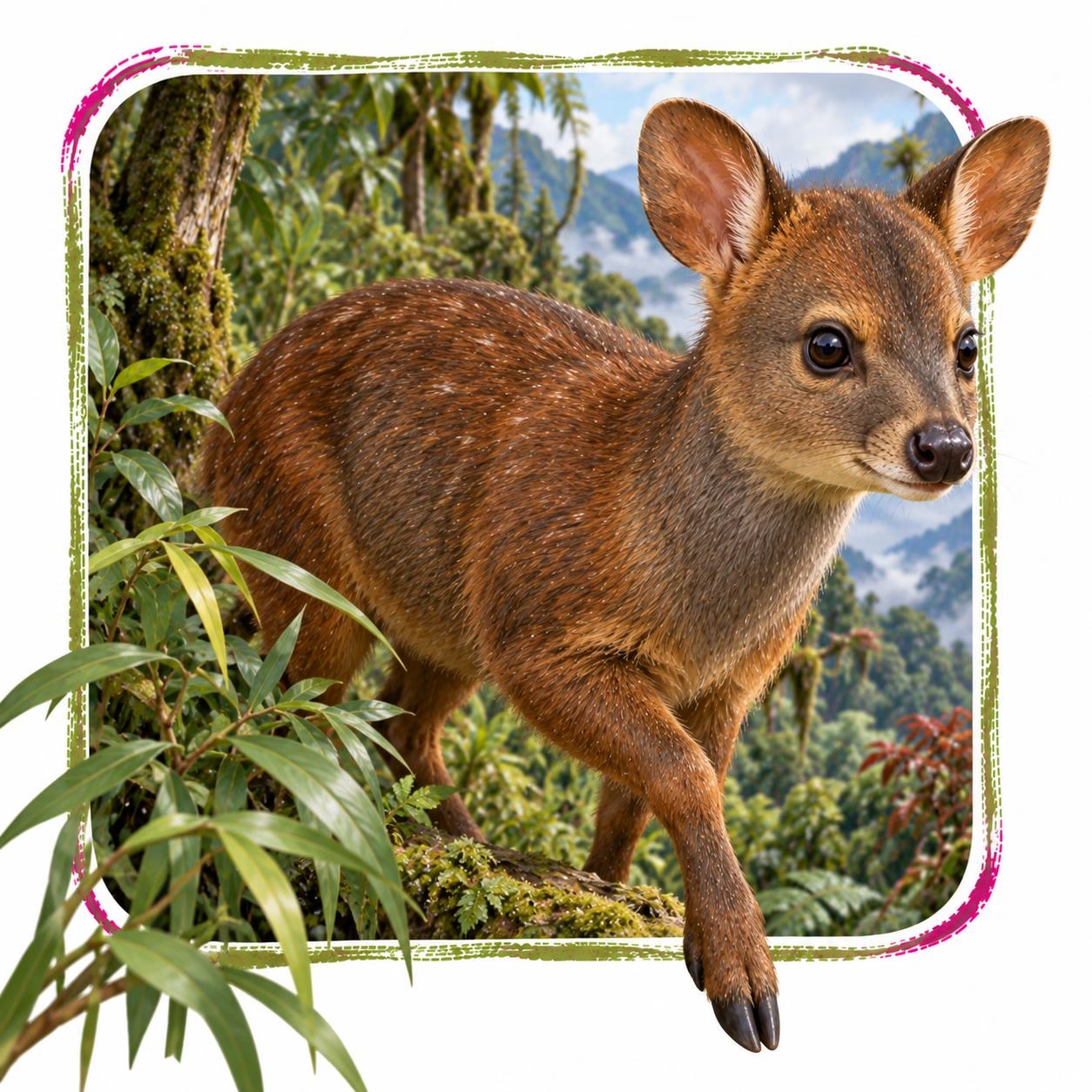
Pudu in its natural Temperate rainforest, bamboo and shrub thickets, Andean cloud forest, Yungas forest, páramo, puna edges, and dense mountain vegetation habitat