
Southern Pudu Facts for Kids
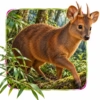
The Southern Pudu, Pudu puda, is one of the world’s smallest deer and lives in the cool temperate forests of southern Chile and southwestern Argentina. Its compact body, short legs, rounded ears, dark brown coat, and low profile help it move through thick bamboo, shrubs, fallen branches, and tangled rainforest vegetation. Adult males grow short simple antlers, while females are normally antlerless. Southern Pudus are selective browsers that eat leaves, shoots, buds, ferns, vines, fruit, and other plant foods, sometimes standing on their hind legs or stepping onto logs to reach higher vegetation. They are usually solitary or found in very small groups, communicate strongly through scent, and hide their spotted fawns in vegetation. The species is currently listed as Near Threatened, with habitat fragmentation, roads, dogs, hunting, and other pressures affecting local populations.
Quick Southern Pudu Facts
- Animal Type: Mammal and deer
- Scientific Name: Pudu puda
- Known For: Tiny size, short simple antlers in males, dense-forest camouflage, selective browsing, scent marking, hidden spotted fawns, and secretive behaviour
- Habitat: Temperate rainforest, bamboo thickets, dense shrubland, forest edge, secondary forest, and other cool wooded habitats with thick cover
- Diet: Leaves, shoots, twigs, buds, ferns, vines, herbs, bark, fruit, flowers, and some fungi
What You’ll Learn
Discover 10 fun Southern Pudu facts for kids with current deer science, quick facts, a quiz, glossary, drawing activity, and South American wildlife links.
Simple explanations make them great for children, families, teachers, and curious young animal lovers.
10 Fun Southern Pudu Facts for Kids
1. It Is One of the World’s Smallest Deer
Southern Pudus are tiny compared with familiar deer, standing only around 30 to 45 centimetres at the shoulder and commonly weighing roughly 6 to 13 kilograms. The Northern Pudu is generally considered even smaller, so the Southern Pudu should be called one of the smallest deer rather than automatically the smallest.
Kid Decode: This deer can stand lower than the seat of many classroom chairs.
2. Males Carry Short Simple Antlers
Adult males grow small unbranched antlers that are shed and regrown in a seasonal cycle. Females normally lack antlers, and the compact headgear is much less elaborate than the branching antlers of many larger deer.
Kid Decode: The tiny buck wears two simple spikes instead of a giant antler crown.
3. A Low Body Fits a Tangled Forest
Short legs, a rounded body, and small stature allow Southern Pudus to slip beneath branches and through dense understory. Their reddish to dark brown coat blends into bark, shadow, wet leaves, and forest soil.
Kid Decode: The forest is a maze, and this deer was built to take the shortcuts underneath.
4. They Are Selective Browsers
Southern Pudus eat leaves, buds, shoots, ferns, vines, herbs, bark, flowers, fruit, and fungi. They may stand on their hind legs or climb onto fallen logs to reach preferred food above head height.
Kid Decode: A tiny deer can become temporarily taller just by standing up for a better leaf.
5. A Four-Chambered Stomach Recycles Food
Like other deer, Southern Pudus are ruminants. Microbes ferment plant material in a four-compartment stomach, and partly digested food can be brought back to the mouth as cud for another round of chewing.
Kid Decode: One mouthful gets two chewing sessions before its forest journey is finished.
6. Smell Is an Important Social Language
Southern Pudus have large scent glands near the eyes and use smell heavily when exploring and communicating. They can rub gland secretions onto vegetation, investigate urine and other scents, and leave chemical information around their home areas.
Kid Decode: A twig can carry a pudu message that another deer reads with its nose.
7. Most Prefer a Quiet, Solitary Life
Wild Southern Pudus are usually secretive and solitary, although pairs or tiny temporary groups can occur. They move along networks of narrow trails through thick vegetation and are often most active around morning, evening, and other cool periods.
Kid Decode: The little deer owns a hidden network of forest footpaths instead of travelling in a giant herd.
8. Fawns Begin Life With Spots
A female usually gives birth to one fawn after a pregnancy of roughly seven months, though twins can occur. The newborn is very small and carries pale spots that provide camouflage while it remains hidden and cared for by its mother.
Kid Decode: The tiny newborn arrives wearing a coat sprinkled with forest-light dots.
9. Pudus Can Bark When Alarmed
Southern Pudus use scent, posture, and sounds to communicate. Alarmed animals can give sharp bark-like calls, a surprising sound from such a small and normally secretive deer.
Kid Decode: The shy little forest deer can suddenly sound as if someone brought a dog into the bushes.
10. Forest Fragmentation Is a Major Problem
The Southern Pudu is currently Near Threatened. Forest loss and fragmentation, roads and vehicle collisions, attacks by free-ranging dogs, hunting, livestock interactions, and introduced species can reduce or isolate populations.
Kid Decode: A deer small enough to hide under branches still needs a forest big enough to connect its world.
The Weirdest Southern Pudu Fact
A Southern Pudu can rear onto its hind legs or stand on a fallen log to browse leaves, briefly turning one of the world’s smallest deer into a surprisingly tall forest feeder.
Try This Southern Pudu Activity
Southern Pudu Forest-Maze Activity
Draw a Southern Pudu moving through cool Chilean temperate rainforest. Add a tiny stocky body, rounded ears, short legs, dark brown coat, cloven hooves, one male with short unbranched antlers, a normally antlerless female, bamboo and ferns, narrow forest trails, browsing leaves, one pudu standing on its hind legs, scent marking near the eyes, a spotted hidden fawn, and a conservation panel showing connected forest beside a road, fencing, and roaming dogs.
Quick Southern Pudu Quiz
- What is the Southern Pudu’s scientific name? Answer: Pudu puda.
- Is it definitely the world’s smallest deer? Answer: No, it is one of the smallest; the Northern Pudu is generally smaller.
- Which sex normally grows short antlers? Answer: Males.
- What pattern helps newborn fawns hide? Answer: Pale spots.
- What is its current IUCN category? Answer: Near Threatened.
Mini Glossary
- Cervid: A member of the deer family Cervidae.
- Browser: An animal that selects leaves, shoots, twigs, buds, and other plant parts.
- Ruminant: A hoofed herbivore with a specialised multi-compartment stomach that rechews cud.
- Scent Gland: A gland producing chemical signals used in communication.
- Understory: The shrubs, young trees, ferns, and other vegetation growing beneath a forest canopy.
 Bumblebee Facts for Kids
 Slow Loris Facts for Kids
 European Hornet Facts for Kids
 Arsinoitherium Facts for Kids
More Animal Facts for Kids
Visit the full animal facts library or explore a focused animal group.
More Extinct Animal Facts for Kids
Discover dinosaurs, Ice Age giants, prehistoric sea creatures, recently extinct species, and other animals from the past.
Fact check note: Fact checked with the American Society of Mammalogists Mammal Diversity Database version 2.5 account for Pudu puda, which restricts the species to southern Chile and southwestern Argentina and lists it as Near Threatened; and Animal Diversity Web’s Southern Pudu account for small body size, male antlers, selective browsing, hind-leg feeding, four-chambered rumination, preorbital scent marking, mostly solitary behaviour, approximately seven-month gestation, one or occasionally two fawns, spotted young, and threats affecting wild populations.

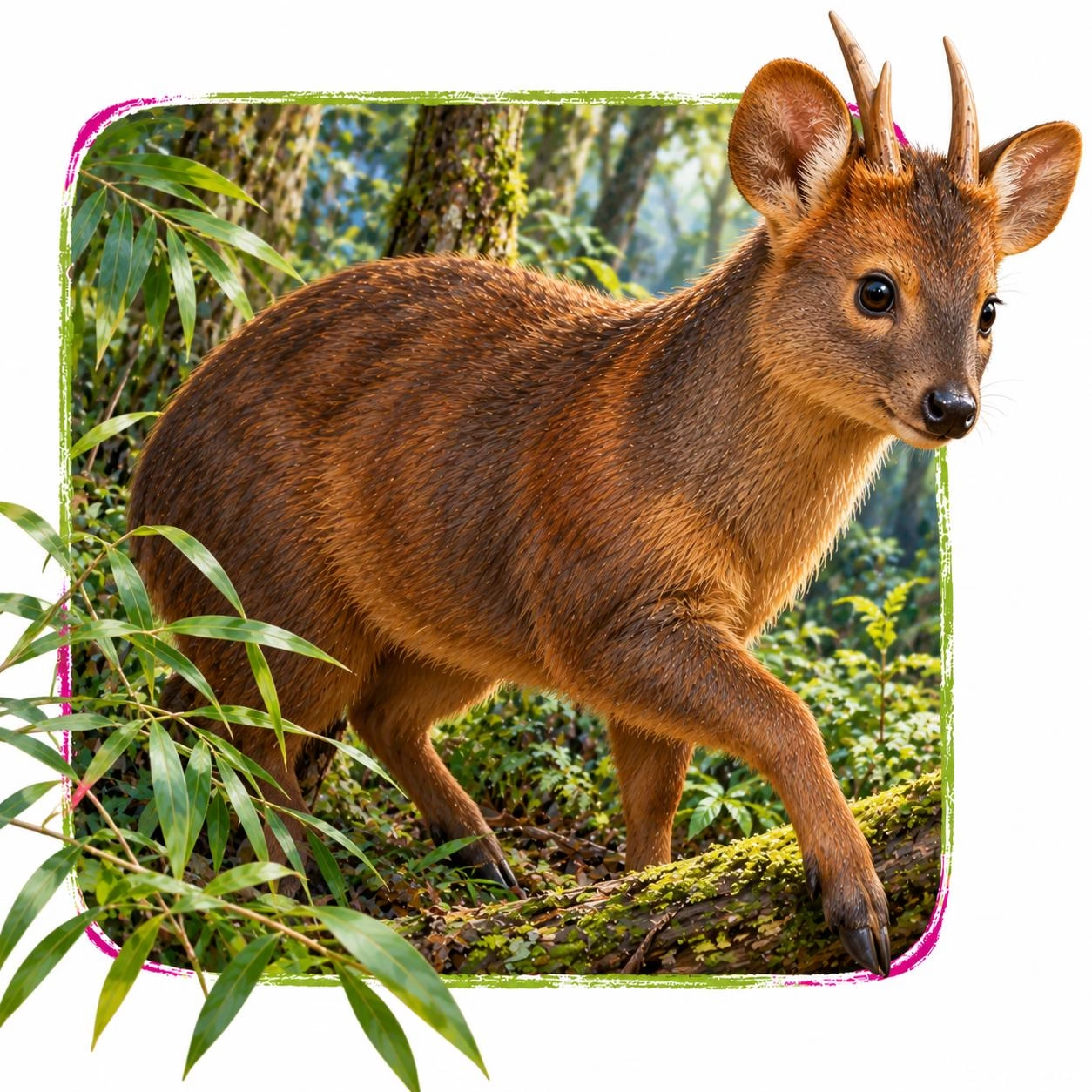
Southern Pudu in its natural Temperate rainforest, bamboo thickets, dense shrubland, secondary forest, forest edge, and other cool southern South American wooded habitats with thick understory habitat