
Purple Finch Facts for Kids
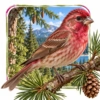
The purple finch, Haemorhous purpureus, is a chunky North American songbird with a strong seed-cracking bill. Despite its name, an adult male usually looks raspberry red or rose washed, not bright purple. Females and young birds are brown and heavily streaked. Purple finches breed mainly in coniferous and mixed forests and may wander south in irregular winter movements when northern seed crops are scarce.
Quick Purple Finch Facts
- Scientific Name: Haemorhous purpureus
- Animal Type: Bird and true finch
- Family: Fringillidae
- Size: About 12–16 centimetres long with a wingspan around 22–26 centimetres
- Known For: Raspberry-colored adult males, bold streaked females, thick conical bill, and rich warbling song
- Habitat: Coniferous and mixed forest, wooded edges, orchards, parks, and winter feeding areas
- Range: Canada and the United States, with migration varying by region
- Diet: Seeds, buds, fruit, berries, and insects
- Young: Chicks raised in a cup nest
- Conservation: Globally Least Concern, but long-term declines have occurred in parts of the range
What You’ll Learn
Explore 10 colorful purple finch facts for kids about raspberry-red males, seeds, songs, nests, and how to identify these birds, plus a quiz, glossary, and activity
These easy facts are made for kids, parents, teachers, and curious young learners.
10 Fun Purple Finch Facts for Kids
1. The Male Looks Raspberry Red
Adult males are washed with rosy red across the head, back, breast, and rump, as if dipped in berry juice. Brown wing and tail feathers remain visible beneath the red coloring.
Kid Decode: The purple finch is named purple but often looks like a flying raspberry.
2. Females Wear Bold Brown Streaks
Adult females and immature birds lack the male’s rosy wash. They show crisp brown streaking below, a pale eyebrow, a darker cheek line, and a patterned face that helps identification.
Kid Decode: A female purple finch trades berry colors for stripes and a bright eyebrow.
3. A Thick Bill Cracks Seeds
The short, deep, cone-shaped bill can open and crush seeds from conifers, weeds, grasses, and trees. The bird manipulates a seed with its tongue and bill, removing the husk before swallowing the nutritious center.
Kid Decode: Its beak works like a small pair of seed-cracking pliers.
4. The Menu Changes With the Season
Purple finches eat seeds, buds, flowers, fruit, and berries, along with insects and spiders. They may visit feeders for black-oil sunflower seeds when natural foods are harder to find.
Kid Decode: A forest finch can switch from buds to beetles to berries during the year.
5. Forests Are Important Breeding Habitat
Breeding birds favor coniferous or mixed woodland, especially moist forests and edges with suitable nest sites. In winter they also use orchards, shrubby areas, parks, and neighborhoods with trees.
Kid Decode: A cone-filled forest can provide both home and pantry.
6. Winter Movements Are Irregular
Some populations migrate predictable distances, while northern birds may stage larger southward movements called irruptions. The number reaching an area changes from winter to winter with food supplies and weather.
Kid Decode: A purple finch may be a winter regular one year and a rare visitor the next.
7. Their Song Is a Rich Warble
Males sing long, lively series of rising and falling notes from exposed perches. Purple finches can weave sounds resembling other bird species into their songs.
Kid Decode: One little finch can hide several borrowed bird voices inside a musical stream.
8. Courtship Includes Hops and Fluffed Feathers
A male may hop near a female while drooping his wings, raising his crest feathers, spreading his tail, and singing softly. These displays advertise his condition and identity.
Kid Decode: The courtship dance combines a tiny hop, a fancy suit, and a private song.
9. The Female Builds a Cup Nest
The female constructs an open cup from twigs, grasses, rootlets, bark strips, and other plant fibers, often on a horizontal conifer branch. She shapes the inside by turning and pressing with her body.
Kid Decode: A finch turns forest threads into a snug bowl among the branches.
10. House Finches Can Be Tough Competitors
Purple finches and introduced house finches overlap in many eastern areas. Studies have found purple finches often lose direct encounters, and competition may contribute to some regional declines along with habitat change.
Kid Decode: A similar-looking feeder neighbor can also be a serious rival.
The Weirdest Purple Finch Fact
A purple finch may tuck imitations of other birds into its own warbling song. Listeners have reported notes resembling American goldfinches, eastern towhees, barn swallows, and brown-headed cowbirds woven into the performance.
Try This Purple Finch Activity
Spot the Purple Finch
Draw three feeder birds: a raspberry-washed male purple finch, a streaked female with a pale eyebrow and dark cheek line, and a male house finch with red mostly on the head and upper breast plus brown streaks below. Add thick cone-shaped bills to all three, then circle the field marks that help identify each bird without relying on color alone.
Quick Purple Finch Quiz
- What color does an adult male usually look? Answer: Raspberry red or rosy red.
- How is the female patterned? Answer: Brown with strong streaks and a patterned face.
- What is the thick bill good at doing? Answer: Cracking seeds.
- What is a winter irruption? Answer: An irregular movement of many birds beyond their usual winter areas.
- Who builds the cup nest? Answer: The female.
Mini Glossary
- Finch: A seed-eating songbird in the family Fringillidae.
- Conical: Shaped like a cone.
- Irruption: An irregular large movement into an area, often driven by food supply.
- Warble: A flowing series of musical notes.
- Competition: A struggle between organisms for food, space, mates, or other resources.
 Mayfly Facts for Kids
 Matamata Turtle Facts for Kids
 Giant Anteater Facts for Kids
 Glyptodon Facts for Kids
More Animal Facts for Kids
Visit the full animal facts library or explore a focused animal group.
More Extinct Animal Facts for Kids
Discover dinosaurs, Ice Age giants, prehistoric sea creatures, recently extinct species, and other animals from the past.
Fact check note: Fact checked against Cornell Lab of Ornithology’s Purple Finch species account and eBird materials; Audubon field guidance; NatureServe information; state bird-atlas accounts; and authoritative North American finch research. Identification, size, bill function, diet, breeding habitat, migration and irruptions, song mimicry, courtship, nesting, house finch competition, range, and conservation were cross-checked.

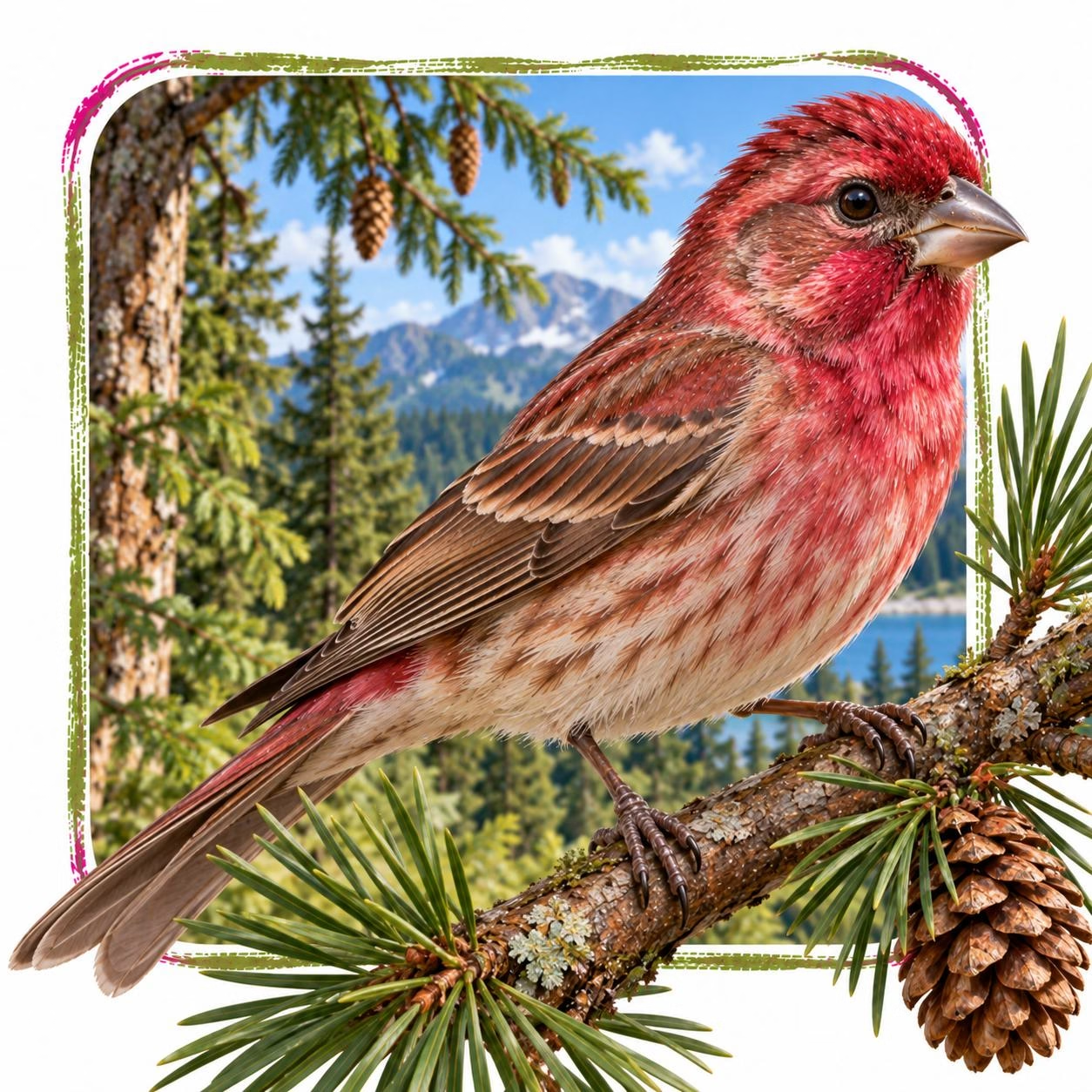
Purple Finch in its natural Coniferous and mixed forest, moist woodland, forest edges, orchards, shrubby openings, parks, gardens, and winter feeding areas habitat