
Red Deer Facts for Kids
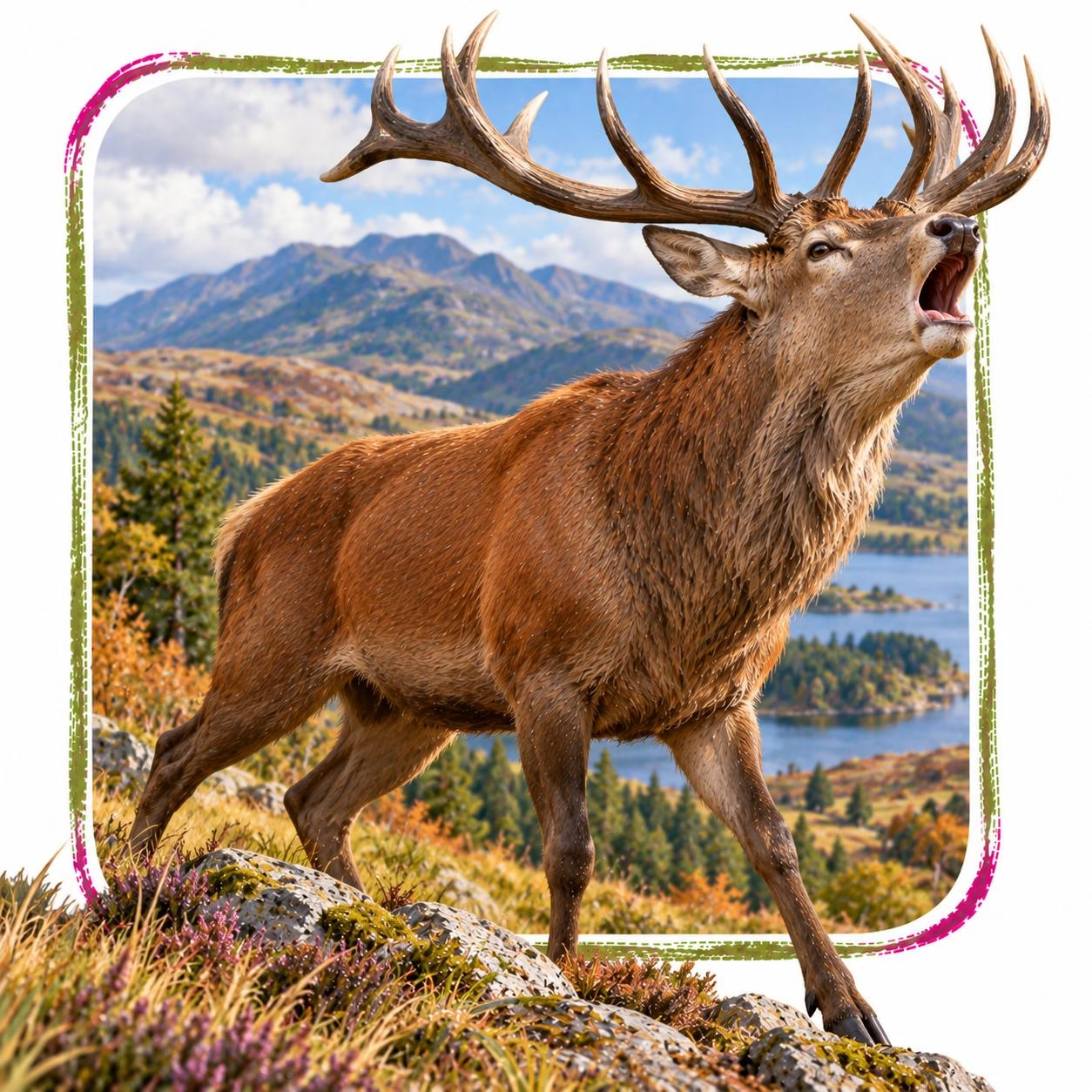
The red deer, Cervus elaphus, is one of the world’s largest deer species. Native populations live across much of Europe and parts of western Asia and North Africa, while people have introduced red deer to several other regions. Adult males are called stags or harts, females are hinds, and young are calves. Their famous autumn roars echo through woodland, grassland, moor, and mountain valleys.
Quick Red Deer Facts
- Scientific Name: Cervus elaphus
- Animal Type: Mammal and true deer
- Family: Cervidae
- Male: Stag or hart
- Female: Hind
- Young: Calf
- Known For: Large branching antlers on males and loud autumn roars
- Native Range: Europe, western Asia, and parts of North Africa
- Diet: Grasses, herbs, leaves, shoots, bark, fruit, seeds, and other plant foods
- Conservation: Globally Least Concern, with some regional populations and subspecies needing special protection
What You’ll Learn
Explore 10 majestic red deer facts for kids about large antlers, roaring calls, herd life, seasonal coats, and forest habitats, with a quiz, glossary, and activity
Easy explanations make them great for children, families, teachers, and young wildlife explorers.
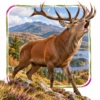
10 Fun Red Deer Facts for Kids
1. Red Deer Are Different From Elk
Red deer are Cervus elaphus. The closely related North American and eastern Asian elk or wapiti is now generally classified as a separate species, Cervus canadensis, although older books sometimes grouped them together.
Kid Decode: Modern taxonomy gives red deer and wapiti separate scientific names.
2. Coats Change With the Seasons
A red deer often wears a reddish-brown summer coat and a thicker gray-brown winter coat. A pale rump patch helps herd members follow one another through dim vegetation.
Kid Decode: The red in red deer is easiest to see in the summer coat.
3. Stags Grow New Antlers Each Year
Antlers are bone, not permanent horns. A stag sheds its old antlers, grows a new set covered in soft velvet, then rubs away the dried velvet after the bone has hardened.
Kid Decode: A stag can rebuild a huge bony crown every year.
4. Velvet Feeds Fast-Growing Bone
Antler velvet is living skin rich in blood vessels and nerves. It supplies oxygen and nutrients while the antler grows, so a damaged velvet antler can bleed and is sensitive.
Kid Decode: A growing antler is alive and sensitive before it becomes hard bare bone.
5. Autumn Is Rutting Season
During the rut, mature stags roar, scent-mark, display, and guard groups of receptive hinds. Rival males assess one another, and evenly matched stags may push antlers in a strength contest.
Kid Decode: A deep roar can advertise a stag before rivals even see him.
6. Herds Often Separate by Sex
For much of the year, hinds and young may form groups apart from adult males. Herd size changes with season, habitat, food, weather, disturbance, and local population density.
Kid Decode: A deer herd is flexible, not one permanent family marching everywhere together.
7. They Graze and Browse
Red deer eat grasses and herbs but also browse leaves, twigs, shoots, bark, fruit, acorns, and other plant material. The exact menu changes with habitat and season.
Kid Decode: A red deer can mow grass and nibble tree shoots with the same mouth.
8. Plant Food Gets a Second Chew
Like cattle and sheep, red deer are ruminants. Microbes in a multi-chambered stomach begin breaking down tough plants, and the deer later brings up cud to chew again.
Kid Decode: Chewing cud helps a deer unlock energy hidden in fibrous plants.
9. Calves Begin With Spots
A hind usually gives birth away from the main herd and hides her newborn calf in cover. The calf’s pale spots break up its outline in dappled light and fade as it grows.
Kid Decode: A still, spotted calf can blend into sun-speckled grass and leaves.
10. People Can Help or Harm Populations
Red deer are globally Least Concern, but roads, fences, hunting, habitat change, genetic mixing, and disturbance can affect local herds. Where introduced or overly abundant, deer can also overbrowse vegetation and require careful management.
Kid Decode: Conservation may mean protecting a rare herd or managing an oversized one, depending on the place.
The Weirdest Red Deer Fact
A stag grows and discards an entire set of solid bony antlers again and again. While growing, the antlers are warm, sensitive, and wrapped in velvet; after they harden, the velvet dies and is rubbed away before the autumn rut.
Try This Red Deer Activity
Make an Antler Year Wheel
Divide a paper circle into four seasons. Draw a stag after antler shedding, with soft velvet antlers growing, with hardened clean antlers during the rut, and with antlers after winter. Add a hind and spotted calf in the correct season for your chosen region, plus labels for bone, velvet, roar, graze, browse, and cud.
Quick Red Deer Quiz
- What is a male red deer called? Answer: A stag or hart.
- What is a female called? Answer: A hind.
- Are antlers permanent horns? Answer: No; they are bone and are shed and regrown.
- What happens during the rut? Answer: Stags roar, display, compete, and seek mates.
- Why are young calves spotted? Answer: The pattern helps camouflage them.
Mini Glossary
- Stag: An adult male red deer.
- Hind: An adult female red deer.
- Antler: A bony growth that is normally shed and regrown.
- Velvet: Blood-rich skin covering a growing antler.
- Rut: The seasonal period of courtship, competition, and mating.
 Falcon Facts for Kids
 Hamster Facts for Kids
 Mockingbird Facts for Kids
 Edaphosaurus Facts for Kids
More Animal Facts for Kids
Visit the full animal facts library or explore a focused animal group.
More Extinct Animal Facts for Kids
Discover dinosaurs, Ice Age giants, prehistoric sea creatures, recently extinct species, and other animals from the past.
Fact check note: Fact checked against the IUCN Red List account for Cervus elaphus; the Mammal Diversity Database; British Deer Society and Forestry England guidance; Animal Diversity Web; and peer-reviewed deer ecology and management references. Taxonomy, native and introduced range, coat, antlers and velvet, rut behavior, herd structure, diet, rumination, calves, management, and global Least Concern status were cross-checked.

Red Deer in its natural Woodland, forest edge, grassland, heath, moorland, scrub, mountain valleys, and open uplands habitat