
Red Kangaroo Facts for Kids
The red kangaroo, Osphranter rufus, is the largest living marsupial and Australia’s largest native land mammal. It roams open country across much of the dry interior. Adult males are usually rusty red, while females are often blue-gray or brown, although color varies. Enormous hind feet, springy legs, and a muscular tail make this grazing mammal superbly suited to long journeys between scattered food and water.
Quick Red Kangaroo Facts
- Scientific Name: Osphranter rufus; formerly widely called Macropus rufus
- Animal Type: Mammal, marsupial, and macropod
- Size: The largest living marsupial; big males can stand taller than many adults
- Known For: Powerful hopping, huge hind feet, muscular tail, pouch-raised joeys, and reddish adult males
- Range: Dry and semi-dry inland Australia
- Habitat: Open plains, grassland, shrubland, woodland, and desert-edge country
- Diet: Mainly grasses and other green plants
- Group: Mob
- Young: Joey
- Conservation: Globally Least Concern; numbers naturally rise after rain and fall during drought
What You’ll Learn
Learn 10 giant red kangaroo facts for kids about powerful legs, huge hops, pouches, joeys, and life in dry Australia, plus a quiz, glossary, and activity
These simple facts are written for kids, parents, teachers, and curious young minds.
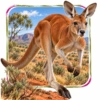
10 Fun Red Kangaroo Facts for Kids
1. It Is the Largest Living Marsupial
A large adult male red kangaroo can weigh several times as much as a female and may stand taller than a person when upright. Females are much smaller, making the species strongly different in size between the sexes.
Kid Decode: The biggest living pouch mammal is a grass eater from inland Australia.
2. Red Is Not the Only Coat Color
Mature males often have rusty red fur, especially on the shoulders and chest. Females commonly appear blue-gray or brown, and individuals vary with sex, age, region, dust, and light.
Kid Decode: A red kangaroo can be gray, brown, or only partly red.
3. Hopping Recycles Energy
When a kangaroo lands, long elastic tendons in its legs stretch and store energy. They release much of that energy into the next bound, making steady high-speed travel more efficient than starting each jump from scratch.
Kid Decode: Its legs work a little like giant biological springs.
4. The Tail Becomes a Fifth Limb
At slow speed, a red kangaroo plants its forelimbs and muscular tail, then swings both hind feet forward. The tail pushes against the ground and supports the body, acting as a powerful fifth limb.
Kid Decode: During a slow crawl, the tail does more propelling work than either front leg.
5. Hind Legs Move Together in a Hop
The enormous hind legs and long feet push off together during normal hopping. A red kangaroo steers and balances with its tail while the body rises and falls in long bounds across open ground.
Kid Decode: Two giant feet launch like one matched spring system.
6. A Newborn Joey Is Tiny
After a very short pregnancy, the blind, hairless newborn crawls through the mother’s fur to her forward-opening pouch. It attaches to a teat and continues developing safely inside.
Kid Decode: A future giant begins life only about the size of a jelly bean.
7. An Embryo Can Pause
A female can delay the development of a new embryo through embryonic diapause while another joey occupies the pouch or harsh conditions make raising young difficult. Development can resume when signals change.
Kid Decode: A red kangaroo can put the earliest stage of pregnancy on hold.
8. One Mother Can Make Different Milk
A female may nurse an older young kangaroo outside the pouch while a younger joey drinks from another teat. Her mammary glands can produce milk with different compositions suited to the youngsters’ different stages.
Kid Decode: Two teats can serve two ages with two different milk recipes at once.
9. Groups Are Called Mobs
Red kangaroos gather in flexible social groups called mobs, often with females, young, and one or more males. Membership and size change as animals move toward fresh grass, water, shade, or safety.
Kid Decode: A mob is a changing neighborhood, not a fixed lifelong team.
10. Males Wrestle and Kick
Males spar by gripping with their forelimbs, balancing on the tail, and kicking with powerful hind feet. Serious contests can help determine access to mates, while younger males also practice through play fighting.
Kid Decode: A tail-supported kick is real kangaroo combat, not boxing with gloves.
The Weirdest Red Kangaroo Fact
At a slow walking pace, a red kangaroo uses its tail as a weight-bearing fifth limb. It braces on its forelimbs and tail, swings both hind legs forward, and then pushes ahead—so the tail is part prop, part leg, and part engine.
Try This Red Kangaroo Activity
Test a Kangaroo Spring
Make two folded-paper springs of different lengths and gently press and release them to compare stored energy. Then draw a red kangaroo in two movement poses: hopping with both hind feet together and moving slowly with forelimbs and tail planted. Label tendons, hind feet, tail, balance, stored energy, and fifth limb.
Quick Red Kangaroo Quiz
- What is the red kangaroo’s current scientific name? Answer: Osphranter rufus.
- What is a kangaroo group called? Answer: A mob.
- How does the tail help during slow movement? Answer: It supports and pushes the body like a fifth limb.
- Where does a newborn joey continue growing? Answer: Attached to a teat inside the pouch.
- What is embryonic diapause? Answer: A pause in an embryo’s development.
Mini Glossary
- Marsupial: A mammal whose very undeveloped young usually continue growing attached to a teat, often in a pouch.
- Macropod: A member of the big-footed kangaroo family Macropodidae.
- Joey: A young kangaroo or other marsupial.
- Mob: A social group of kangaroos.
- Embryonic diapause: A temporary pause in an embryo’s development.
 Hercules Beetle Facts for Kids
 Bengal Tiger Facts for Kids
 Colossal Squid Facts for Kids
 Mussaurus Facts for Kids
More Animal Facts for Kids
Visit the full animal facts library or explore a focused animal group.
More Extinct Animal Facts for Kids
Discover dinosaurs, Ice Age giants, prehistoric sea creatures, recently extinct species, and other animals from the past.
Fact check note: Fact checked against Australian Museum and Australian government kangaroo resources; New South Wales Department of Climate Change, Energy, the Environment and Water materials using Osphranter rufus; the IUCN Red List; Animal Diversity Web; and peer-reviewed studies of kangaroo locomotion, tail propulsion, reproduction, lactation, and ecology. Taxonomy, size, color, habitat, diet, movement, joey development, diapause, milk, social groups, behavior, population fluctuations, and Least Concern status were cross-checked.

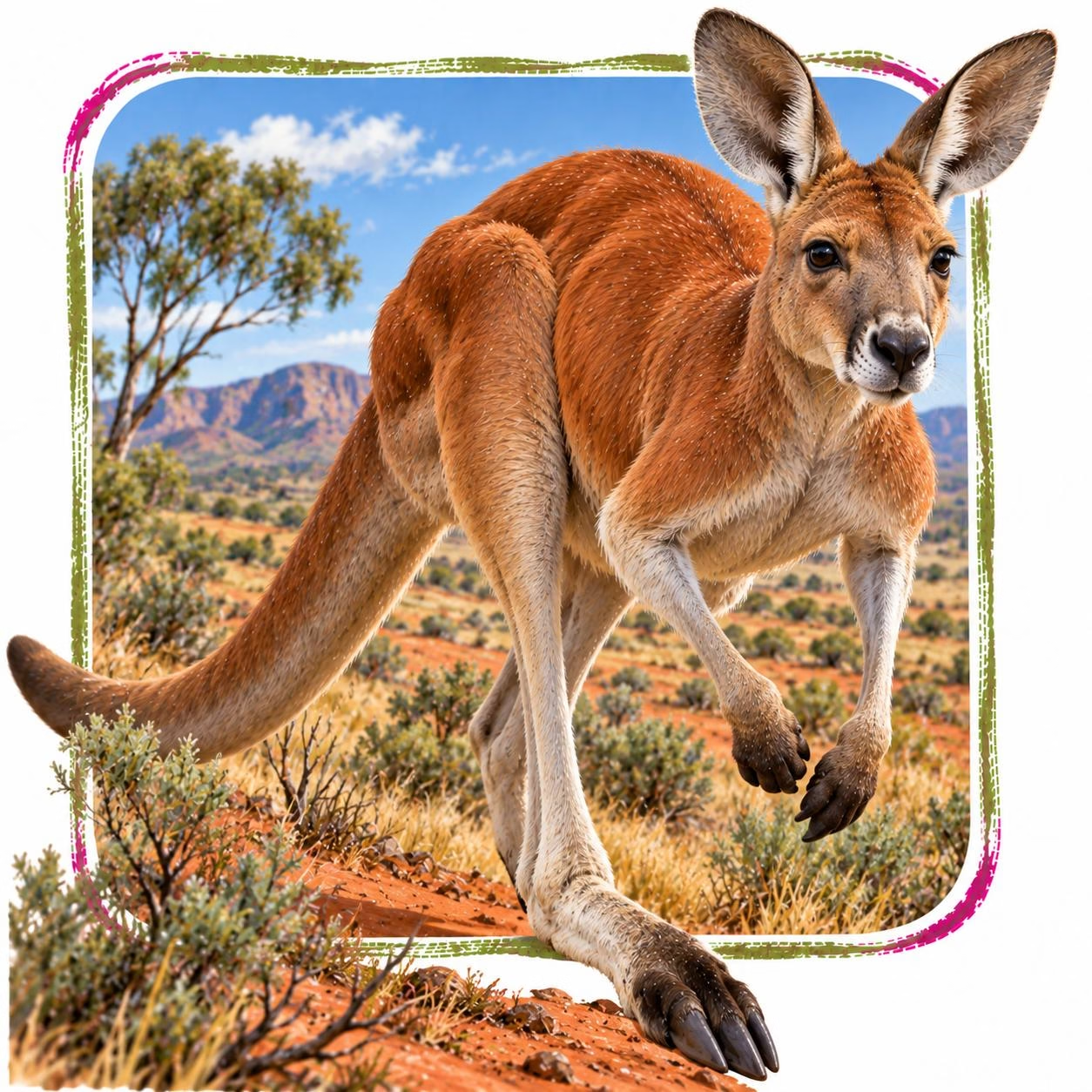
Red Kangaroo in its natural Arid and semi-arid open plains, grasslands, shrublands, savannas, open woodland, and desert-edge country habitat