
Ring-Tailed Lemur Facts for Kids
Ring-tailed lemurs are Madagascar primates famous for long black-and-white striped tails, bright eyes, and lively social groups. They spend more time on the ground than many lemurs and live in dry forests, rocky areas, and scrubby habitats.
Quick Ring-Tailed Lemur Facts
- Animal Type: Mammal
- Group: Primate and lemur
- Known For: Black-and-white striped tail
- Habitat: Dry forests, gallery forests, scrublands, rocky areas, and spiny forest habitats in Madagascar
- Diet: Fruit, leaves, flowers, bark, sap, herbs, insects, and other small foods
What You’ll Learn
Discover 10 amazing ring-tailed lemur facts for kids about striped tails, sunbathing, scent marking, groups, and Madagascar, with a quiz, glossary, and activity
These simple facts are made for kids, parents, teachers, and curious little fact-hunters.
10 Fun Ring-Tailed Lemur Facts for Kids
1. Ring-Tailed Lemurs Are Primates
Ring-tailed lemurs are primates and members of the lemur family. They are native to Madagascar.
Kid Decode: A ring-tailed lemur is a striped-tail island acrobat.
2. They Have Striped Tails
Ring-tailed lemurs are famous for long tails with bold black-and-white rings.
Kid Decode: The tail looks like a fuzzy zebra scarf.
3. The Tail Is Not Prehensile
Unlike spider monkeys, ring-tailed lemurs cannot grip branches with their tails. The tail helps with balance and signaling.
Kid Decode: It is a flag, not a hand.
4. Ring-Tailed Lemurs Live in Troops
Ring-tailed lemurs live in social groups called troops. Troops include adults and young lemurs.
Kid Decode: A troop is a busy lemur neighborhood.
5. Females Often Lead
In ring-tailed lemur troops, females are usually dominant over males, which is unusual among many mammals.
Kid Decode: The lemur queens run the tail-striped town.
6. Baby Ring-Tailed Lemurs Are Infants
Baby ring-tailed lemurs are called infants. They cling to their mothers at first and later ride on the back.
Kid Decode: A lemur infant starts life as a furry backpack passenger.
7. They Like Sunbathing
Ring-tailed lemurs often sit upright with arms open to warm themselves in the sun.
Kid Decode: They look like tiny forest yoga experts.
8. They Use Scent Marks
Ring-tailed lemurs use scent glands to mark places and communicate with other lemurs.
Kid Decode: To a lemur, smell can be a message board.
9. They Eat Plants and Small Foods
Ring-tailed lemurs eat fruit, leaves, flowers, bark, sap, herbs, and sometimes insects.
Kid Decode: Their lunch is a Madagascar mixed plate.
10. Ring-Tailed Lemurs Need Protection
Ring-tailed lemurs are threatened by habitat loss, hunting, and drought. Conservation helps protect their homes.
Kid Decode: Protecting Madagascar keeps the striped tails waving.
The Weirdest Ring-Tailed Lemur Fact
Ring-tailed lemurs sometimes sit upright with arms spread wide, soaking up sunshine like tiny fuzzy solar panels.
Try This Ring-Tailed Lemur Activity
Ring-Tailed Lemur Drawing Activity
Draw a ring-tailed lemur sunbathing on a warm rock. Add a black-and-white striped tail, bright eyes, long fingers, dry forest plants, fruit, and an infant riding nearby.
Quick Ring-Tailed Lemur Quiz
- Where do ring-tailed lemurs live naturally? Answer: Madagascar.
- What are ring-tailed lemurs famous for? Answer: Black-and-white striped tails.
- Can their tails grip branches? Answer: No.
- What are baby ring-tailed lemurs called? Answer: Infants.
- What is a lemur social group called? Answer: A troop.
Mini Glossary
- Primate: A mammal group that includes lemurs, monkeys, apes, and humans.
- Infant: A baby primate.
- Troop: A social group of lemurs or monkeys.
- Scent Mark: A smell left by an animal to communicate.
- Habitat Loss: When an animal’s natural home is damaged or disappears.
 Freshwater Eel Facts for Kids
 Betta Fish Facts for Kids
 Giant Squid Facts for Kids
 Pikaia Facts for Kids
More Animal Facts for Kids
Visit the full animal facts library or explore a focused animal group.
More Extinct Animal Facts for Kids
Discover dinosaurs, Ice Age giants, prehistoric sea creatures, recently extinct species, and other animals from the past.
Fact check note: Fact checked with Britannica ring-tailed lemur resources, Britannica lemur resources, and trusted primate conservation references.

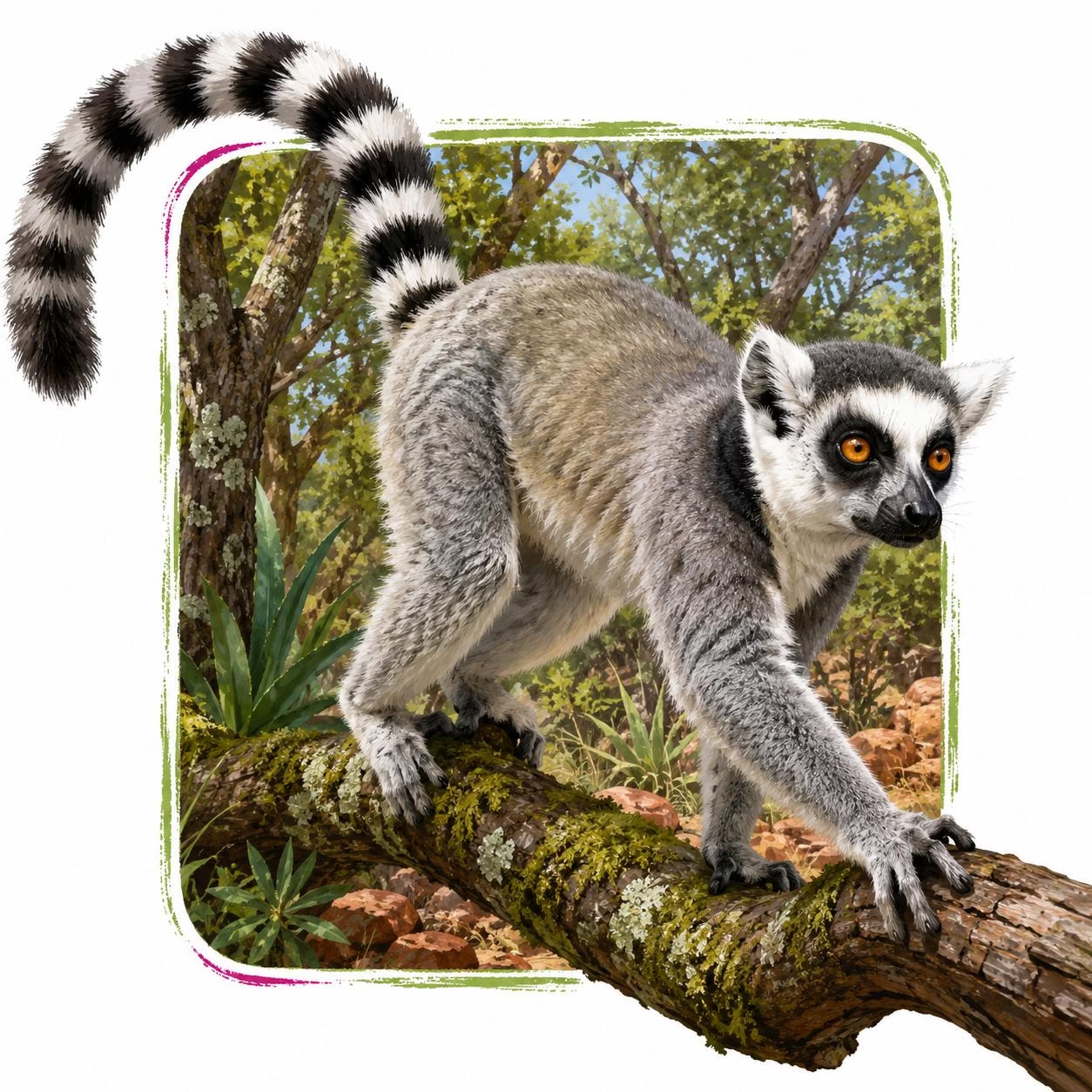
Ring-Tailed Lemur in its natural Forests habitat