
Roan Antelope Facts for Kids
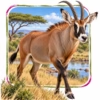
The roan antelope, Hippotragus equinus, is one of Africa’s largest antelopes. Its horse-like build inspired the scientific name equinus, while its common name refers to its reddish or sandy roan coat. A bold black-and-white face mask, very long tasseled ears, an upright mane, and backward-curving horns make this savanna grazer easy to recognize.
Quick Roan Antelope Facts
- Scientific Name: Hippotragus equinus
- Animal Type: Mammal, bovid, and antelope
- Family: Bovidae
- Size: One of the largest antelopes, often about 1.3–1.6 metres at the shoulder
- Known For: Horse-like shape, roan coat, black-and-white mask, tasseled ears, mane, and arched horns
- Range: Scattered populations across western, central, eastern, and southern Africa
- Habitat: Savanna woodland, open grassland, floodplain, and lightly wooded country near water
- Diet: Mainly grasses, with some leaves and shoots
- Young: Usually one calf
- Conservation: Globally Least Concern, but decreasing, fragmented, and regionally extinct in parts of its former range
What You’ll Learn
Explore 10 impressive roan antelope facts for kids about curved horns, bold face markings, herd life, grazing, and African savannas, with a quiz, glossary, and activity
Easy explanations make them fun for children, families, teachers, and young nature explorers.
10 Fun Roan Antelope Facts for Kids
1. The Scientific Name Means Horse-Like
Hippotragus combines words linked to horse and goat, while equinus means horse-like. The long face, thick neck, mane, sturdy body, and powerful running legs help explain the comparison.
Kid Decode: This antelope carries a horse clue in its scientific name.
2. A Face Mask Makes It Recognizable
Dark markings cover the forehead and muzzle and frame pale areas around the eyes and mouth. Males usually have a darker, more strongly contrasting mask than females.
Kid Decode: Its black-and-white face looks painted for a savanna performance.
3. Long Ears Listen Above the Grass
Very long upright ears carry dark tufts at their tips and swivel toward sounds. Combined with sharp sight and smell, they help a wary roan detect predators and signals from herd mates.
Kid Decode: Those tasseled ears work like furry direction finders.
4. Both Sexes Carry Curved Horns
Males and females grow permanent ringed horns that rise and sweep backward. Male horns are usually thicker and longer, but a female’s horns are also strong defensive tools.
Kid Decode: A roan mother can carry an impressive horn pair too.
5. They Can Run About 55 Kilometres per Hour
Long legs and a strong body help a roan antelope gallop quickly across open ground when threatened. It relies on alertness, group warnings, speed, and its horns rather than on just one defense.
Kid Decode: This heavyweight antelope can sprint about as fast as a city car.
6. Fresh Grass Is the Main Food
Roan antelopes are primarily grazers that prefer medium-height grasses and tender new growth. They may browse leaves and shoots, especially when grass quality changes during the dry season.
Kid Decode: A roan can trim the savanna with broad sweeping bites.
7. They Stay Within Reach of Water
Roan antelopes need regular access to drinking water and often occupy grasslands or open woodlands near rivers, pans, and floodplains. Seasonal movement helps them follow good grazing and reliable water.
Kid Decode: A patch of grass is more useful when a drinking place is not too far away.
8. Herds Have a Social Order
Females and young form herds with a dominance hierarchy, often guided by an experienced female. A territorial adult male may guard access to the group, while other males live alone or in bachelor groups.
Kid Decode: A roan herd may have a leading female and a guarding male.
9. A New Calf Hides at First
A mother leaves the herd to give birth, usually to one calf. The newborn remains concealed in vegetation for its earliest weeks while the mother returns to nurse, then joins other young in the herd.
Kid Decode: The tall grass becomes a spotted-free calf’s first hiding room.
10. Global Status Can Hide Local Losses
The roan antelope is globally Least Concern, yet numbers are decreasing and many populations are small or isolated. Habitat conversion, hunting, livestock pressure, drought, disease, and blocked wildlife corridors create regional declines.
Kid Decode: A species may cover much of Africa on a map but survive only in scattered patches.
The Weirdest Roan Antelope Fact
When cornered, a roan antelope may drop onto its knees and sweep its long backward-curving horns toward an attacker. Even lions must be cautious around this large, powerful antelope, although running away is usually the safer first choice.
Try This Roan Antelope Activity
Build a Roan Savanna Route
Draw two protected grasslands separated by farms and a road. Add a river, seasonal water pan, tall-grass calf shelter, fresh grazing, and a wide wildlife corridor. Move a paper herd between food and water without crossing dangerous areas, then label the ears, mask, mane, horns, hooves, and one protection idea.
Quick Roan Antelope Quiz
- What does equinus suggest about the roan antelope? Answer: It looks horse-like.
- Do females grow horns? Answer: Yes.
- What does a roan mainly eat? Answer: Grass.
- Why does it usually live near water? Answer: It needs to drink regularly.
- What is its global conservation category? Answer: Least Concern, although populations are decreasing.
Mini Glossary
- Bovid: A hoofed mammal in the cattle, goat, sheep, and antelope family Bovidae.
- Grazer: An animal that feeds mainly on grasses.
- Roan: A reddish, sandy, or gray-brown coat color mixed with paler hairs.
- Hierarchy: A social ranking within a group.
- Wildlife corridor: Connected habitat that animals can use to travel safely between areas.
 Bittern Facts for Kids
 Burmese Python Facts for Kids
 Quail Facts for Kids
 Palaeomastodon Facts for Kids
More Animal Facts for Kids
Visit the full animal facts library or explore a focused animal group.
More Extinct Animal Facts for Kids
Discover dinosaurs, Ice Age giants, prehistoric sea creatures, recently extinct species, and other animals from the past.
Fact check note: Fact checked against the IUCN Red List assessment for Hippotragus equinus; Mammal Diversity Database; African Wildlife Foundation; San Diego Zoo Wildlife Alliance; Animal Diversity Web and authoritative African antelope references. Taxonomy, name meaning, measurements, coat and face markings, ears, horns, speed, diet, water dependence, habitat, herd structure, calves, range, threats, population trend, and global Least Concern status were cross-checked.

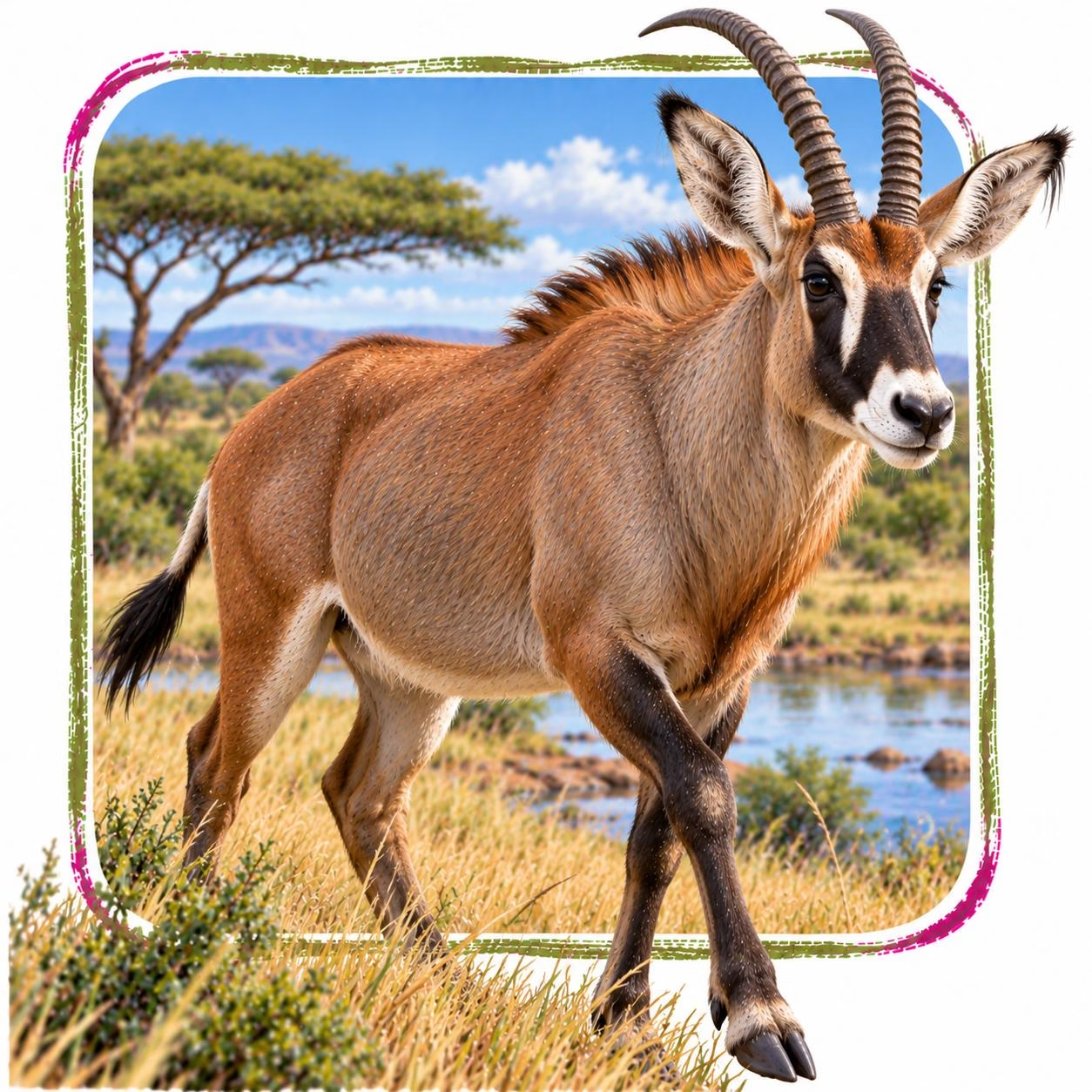
Roan Antelope in its natural Savanna woodland, open grassland, wooded grassland, floodplain, seasonal pans, and lightly wooded country near water habitat