
Salp Facts for Kids
Salps are transparent, barrel-shaped ocean animals in the tunicate group. They may resemble jellyfish, but they are chordates and are more closely related to animals with backbones than to true jellyfish. A salp draws water through its body to collect tiny food and then squirts the water out, so one simple system provides both dinner and jet-powered travel.
Quick Salp Facts
- Scientific Group: Family Salpidae in the tunicate class Thaliacea
- Animal Type: Marine invertebrate, tunicate, chordate, and gelatinous zooplankton
- Body: Soft, transparent, hollow, and barrel-shaped, with a visible dark or orange-brown gut
- Size: Varies by species; individual salps range from tiny forms to animals several centimetres long
- Range: Open oceans worldwide, from warm seas to polar waters
- Habitat: Sunlit and deeper layers of the open ocean
- Diet: Phytoplankton, bacteria, and other suspended organic particles filtered from seawater
- Movement: Jet propulsion made by contracting the body and pumping water
- Life Cycle: Alternates between solitary and chain-forming generations
- Conservation: Salp is a group of many species, so there is no single conservation category for all salps
What You’ll Learn
Discover 10 unusual salp facts for kids about transparent bodies, jet propulsion, filter feeding, ocean chains, and drifting through open water, plus a quiz, glossary, and activity
These facts are explained simply for kids, parents, teachers, and curious little fact-finders.
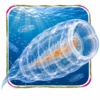
10 Fun Salp Facts for Kids
1. Salps Are Not Jellyfish
A salp has a clear, jelly-like body, but it is a tunicate rather than a cnidarian. Tunicates belong to Chordata, the same broad animal group that includes vertebrates, although an adult salp has no backbone.
Kid Decode: A salp looks jelly-like but sits on the chordate branch of the animal family tree.
2. Their Bodies Work Like Pumps
Bands of muscle squeeze a salp’s barrel-shaped body. Water enters through one opening and leaves through another, pushing the animal forward by jet propulsion while helping it breathe and feed.
Kid Decode: One stream of water powers movement, breathing, and feeding.
3. A Mucus Net Catches Tiny Food
Inside the body, a delicate mucus mesh filters phytoplankton, bacteria, and organic particles from seawater. Cilia move the food-loaded sheet toward the digestive system, where the compact gut is often easy to see.
Kid Decode: A salp carries a nearly invisible food net inside its transparent body.
4. They Can Form Long Chains
One stage of the life cycle buds off genetically matching salps that remain joined in a chain. Each barrel in the chain is an individual animal called a zooid, not one segment of a single giant creature.
Kid Decode: A long salp chain is a traveling group of many little animals.
5. Two Generations Take Turns
A solitary oozoid produces a chain asexually by budding. The chain’s aggregate zooids reproduce sexually and release young that grow into new solitary salps, creating an alternating life cycle.
Kid Decode: A lone salp makes a chain, and the chain makes new loners.
6. Some Change Sex as They Mature
In many salp species, chain-forming individuals mature first as females and later function as males. This sequential hermaphroditism can reduce self-fertilization within a developing chain.
Kid Decode: Some salps begin adult life producing eggs and later produce sperm.
7. Salp Blooms Can Grow Quickly
When currents, temperature, and phytoplankton are favorable, fast reproduction can produce enormous swarms called blooms. A bloom may cover a wide ocean area and provide food for many predators.
Kid Decode: A few salps can become a drifting crowd when the ocean buffet is right.
8. They Travel Up and Down
Many salps join daily vertical migrations, feeding nearer the surface at night and sinking deeper by day. Species, age, season, food, light, and predators all influence the timing and depth.
Kid Decode: A salp may make an elevator-like ocean journey every day.
9. Salps Feed Other Animals
Fish, sea turtles, seabirds, and other ocean predators eat salps despite their watery bodies. Salp blooms can therefore redirect plankton energy through marine food webs.
Kid Decode: A clear, squishy salp can still be an important ocean meal.
10. They Carry Carbon Downward
Salps produce dense fecal pellets that can sink quickly, and their bodies also fall when they die. This helps move carbon from surface waters toward the deep ocean as part of the biological carbon pump.
Kid Decode: A salp’s sinking waste can deliver surface carbon to the deep sea.
The Weirdest Salp Fact
A salp can clone a long chain from its body, but the next generation uses sexual reproduction. The life cycle therefore switches between a solitary parent that buds and a linked generation that produces the next solitary salps.
Try This Salp Activity
Build a Salp Life-Cycle Chain
Cut paper into one large solitary salp and eight small transparent barrel shapes. Link the small salps into a chain, draw arrows for water flow and jet propulsion, and add phytoplankton dots caught by a mucus mesh. Arrange the pieces in a circle showing solitary budding, chain growth, sexual reproduction, and a new solitary young salp.
Quick Salp Quiz
- Is a salp a jellyfish? Answer: No, it is a tunicate and chordate.
- How does a salp move? Answer: By pumping water for jet propulsion.
- What does its mucus mesh catch? Answer: Phytoplankton, bacteria, and other tiny particles.
- Is a salp chain one giant animal? Answer: No, it contains many individual zooids.
- How can salps move carbon deeper? Answer: Their fecal pellets and dead bodies sink.
Mini Glossary
- Tunicate: A marine chordate whose body is covered by a flexible outer tunic.
- Zooplankton: Animals and animal-like drifters carried largely by currents.
- Jet propulsion: Forward movement made by forcing fluid backward.
- Zooid: One individual animal within a connected colony or chain.
- Carbon pump: Ocean processes that move carbon from surface water into deeper layers.
 Maned Wolf Facts for Kids
 Proboscis Monkey Facts for Kids
 Lorikeet Facts for Kids
 Cladoselache Facts for Kids
More Animal Facts for Kids
Visit the full animal facts library or explore a focused animal group.
More Extinct Animal Facts for Kids
Discover dinosaurs, Ice Age giants, prehistoric sea creatures, recently extinct species, and other animals from the past.
Fact check note: Fact checked against Smithsonian Ocean salp resources; Encyclopaedia Britannica tunicate references; Woods Hole Oceanographic Institution and Australian Antarctic Program materials; and peer-reviewed research on salp filtration, life cycles, blooms, vertical migration, food webs, fecal-pellet sinking, and the biological carbon pump. Classification, anatomy, jet propulsion, diet, zooid chains, alternating generations, sequential hermaphroditism, worldwide range, and ecological roles were cross-checked.

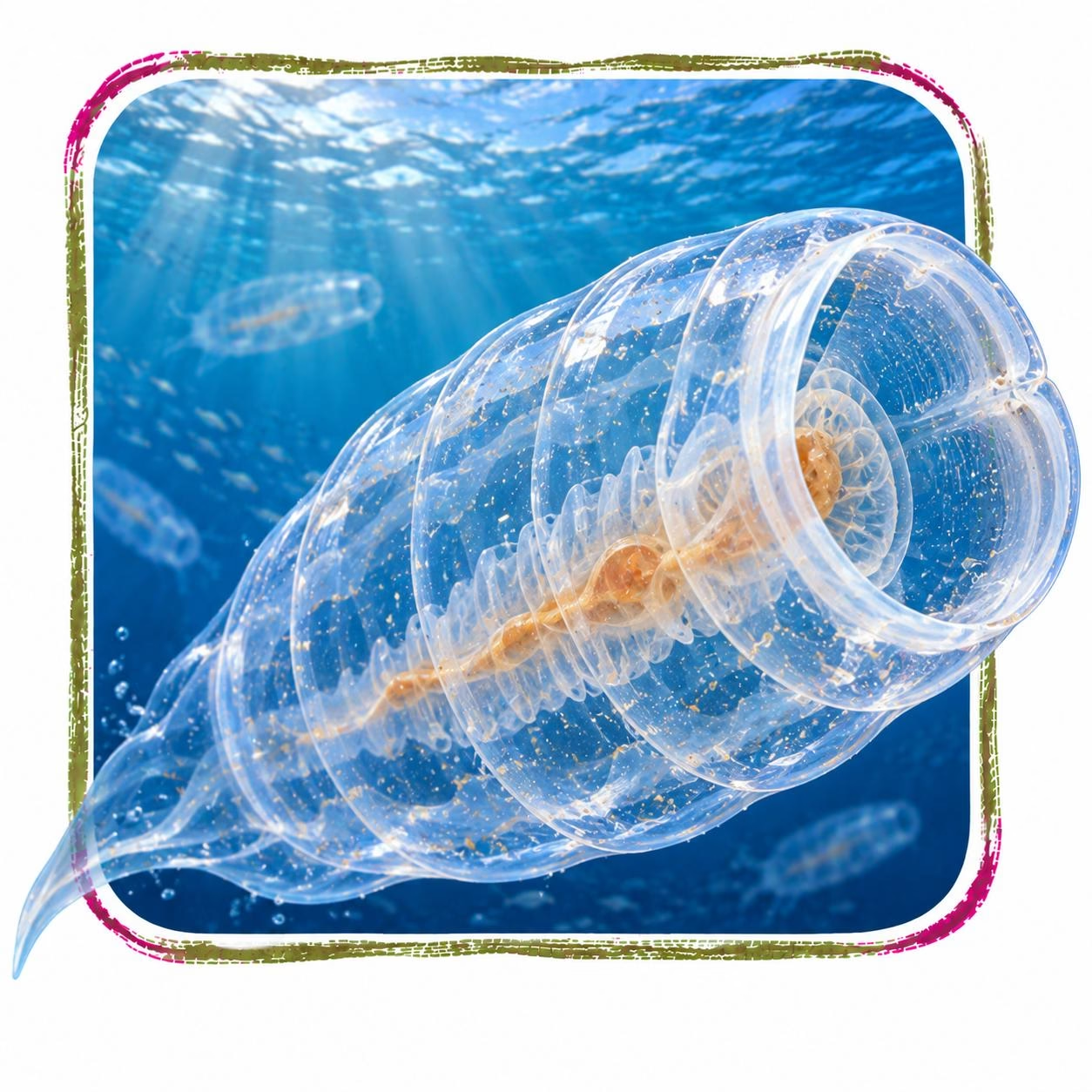
Salp in its natural Open-ocean surface waters and deeper pelagic layers in tropical, temperate, and polar seas worldwide habitat