
Saltwater Crocodile Facts for Kids
The saltwater crocodile, Crocodylus porosus, is the largest living reptile. It inhabits rivers, wetlands, mangroves, estuaries, coasts, and nearby seas from South Asia through Southeast Asia to northern Australia and western Pacific islands. This powerful ambush predator can tolerate salt water, cross long ocean distances, and disappear almost completely beneath a shallow surface.
Quick Saltwater Crocodile Facts
- Scientific Name: Crocodylus porosus
- Animal Type: Reptile and crocodilian
- Family: Crocodylidae
- Size: Large adult males commonly reach about 5 metres; exceptional verified or well-supported individuals approach 6–7 metres
- Known For: Huge size, armored scales, powerful bite, stealth, salt tolerance, and long-distance travel
- Range: Eastern India and Sri Lanka through Southeast Asia to northern Australia and western Pacific islands
- Habitat: Rivers, floodplains, freshwater swamps, mangroves, estuaries, tidal creeks, coasts, and sea passages
- Diet: Carnivorous; prey changes from insects and small aquatic animals to fish, reptiles, birds, and mammals
- Young: Hatchlings emerge from eggs in a guarded mound nest
- Conservation: Globally Least Concern, but abundance and protection vary greatly across its range
What You’ll Learn
Explore 10 enormous saltwater crocodile facts for kids about massive size, powerful jaws, swimming, hunting, and coastal habitats, with a quiz, glossary, and activity
Easy explanations make them great for children, families, teachers, and young reptile explorers.
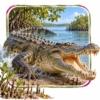
10 Fun Saltwater Crocodile Facts for Kids
1. It Is the Largest Living Reptile
Adult males grow much larger than females and can commonly reach around 5 metres in regions with healthy populations. Six-metre giants are rare, and reports far beyond 7 metres usually lack reliable measurement.
Kid Decode: A very large male can be longer than a family car.
2. Tongue Glands Remove Extra Salt
Special glands on the tongue release excess salt from the blood. These efficient salt glands let the crocodile use brackish and marine habitats, although fresh water remains important.
Kid Decode: A salty crocodile carries desalination glands in its tongue.
3. Ocean Currents Help Long Journeys
Saltwater crocodiles can travel along coasts and cross broad sea channels. Tracking studies show that they time some movements with favorable tides and currents, saving energy during long swims.
Kid Decode: A crocodile can ride an ocean current like a living raft with a tail.
4. Its Head Is Built for Ambush
Eyes, ears, and nostrils sit high on the head, allowing a crocodile to watch, hear, and breathe while most of its body stays hidden. Pressure-sensing organs around the jaws detect tiny water movements.
Kid Decode: A few bumps above the water may be an entire crocodile watching.
5. The Bite Is Record-Breaking
Direct tests on crocodilians found the highest measured bite forces in large saltwater crocodiles, exceeding 16,000 newtons in the biggest tested animals. Conical teeth grip and hold prey rather than chewing it into small pieces.
Kid Decode: Its jaws can deliver one of the strongest bites ever directly measured in a living animal.
6. Teeth Keep Getting Replaced
Each tooth sits above replacement teeth that can grow in after loss. A crocodile may cycle through thousands of teeth over a lifetime, keeping a useful set of pointed gripping tools.
Kid Decode: A lost crocodile tooth has a replacement waiting below.
7. Young and Adults Eat Differently
Hatchlings catch insects, crustaceans, frogs, and small fish. As crocodiles grow, they can tackle larger fish, turtles, birds, pigs, deer, and other mammals, while still taking smaller prey when convenient.
Kid Decode: The menu expands as the hunter grows.
8. A Mound Protects the Eggs
A female piles leaves, grass, mud, and soil into a nest mound and often lays around 50 eggs. She guards the area, listens for hatchling calls, opens the nest, and may carry babies gently in her jaws.
Kid Decode: The same jaws that seize prey can lift a tiny hatchling without crushing it.
9. Nest Temperature Affects Sex
Crocodilian embryos do not use sex chromosomes in the same way humans do. Temperatures during a sensitive part of incubation strongly influence whether hatchlings develop as males or females.
Kid Decode: Warmth inside the nest helps decide the hatchlings’ sex.
10. People Must Keep Far Away
Saltwater crocodiles are dangerous wild predators that can hide in very shallow water. People in crocodile country should obey warning signs, avoid the water’s edge, never swim outside approved areas, never feed crocodiles, and follow local ranger advice.
Kid Decode: The safest crocodile encounter is from a legal, protected viewing place.
The Weirdest Saltwater Crocodile Fact
A mother saltwater crocodile can hear babies calling before they have fully left their eggs. She digs open the mound and may carry hatchlings to water inside the same enormous jaws capable of one of the strongest measured bites on Earth.
Try This Saltwater Crocodile Activity
Design a Crocodile-Safe Estuary
Draw a map connecting an inland swamp, river, mangrove creek, estuary, beach, and offshore island. Add arrows for tides and a crocodile’s possible route. Mark a mound nest well away from people, then create a safety zone with fences, warning signs, an approved lookout, and rules saying stay back, never feed, and swim only where local authorities say it is safe.
Quick Saltwater Crocodile Quiz
- What is the largest living reptile? Answer: The saltwater crocodile.
- Where are its salt-removing glands? Answer: In the tongue.
- How can currents help it? Answer: They reduce the energy needed for long sea journeys.
- What kind of nest does a female build? Answer: A mound of vegetation, mud, and soil.
- Should people feed wild crocodiles? Answer: Never.
Mini Glossary
- Estuary: A place where river water mixes with seawater.
- Brackish: Slightly salty water formed by mixing fresh and sea water.
- Ambush predator: A hunter that waits hidden before making a sudden attack.
- Newton: A scientific unit used to measure force.
- Incubation: The period when eggs are kept under conditions that allow embryos to develop.
 Gannet Facts for Kids
 Mandrill Facts for Kids
 Margay Facts for Kids
 Edaphosaurus Facts for Kids
More Animal Facts for Kids
Visit the full animal facts library or explore a focused animal group.
More Extinct Animal Facts for Kids
Discover dinosaurs, Ice Age giants, prehistoric sea creatures, recently extinct species, and other animals from the past.
Fact check note: Fact checked against the IUCN-SSC Crocodile Specialist Group species account, conservation-status guidance, biology pages, and crocodile-safety materials; Australian state and territory wildlife agencies; peer-reviewed telemetry studies of sea travel; and peer-reviewed crocodilian bite-force and temperature-dependent sex-determination research. Taxonomy, size limits, range, habitat, salt glands, currents, sensory anatomy, bite force, teeth, diet, nests, parental care, global Least Concern status, regional variation, and safety were cross-checked.

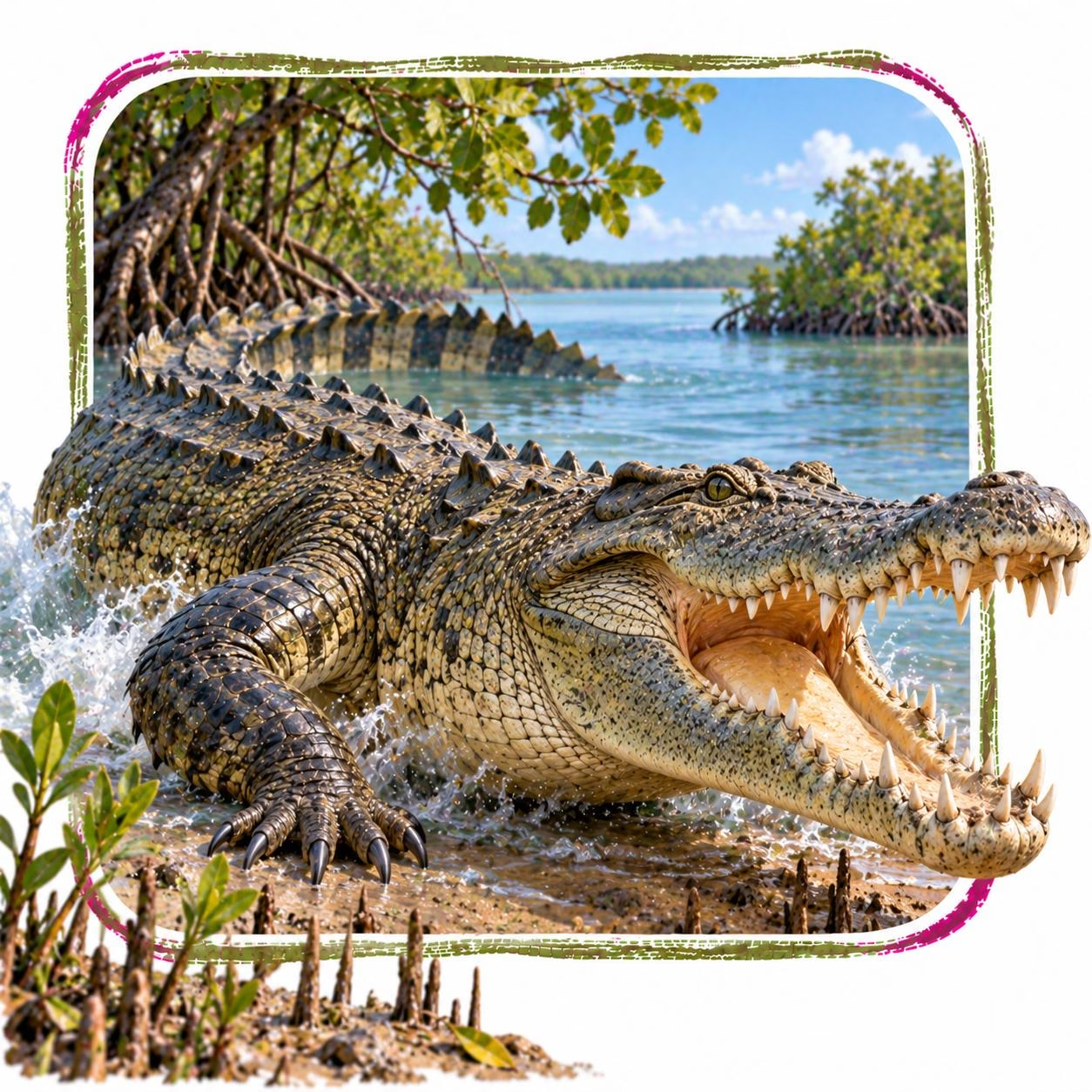
Saltwater Crocodile in its natural Freshwater rivers, floodplains, swamps, mangroves, tidal creeks, estuaries, coasts, and marine channels habitat