
Sawfish Facts for Kids
Sawfishes are huge, shark-shaped rays with long, flat snouts edged by tooth-like spikes. The five living species belong to the family Pristidae and once occupied warm coastal waters and rivers across much of the world. Their sensitive saws help them locate and capture prey, but they also tangle easily in fishing nets. All five species are now Critically Endangered.
Quick Sawfish Facts
- Scientific Group: Family Pristidae in the ray order Rhinopristiformes
- Animal Type: Cartilaginous fish and highly modified ray
- Living Species: Five
- Size: Varies by species from roughly 3 metres to more than 7 metres at maximum size
- Known For: A long rostrum edged with large tooth-like denticles
- Historic Range: Tropical and subtropical coasts and rivers of the Atlantic, Indian, and Pacific regions
- Habitat: Shallow coasts, bays, estuaries, mangroves, river mouths, and freshwater rivers or lakes in some species
- Diet: Small fish, crustaceans, mollusks, and other bottom animals
- Young: Live-born pups with flexible, sheathed saws
- Conservation: All five living species are Critically Endangered on the IUCN Red List
What You’ll Learn
Explore 10 incredible sawfish facts for kids about saw-like snouts, electroreception, rays, shallow waters, and conservation, plus a quiz, glossary, and activity
These easy facts are made for kids, parents, teachers, and curious young learners.
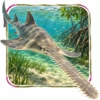
10 Fun Sawfish Facts for Kids
1. Sawfishes Are Rays, Not Sharks
Their streamlined bodies and tall fins look shark-like, but sawfishes are rays. Their heads and front bodies are flattened, and their five pairs of gill openings sit underneath rather than on the sides.
Kid Decode: Look underneath: belly gills reveal that the sawfish is a ray.
2. Five Species Survive Today
The living family includes largetooth, smalltooth, green, dwarf, and narrow sawfishes. Species differ in body size, saw shape, tooth count, habitat use, and geographic range.
Kid Decode: Sawfish is a five-species family, not one single species.
3. The Saw Teeth Are Denticles
The spikes along the rostrum are enlarged dermal denticles, structures related to the tiny tooth-like scales covering sharks and rays. They are anchored in cartilage and do not properly regrow if their roots are badly damaged.
Kid Decode: A sawfish cannot simply replace a broken saw spike like a shark replaces a mouth tooth.
4. Electric Fields Reveal Hidden Prey
Thousands of electroreceptors called ampullae of Lorenzini cover the head and rostrum. They detect weak electrical fields produced by living animals, helping a sawfish locate prey hidden in cloudy water or sediment.
Kid Decode: The saw works partly like an underwater metal detector for living prey.
5. The Saw Is a Hunting Tool
A sawfish sweeps its rostrum from side to side to stun or injure schooling fish and to disturb crustaceans or other animals on the bottom. It then swallows prey small enough to fit inside its mouth.
Kid Decode: The saw catches dinner; it does not cut trees or chew food.
6. Spiracles Help Them Breathe
Large openings behind the eyes called spiracles draw water toward the gills. This allows a sawfish to breathe while resting on the bottom without pulling a mouthful of sand or mud over its gills.
Kid Decode: A resting sawfish can sip breathing water through openings behind its eyes.
7. Some Travel Between Salt and Fresh Water
Sawfishes use marine and estuarine habitats, and some species move far into freshwater rivers and lakes. Largetooth sawfish pups may grow in rivers before shifting toward more coastal habitats.
Kid Decode: One sawfish journey can connect an inland river with the sea.
8. Shallow Nurseries Protect Pups
Young sawfishes often occupy warm, shallow water along mangrove-lined shores, tidal creeks, lagoons, and river edges. These nursery areas offer food and can shelter pups from large predators.
Kid Decode: Mangrove roots form a watery nursery fence for young sawfish.
9. Pups Are Born With Covered Saws
Sawfishes give birth to live young nourished by yolk before birth. A newborn’s rostrum is flexible and its rostral teeth are covered by a thick gelatinous sheath that soon dissolves, protecting the mother during delivery.
Kid Decode: A baby sawfish arrives with its sharp-looking saw safely wrapped.
10. Fishing Nets Are a Major Threat
The broad toothed rostrum tangles easily in gillnets, trawls, and other fishing gear. Accidental capture, past targeted fishing, trade in body parts, slow reproduction, river changes, and loss of mangroves have driven enormous declines.
Kid Decode: The tool that helps a sawfish hunt can become a trap inside a net.
The Weirdest Sawfish Fact
A newborn sawfish already has a fully formed saw, but the rostrum is flexible and the side teeth are wrapped in a gelatinous sheath. The temporary covering protects the mother and dissolves shortly after birth.
Try This Sawfish Activity
Compare a Sawfish and a Sawshark
Fold paper into two columns. Draw a broad, flattened sawfish with belly gills, even-sized rostral teeth, and no barbels beside a slender sawshark with side gills, two barbels, and alternating saw teeth. Add shallow mangrove nursery habitat for the sawfish and deeper continental-slope habitat for the sawshark, then circle four differences.
Quick Sawfish Quiz
- Is a sawfish a shark or a ray? Answer: A ray.
- Where are its gill openings? Answer: Underneath the body.
- What do electroreceptors detect? Answer: Weak electrical fields from living animals.
- Why is a pup’s saw sheathed? Answer: To protect the mother during birth.
- What is the status of all five species? Answer: Critically Endangered.
Mini Glossary
- Rostrum: The long projecting snout of an animal.
- Dermal denticle: A small tooth-like skin structure found on sharks and rays.
- Electroreceptor: A sense organ that detects weak electrical fields.
- Spiracle: An opening behind the eye that helps move water toward the gills.
- Bycatch: An animal caught accidentally while people are fishing for something else.
 Crown-of-Thorns Starfish Facts for Kids
 Hornbill Facts for Kids
 Barracuda Facts for Kids
 Placerias Facts for Kids
More Animal Facts for Kids
Visit the full animal facts library or explore a focused animal group.
More Extinct Animal Facts for Kids
Discover dinosaurs, Ice Age giants, prehistoric sea creatures, recently extinct species, and other animals from the past.
Fact check note: Fact checked against the 2024 IUCN-SSC Shark Specialist Group update confirming that all five sawfish species are Critically Endangered; NOAA Fisheries sawfish species and conservation pages; Florida Museum of Natural History Sawfish Biology and species profiles; CITES sawfish protections; and peer-reviewed sawfish sensory, feeding, movement, nursery, reproduction, and conservation research. Taxonomy, ray identification, species count, size variation, rostral denticles, electroreception, spiracles, diet, fresh-saltwater movement, live birth, pup sheath, threats, and conservation status were cross-checked.

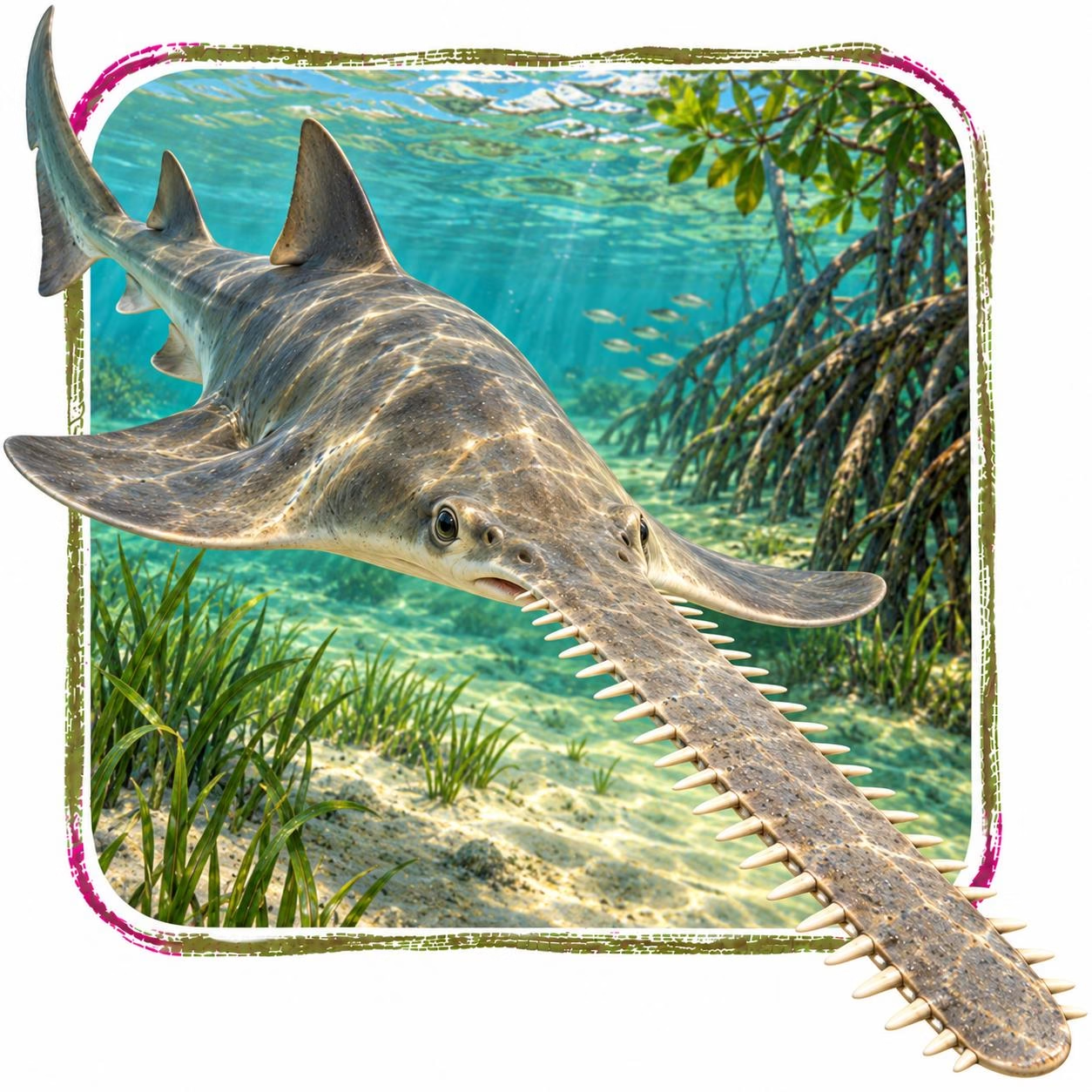
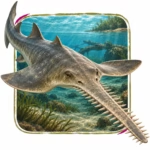
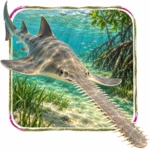
Sawfish in its natural Warm shallow coasts, bays, estuaries, mangroves, tidal creeks, river mouths, and freshwater rivers or lakes used by some species habitat