
Sea Slug Facts for Kids
Sea slug is an informal name for many soft-bodied marine gastropods, including nudibranchs, sea hares, and sap-sucking sacoglossans. They are relatives of snails, but most adults have reduced or missing shells. Sea slugs inhabit oceans worldwide and use camouflage, warning colors, chemicals, mucus, or even defenses borrowed from their food to survive.
Quick Sea Slug Facts
- Scientific Group: Several lineages of marine gastropod mollusks, not one single taxonomic group
- Animal Type: Invertebrate, mollusk, and gastropod
- Body: Soft and unsegmented; most adults lack an obvious external shell
- Size: From only a few millimetres to more than 50 centimetres, depending on species
- Known For: Brilliant colors, rhinophores, chemical defenses, and unusual borrowed abilities
- Range: Oceans worldwide, from tropical reefs to polar and deep waters
- Habitat: Tide pools, reefs, kelp and seagrass beds, sand, open water, and the deep seafloor
- Diet: Species may eat algae, sponges, hydroids, anemones, bryozoans, corals, eggs, or other slugs
- Young: Most hatch as larvae, and many larval stages temporarily carry a tiny shell
- Conservation: Sea slug is a diverse group without one global status; habitat damage, pollution, warming, and acidification affect species differently
What You’ll Learn
Explore 10 colorful sea slug facts for kids about soft bodies, bright colors, gills, chemical defenses, and the huge variety of marine gastropods, plus a quiz, glossary, and activity
These easy facts are made for kids, parents, teachers, and curious young learners.
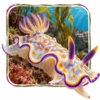
10 Fun Sea Slug Facts for Kids
1. Sea Slug Is an Umbrella Name
Sea slug does not describe one branch of the animal family tree. People use the name for several kinds of marine gastropods, including nudibranchs, sea hares, headshield slugs, and sacoglossans.
Kid Decode: Two animals called sea slugs may be less closely related than their matching nickname suggests.
2. They Are Snail Relatives
Sea slugs are mollusks in class Gastropoda, the group containing snails and land slugs. They have soft bodies, a head, internal organs, and a broad muscular foot instead of bones or jointed legs.
Kid Decode: A sea slug is much closer to a garden snail than to a worm.
3. Not Every Sea Slug Is Completely Shell-Less
Nudibranch adults lose the shell entirely, but other sea slugs may hide a small shell inside the body or keep a thin external one. Many larvae begin life with a shell before changing form.
Kid Decode: The word slug does not guarantee that every stage has no shell.
4. A Muscular Foot Makes a Slime Road
Most sea slugs glide by sending waves of muscle along the underside of the foot. Mucus reduces scraping, improves grip, and can leave a chemical trail that another slug may detect.
Kid Decode: A sea slug lays its own slippery road while it travels.
5. Rhinophores Smell Through Water
The horn-like structures on many sea slug heads are called rhinophores. They detect dissolved chemicals that reveal food, mates, predators, and trails, while their folds increase the surface area available for sensing.
Kid Decode: Those colorful head horns act more like noses than antenna decorations.
6. Their Menus Can Be Extremely Specialized
Most gastropods use a radula, a ribbon covered with tiny teeth, to scrape or pierce food. Individual sea slug species may specialize on one kind of algae, sponge, hydroid, bryozoan, coral, egg mass, or even another slug.
Kid Decode: A sea slug may crawl past a whole buffet while searching for its one favorite meal.
7. Colors Can Hide or Warn
Some species copy the colors and textures of algae, sponges, or corals. Others advertise distasteful chemicals with vivid patterns, although bright color alone does not prove that an animal is poisonous.
Kid Decode: One sea slug vanishes into a sponge while another wears a warning poster on its back.
8. Some Borrow Stinging Cells
Certain aeolid nudibranchs eat hydroids, anemones, or other cnidarians without firing every stinging capsule. They move undischarged nematocysts into sacs at the tips of their cerata and use the stolen weapons for defense.
Kid Decode: A nudibranch can eat a stinging animal and keep some of its unfired harpoons.
9. Some Borrow Working Chloroplasts
Sap-sucking sacoglossans pierce algae and retain chloroplasts inside their own cells, a process called kleptoplasty. The chloroplasts may keep photosynthesizing and supplement the slug’s energy, but the slug remains an animal.
Kid Decode: A few green sea slugs carry stolen solar panels from algae.
10. Many Lay Beautiful Egg Ribbons
Most sea slugs are simultaneous hermaphrodites, so each adult has male and female reproductive organs. After mating, they often lay thousands of eggs inside ribbons, coils, rosettes, strings, or gelatinous sheets.
Kid Decode: A sea slug’s spiral decoration may actually be a nursery holding thousands of eggs.
The Weirdest Sea Slug Fact
Young individuals of two sacoglossan species have been observed deliberately shedding almost the entire body. The detached head kept feeding, rebuilt a heart and the rest of the body in roughly three weeks, and may have escaped internal parasites; this remarkable power is not known from every sea slug.
Try This Sea Slug Activity
Design a Sea Slug Survival Suit
Draw a reef scene and invent a scientifically possible sea slug. Give it either camouflage or warning colors, a muscular foot and mucus trail, two rhinophores, and gills or cerata. Choose a real food such as algae, sponge, or hydroid, then label how its radula works and whether it borrows chloroplasts, chemicals, or stinging cells. Add a coiled egg ribbon nearby.
Quick Sea Slug Quiz
- Is sea slug one formal taxonomic group? Answer: No, it is an informal name for several marine gastropod groups.
- What is a rhinophore used for? Answer: Detecting chemicals in the water.
- What mouthpart carries rows of tiny teeth? Answer: The radula.
- What can some aeolid nudibranchs steal from cnidarian prey? Answer: Unfired stinging capsules called nematocysts.
- What is kleptoplasty? Answer: Retaining working chloroplasts taken from algae.
Mini Glossary
- Gastropod: A mollusk in the animal group containing snails and slugs.
- Rhinophore: A chemical-sensing structure on the head of many sea slugs.
- Radula: A flexible ribbon of tiny teeth used by most mollusks to handle food.
- Cerata: Finger-like projections that can help with breathing, digestion, or defense.
- Kleptoplasty: Keeping chloroplasts stolen from eaten algae inside an animal’s cells.
 Fisher Facts for Kids
 Leopard Seal Facts for Kids
 Caribou Facts for Kids
 Wonambi Facts for Kids
More Animal Facts for Kids
Visit the full animal facts library or explore a focused animal group.
More Extinct Animal Facts for Kids
Discover dinosaurs, Ice Age giants, prehistoric sea creatures, recently extinct species, and other animals from the past.
Fact check note: Fact checked against World Register of Marine Species classification; Australian Museum and Sea Slug Forum resources; Smithsonian and National Geographic nudibranch coverage; Monterey Bay Aquarium marine-gastropod profiles; and peer-reviewed research on rhinophores, locomotion, radulae, kleptocnidy, chemical defense, kleptoplasty, reproduction, larval shells, and extreme autotomy in Elysia cf. marginata and Elysia atroviridis. The informal scope of “sea slug,” shell variation, diets, worldwide distribution, and the species-limited nature of regeneration were cross-checked.

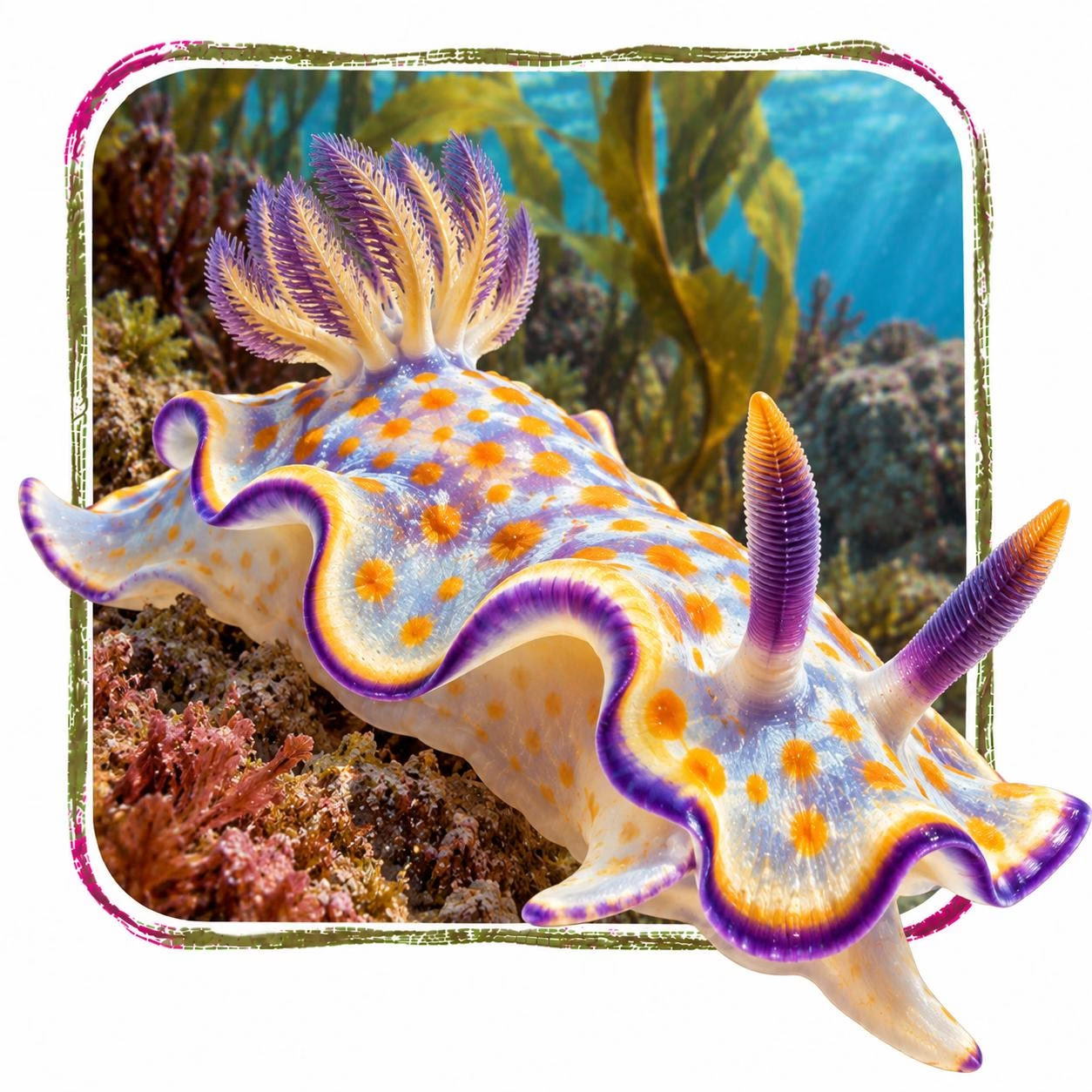
Sea Slug in its natural Tide pools, coral and rocky reefs, kelp forests, seagrass beds, sandy bottoms, open water, polar seas, and deep-ocean habitats habitat