
Slug Facts for Kids
Land slugs are soft-bodied gastropod mollusks that have lost the large outer shell carried by a typical snail. Slug bodies evolved independently in several gastropod lineages, so the name does not describe one single branch of the family tree. Mucus, a muscular foot, retractable tentacles, and a hidden breathing pore help these animals explore damp habitats without legs.
Quick Slug Facts
- Scientific Group: Several terrestrial gastropod lineages within class Gastropoda
- Animal Type: Invertebrate, mollusk, and gastropod
- Body: Soft, elongated, legless, and apparently shell-less; some species retain a tiny internal shell
- Size: From only a few millimetres to more than 20 centimetres, depending on species
- Known For: Mucus trails, retractable tentacles, rasping radula, and activity in damp weather
- Range: Moist terrestrial habitats across most of the world
- Habitat: Forest litter, gardens, farms, caves, wetlands, grasslands, compost, logs, rocks, and soil
- Diet: Leaves, seedlings, fruit, fungi, algae, lichens, decay, carrion, worms, snails, or other slugs
- Young: Most hatch from clusters of translucent eggs hidden in moist protected places
- Conservation: Status varies; native slugs support ecosystems, while some introduced species become crop pests
What You’ll Learn
Learn 10 slimy slug facts for kids about soft bodies, tentacles, mucus, feeding, movement, and life without an external shell, plus a quiz, glossary, and activity
These simple facts are written for kids, parents, teachers, and curious young minds.
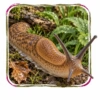
10 Fun Slug Facts for Kids
1. Slugs Evolved More Than Once
A slug is not simply one shell-less snail family. Large external shells were reduced or lost independently in several land-gastropod lineages, an example of unrelated animals evolving similar solutions.
Kid Decode: Nature invented the land-slug body plan several separate times.
2. Some Still Hide a Tiny Shell
Many species have no shell, but others keep a thin plate or a few shell fragments beneath the mantle. This internal remnant can store calcium even though the slug cannot retreat inside it.
Kid Decode: A slug that looks shell-free may carry secret shell pieces under its skin.
3. The Foot Builds a Slime Road
Rhythmic muscle waves travel along the broad underside foot while mucus reduces scraping and improves grip. The same system lets a slug cross soil, leaves, bark, rocks, and even climb a vertical wall.
Kid Decode: A slug makes its own road and travels on it at the same time.
4. Different Mucus Does Different Jobs
Thin mucus under the foot supports movement, while thicker body mucus slows water loss and makes the animal hard to grab. Slime can also carry chemical messages, taste unpleasant, or become extremely sticky.
Kid Decode: Slug slime can be a road, raincoat, message, shield, and glue.
5. Four Tentacles Explore the World
Many familiar land slugs have two long upper tentacles with light-sensitive eyes at their tips and two shorter lower tentacles for touch and chemical sensing. All four can retract rapidly when danger approaches.
Kid Decode: A slug can pull its eye stalks safely inside its head.
6. A Side Pore Leads to the Lung
On many land slugs, a round opening called the pneumostome appears on the right side of the saddle-shaped mantle. It opens and closes to exchange air with a lung-like mantle cavity.
Kid Decode: A slug breathes through a button-like doorway on the side of its back.
7. Thousands of Teeth Form a Food File
The radula is a flexible ribbon covered with rows of microscopic teeth. Depending on species, it rasps leaves, scrapes algae and fungi, tears decaying matter, or helps a predatory slug seize worms and other gastropods.
Kid Decode: A tiny mouth can contain thousands of teeth arranged like a living cheese grater.
8. Moisture Controls the Schedule
Without a protective outer shell, land slugs lose water easily. Many hide by day and emerge at night, after rain, or during cool cloudy weather, while dry periods are spent under cover or inactive in soil.
Kid Decode: Rain can turn a quiet garden into a busy slug city.
9. Most Carry Both Reproductive Systems
Most land slugs are simultaneous hermaphrodites, meaning one adult has male and female organs. Partners generally exchange sperm, and each may later place gelatinous egg clusters in damp soil, compost, or protected crevices.
Kid Decode: After two slugs mate, both partners may be able to lay eggs.
10. They Are Gardeners and Garden Eaters
Some slugs damage seedlings and crops, but many consume fungi, algae, dung, carrion, and dead plants. They recycle nutrients and feed beetles, frogs, birds, reptiles, hedgehogs, and other wildlife.
Kid Decode: The leaf-nibbler can also be a recycler and someone else’s dinner.
The Weirdest Slug Fact
Two leopard slugs may climb a tree or wall, twist together, and lower themselves on a thick rope of mucus. Hanging in midair, both extend their reproductive organs, exchange sperm, and then climb back up or drop safely to the ground.
Try This Slug Activity
Map a Slug’s Night Journey
Draw a garden before and after rain. Trace a shiny route from a daytime shelter beneath a log to fungi, fallen leaves, seedlings, a mate, and a damp egg site. Add an enlarged slug with upper eye tentacles, lower sensing tentacles, mantle, pneumostome, muscular foot, mucus layers, and magnified radula. Mark where a frog, beetle, and bird join the food web.
Quick Slug Quiz
- Is every slug part of one shell-less family? Answer: No, the body form evolved in several lineages.
- What body part produces movement waves? Answer: The muscular foot.
- Where are the eyes on many land slugs? Answer: At the tips of the upper tentacles.
- What is the breathing pore called? Answer: The pneumostome.
- What tooth-covered ribbon rasps food? Answer: The radula.
Mini Glossary
- Gastropod: A mollusk in the group containing snails and slugs.
- Mantle: Tissue covering internal organs and forming the breathing cavity in many land slugs.
- Pneumostome: The opening leading to a land slug’s lung-like cavity.
- Radula: A ribbon of microscopic teeth used to gather food.
- Hermaphrodite: An individual with both male and female reproductive organs.
 West Indian Ocean Coelacanth Facts for Kids
 Crayfish Facts for Kids
 Cow Facts for Kids
 Giant Ground Sloth Facts for Kids
More Animal Facts for Kids
Visit the full animal facts library or explore a focused animal group.
More Extinct Animal Facts for Kids
Discover dinosaurs, Ice Age giants, prehistoric sea creatures, recently extinct species, and other animals from the past.
Fact check note: Fact checked against Oregon State University Slug Portal anatomy resources; Royal Horticultural Society slug biology; University of Minnesota Extension garden-slug guidance; Carnegie Museum of Natural History land-gastropod ecology; MolluscaBase taxonomy; and peer-reviewed work on repeated shell reduction, locomotion, mucus, tentacles, pneumostomes, radulae, water balance, diets, reproduction, egg development, and Limax maximus aerial mating. Group-level variation and the ecological difference between native and invasive slugs were cross-checked.

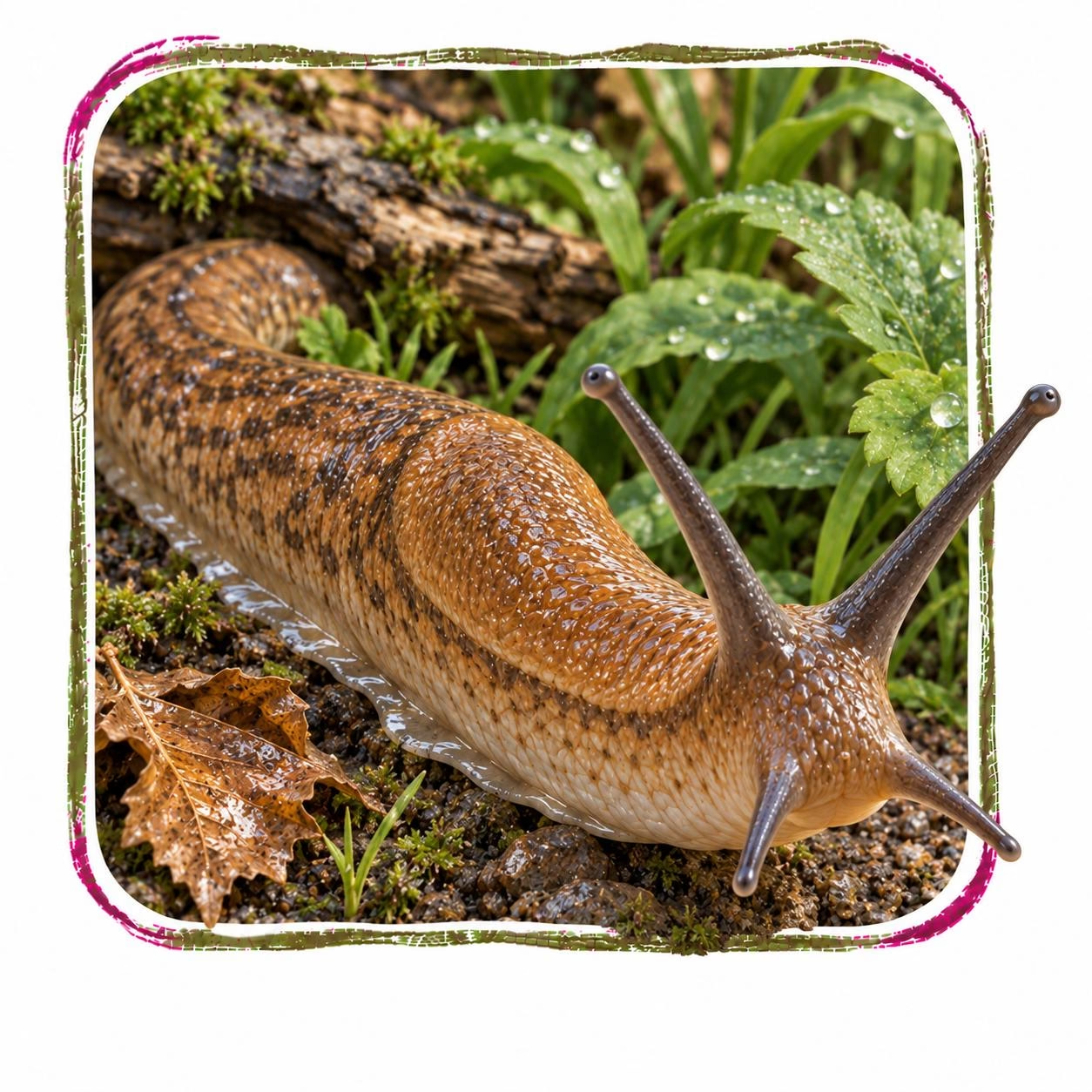
Slug in its natural Moist forests, gardens, farms, grasslands, wetlands, caves, compost, leaf litter, logs, rocks, and soil across most of the world habitat