
Shag Facts for Kids
On this page, shag means the European shag, Gulosus aristotelis, a slim dark cormorant of rocky coasts. In New Zealand, Australia, and other places, people also use shag for several different cormorant species. European shags chase fish underwater, nest on cliffs and islands, and grow glossy green-black plumage with a curled crest during the breeding season.
Quick Shag Facts
- Scientific Name: Gulosus aristotelis, also listed in older sources as Phalacrocorax aristotelis
- Animal Type: Bird, seabird, and member of the cormorant family Phalacrocoracidae
- Size: About 65–80 centimetres long with a wingspan around 90–105 centimetres
- Appearance: Slim dark body, long neck and tail, narrow hooked bill, green sheen, yellow gape, and seasonal crest
- Range: Rocky coasts of Europe, northwest Africa, and southwest Asia
- Habitat: Marine cliffs, islands, caves, ledges, harbors, bays, and nearshore waters
- Diet: Fish, especially bottom-living and schooling species; also some crustaceans and cephalopods
- Diving: Pursuit diver propelled mainly by large webbed feet
- Nest: Seaweed-and-stick platform on a sheltered coastal ledge or in a cave
- Conservation: Globally Least Concern, but declining or concentrated populations receive higher concern in some regions
What You’ll Learn
Discover 10 fascinating shag facts for kids about dark feathers, crests, diving, fish, and rocky European coasts, plus a quiz, glossary, and activity
These facts are explained simply for kids, parents, teachers, and curious little fact-finders.
10 Fun Shag Facts for Kids
1. This Shag Is a Cormorant
The European shag belongs to the cormorant family and is the only species placed in the genus Gulosus. Older books often use Phalacrocorax aristotelis, and the word shag can name other cormorants outside Europe.
Kid Decode: One short bird name can mean different cormorant species in different countries.
2. It Stays Close to Salt Water
European shags breed on rocky Atlantic, Mediterranean, and Black Sea coasts from northern Europe to northwest Africa and southwest Asia. They are strongly marine and are much less likely than great cormorants to visit inland lakes and rivers.
Kid Decode: A European shag usually chooses a sea cliff over an inland pond.
3. Black Feathers Can Shine Green
An adult’s breeding plumage looks black from a distance but reflects a bottle-green gloss in good light. It also has a yellow gape and grows a small forward-curving crest, while young birds are browner and paler below.
Kid Decode: Sunlight can turn a shag’s black-looking coat into shimmering green.
4. It Is Slimmer Than a Great Cormorant
Compared with the great cormorant, a European shag is generally smaller and lighter, with a narrower bill, steeper forehead, slimmer neck, and no broad white cheek-and-throat patch. Distance and age can still make identification tricky.
Kid Decode: The shag is the sleek coastal cousin in the cormorant comparison.
5. Webbed Feet Power the Dive
A shag jumps or slips underwater, folds its wings close, and kicks with both large webbed feet. Its long flexible body and steering tail help it twist after fish near rocks or along the seafloor.
Kid Decode: Underwater, a shag’s feet work like twin propellers.
6. Less Trapped Air Helps It Sink
Water can enter parts of a shag’s outer plumage, reducing buoyant air and helping the bird dive. Insulating feather layers still protect the body, and spreading the wings afterward may aid drying and temperature control.
Kid Decode: The feathers trade some floating power for easier underwater hunting.
7. Fish Are the Main Meal
Shags pursue many coastal fish, including sand eels and bottom-living species, and may also take crustaceans or cephalopods. Diet changes with place, season, weather, depth, and which prey is available.
Kid Decode: A shag does not order one fish forever; it hunts what its coast can provide.
8. Colonies Fill Rocky Ledges
Breeding pairs gather in colonies on cliffs, islands, sea caves, stacks, and sheltered ledges. Both adults build a platform from seaweed, twigs, grass, and other material, sometimes adding to the same nest through the season.
Kid Decode: A pile of seaweed on a cliff can become a sturdy seabird cradle.
9. Both Parents Raise the Chicks
A clutch often contains about three eggs. Both parents incubate, shelter the helpless hatchlings, and deliver regurgitated fish; a hungry chick reaches into the adult’s open bill to collect its meal.
Kid Decode: Shag chicks eat fish delivered straight from a parent’s throat.
10. Global and Local Status Can Differ
BirdLife assesses the European shag globally as Least Concern, but colonies are concentrated and some regions have suffered declines. Food shortages, severe storms, warming seas, fishing bycatch, oil, disease, and disturbance can create local trouble.
Kid Decode: A species can be common enough worldwide while still disappearing from part of its coast.
The Weirdest Shag Fact
Depth recorders have followed European shags to about 61 metres underwater, roughly the height of a 20-storey building. The bird reaches these depths without scuba gear, chases prey using its feet, and then must swim and fly back to a tiny cliff nest.
Try This Shag Activity
Build a Shag Dive-and-Nest Profile
Draw a side view from a 60-metre-deep seafloor to a high coastal ledge. Add depth marks every 10 metres, fish at different levels, and a shag route powered by webbed feet. Above water, draw a seaweed nest with three eggs. Finish with an identification box comparing the shag’s slim body, green sheen, crest, and narrow bill with a great cormorant’s heavier shape and white throat patch.
Quick Shag Quiz
- Which bird family contains the European shag? Answer: The cormorant family.
- What color sheen appears on breeding adults? Answer: Glossy green.
- What mainly powers a shag underwater? Answer: Its large webbed feet.
- Where does it usually nest? Answer: On coastal cliffs, islands, ledges, or in sea caves.
- What is its global IUCN category? Answer: Least Concern.
Mini Glossary
- Cormorant: A long-necked waterbird that catches prey by diving.
- Gape: The edge and opening of a bird’s mouth.
- Buoyancy: The upward force that helps an object or animal float.
- Pursuit diver: A bird that swims underwater while actively chasing prey.
- Regurgitate: To bring swallowed food back up so it can be fed to young.
 Mallard Facts for Kids
 Reef Shark Facts for Kids
 Limpet Facts for Kids
 Javan Tiger Facts for Kids
More Animal Facts for Kids
Visit the full animal facts library or explore a focused animal group.
More Extinct Animal Facts for Kids
Discover dinosaurs, Ice Age giants, prehistoric sea creatures, recently extinct species, and other animals from the past.
Fact check note: Fact checked against the RSPB European shag species profile; BirdLife International’s Gulosus aristotelis factsheet and global Red List assessment; British Trust for Ornithology identification and population resources; Marine Life Information Network species account; and peer-reviewed studies of shag diving depth, foot-propelled locomotion, plumage wetting, diet, breeding, chick care, and climate-linked population change. Current genus, older synonym, range, 65–80-centimetre length, 90–105-centimetre wingspan, plumage, nesting, diet, approximately 61-metre recorded dive, global Least Concern status, and regional concern were cross-checked.

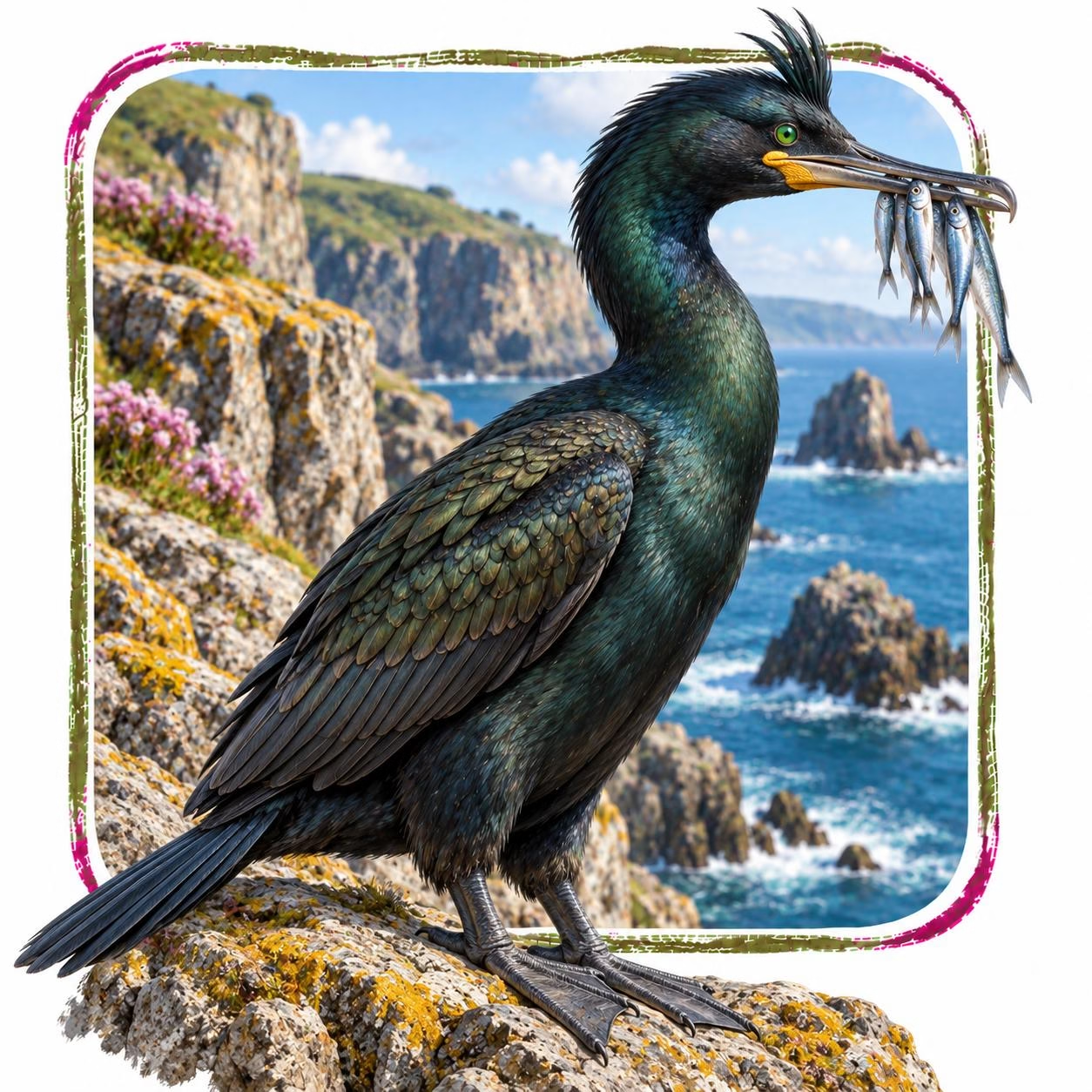
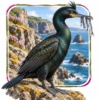
Shag in its natural Rocky marine coasts, offshore islands, sea cliffs, caves, ledges, bays, harbors, and nearby continental-shelf waters habitat