
Skate Facts for Kids
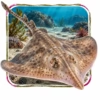
Skates are flattened cartilaginous fishes closely related to sharks and other rays. Most live on or near the seafloor, where broad pectoral fins form a diamond-shaped disc around the head and body. Unlike stingrays, true skates lack a venomous tail stinger and reproduce by laying tough egg cases popularly called mermaid’s purses.
Quick Skate Facts
- Scientific Group: Skate families within order Rajiformes, especially the diverse family Rajidae
- Animal Type: Cartilaginous fish, batoid, and close relative of sharks and rays
- Body: Flattened disc, wing-like pectoral fins, underside gill slits, and a usually sturdy tail
- Size: Species range from small skates under 30 centimetres to giants around 2 metres long
- Known For: Mermaid’s-purse egg cases, thorny skin, and life close to the seafloor
- Range: Oceans worldwide, with many species in cool and deep water
- Habitat: Sandy, muddy, gravelly, rocky, coastal, continental-shelf, and deep-sea bottoms
- Diet: Carnivorous; worms, shrimps, crabs, clams, snails, squid, and small fish
- Young: Miniature skates hatch from leathery egg cases after developing for months or longer
- Conservation: Status varies; slow growth, late maturity, egg damage, and accidental trawl capture threaten some species
What You’ll Learn
Explore 10 unusual skate facts for kids about flat bodies, wing-like fins, egg cases, seafloor life, and their shark relatives, plus a quiz, glossary, and activity
These easy facts are made for kids, parents, teachers, and curious young learners.
10 Fun Skate Facts for Kids
1. Skates Are Flat Shark Relatives
Skates, rays, and sharks are elasmobranchs with cartilage skeletons. A skate’s enlarged pectoral fins connect alongside the head to make a broad disc, while its eyes and spiracles sit above and its mouth and gills sit below.
Kid Decode: A skate is built like a shark relative flattened into an underwater kite.
2. Cartilage Replaces Heavy Bone
The skeleton is made mainly from cartilage rather than true bone. Mineralized areas add strength, but the light flexible framework supports swimming and life on the bottom without the weight of a bony skeleton.
Kid Decode: A skate has a skull and spine built from firm flexible cartilage.
3. Spiracles Pull Water from Above
A skate resting in sand cannot rely on taking clean water through its underside mouth. Large spiracles behind the eyes draw water in from above and guide it across the gills before it exits through five pairs of slits underneath.
Kid Decode: Even a half-buried skate can breathe through openings on top of its head.
4. Its Wings Are Really Fins
Broad pectoral fins ripple or flap to push the animal forward, steer, and hover above the bottom. Some skates also use the front lobes of their divided pelvic fins to punt or walk across the seafloor.
Kid Decode: A skate can fly through water and sometimes walk with little pelvic-fin feet.
5. Camouflage Hides the Disc
Brown, gray, spotted, or mottled upper surfaces blend with sand, mud, gravel, and rock. A skate may wriggle beneath loose sediment until only its raised eyes and spiracles remain visible.
Kid Decode: The seafloor can appear to grow two eyes when a hidden skate peeks out.
6. Underside Jaws Crush Bottom Prey
The downward-facing mouth is well placed for seafloor hunting. Species use rows of teeth to grip or crush worms, shrimps, crabs, mollusks, squid, and small fish, with tooth shape differing by food, age, and sex.
Kid Decode: A skate’s smile faces the sand because dinner usually lives below it.
7. They Sense Electricity and Motion
Jelly-filled ampullae of Lorenzini detect weak electric fields from living prey, while the lateral-line system senses water movement. These tools help locate an animal hidden under sediment or moving in dim deep water.
Kid Decode: A buried crab still produces clues that an electric-sensing skate can follow.
8. Skates Are Not Stingrays
True skates generally have a shorter, sturdier tail with two small dorsal fins near its end, divided pelvic fins, and rows of thorns. They do not carry the venomous serrated tail spine typical of many stingrays.
Kid Decode: The prickly skate has thorns for protection but no stingray-style venom barb.
9. Every True Skate Lays Egg Cases
A female surrounds a fertilized egg with a tough rectangular capsule whose horns or tendrils catch on the bottom. Water enters small openings, and the developing embryo uses yolk until it hatches as a fully formed little skate.
Kid Decode: A beachcomber’s mermaid’s purse was once a skate nursery.
10. Slow Lives Increase Fishing Risk
Many skates grow slowly, mature late, produce relatively few egg cases, and spend time where bottom trawls operate. Large species are especially vulnerable because populations cannot quickly replace removed adults.
Kid Decode: A skate population may need many years to replace animals caught in one season.
The Weirdest Skate Fact
Most skate egg cases contain one embryo, but a big skate’s oversized mermaid’s purse can hold several and sometimes as many as seven. Each embryo shares the same leathery underwater capsule while developing into a miniature flat fish.
Try This Skate Activity
Build a Skate Seafloor Model
Draw a skate viewed from above and below. On top, label eyes, spiracles, camouflage, thorns, pectoral-fin disc, pelvic fins, tail, and two small dorsal fins. Underneath, label mouth, nostrils, and five pairs of gill slits. Add a sandy prey trail detected by electric fields and a separate mermaid’s purse with capsule, horns, yolk, embryo, and water openings.
Quick Skate Quiz
- What forms a skate’s skeleton? Answer: Cartilage.
- Where are its gill slits? Answer: On the underside.
- What enters the spiracles? Answer: Water for breathing.
- Does a true skate have a stingray-style venomous barb? Answer: No.
- What is a skate egg case nicknamed? Answer: A mermaid’s purse.
Mini Glossary
- Batoid: A flattened cartilaginous fish in the ray-and-skate group.
- Spiracle: An opening behind the eye that draws water toward the gills.
- Pectoral fin: One of the broad side fins forming a skate’s disc.
- Ampullae of Lorenzini: Sensory pores that detect weak electric fields.
- Oviparous: Reproducing by laying eggs.

 Fishing Cat Facts for Kids
 Crested Gecko Facts for Kids
 Eastern Grey Kangaroo Facts for Kids
 Eotriceratops Facts for Kids
More Animal Facts for Kids
Visit the full animal facts library or explore a focused animal group.
More Extinct Animal Facts for Kids
Discover dinosaurs, Ice Age giants, prehistoric sea creatures, recently extinct species, and other animals from the past.
Fact check note: Fact checked against Australian Museum Rajidae resources; NOAA Fisheries skate species profiles and nursery research; Alaska Department of Fish and Game skate biology; Florida Museum skate profiles; IUCN Shark Specialist Group assessments; and peer-reviewed work on rajiform taxonomy, spiracle ventilation, pelvic-fin walking, electroreception, diet, dentition, egg cases, development, life history, and trawl vulnerability. Cartilage, underside gills, lack of a stingray-style venomous spine, oviparity, mermaid’s-purse structure, multi-embryo big-skate cases, worldwide benthic habitats, and species-varying conservation status were cross-checked.

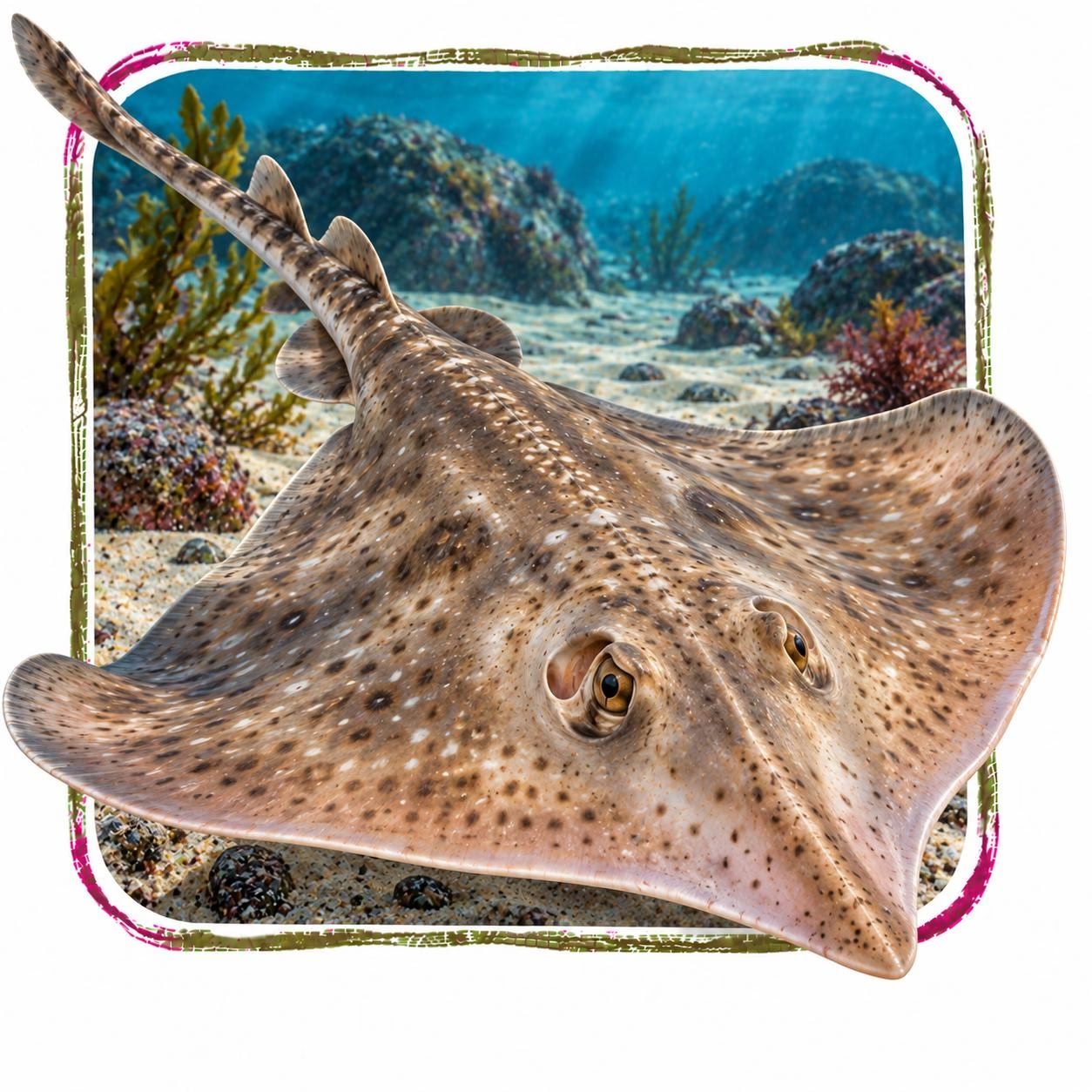
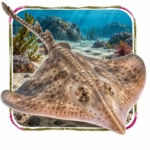
Skate in its natural Sandy, muddy, gravelly, and rocky seafloors from shallow coasts and continental shelves to deep ocean slopes worldwide habitat