
Snail Facts for Kids
A snail is a gastropod mollusk with an external shell large enough to protect much of its soft body. The common name includes thousands of unrelated-looking land, freshwater, and marine species. Snails glide on muscular feet, usually feed with tooth-covered radulae, and build shells from minerals released by a tissue layer called the mantle.
Quick Snail Facts
- Scientific Group: Shelled members of class Gastropoda within phylum Mollusca
- Animal Type: Invertebrate, mollusk, and gastropod
- Body: Head, tentacles or sensory structures, mantle, internal organs, muscular foot, and outer shell
- Size: From microscopic species to giant marine and land snails with shells many centimetres long
- Known For: Coiled shells, slow gliding, slime trails, and rasping radulae
- Range: Worldwide on land and in freshwater and marine environments
- Habitat: Forests, deserts, gardens, caves, rivers, lakes, wetlands, shores, reefs, and deep oceans
- Diet: Algae, plants, fungi, decay, plankton, carrion, worms, other mollusks, or animal prey
- Young: Most hatch from eggs, while some aquatic species release larvae and a few bear live young
- Conservation: Status varies; many island and freshwater snails are threatened by habitat loss, pollution, invasive predators, and collection
What You’ll Learn
Discover 10 amazing snail facts for kids about spiral shells, muscular feet, tentacles, slime trails, and land and water habitats, with a quiz, glossary, and activity
Clear explanations make them fun for children, families, teachers, and little fact-hunters.

10 Fun Snail Facts for Kids
1. Snail Means a Shelled Gastropod
Snail is a common name for gastropods with a large visible shell, not one narrow family. Land snails, freshwater snails, sea snails, limpets, whelks, and other shelled forms occupy many branches of the gastropod tree.
Kid Decode: A garden snail and an ocean whelk share a body plan but lead very different lives.
2. The Mantle Builds the Shell
The mantle releases calcium carbonate and proteins along the shell opening. New material enlarges the edge as the snail grows, while added layers thicken older regions and can repair limited chips or cracks.
Kid Decode: A snail grows its house from the doorway outward.
3. Shell Coiling Has a Direction
Most coiled snail shells open on the right when held with the tip upward, but some species or rare individuals coil left. Opposite coils can make mating difficult when body openings no longer line up.
Kid Decode: A left-handed shell can make its owner an unusual snail in a right-handed crowd.
4. A Foot Creates Traveling Waves
A broad muscular foot produces coordinated waves that push the body forward. Mucus improves grip and reduces injury on rough surfaces, while aquatic species may crawl, burrow, float, or modify the foot for swimming.
Kid Decode: The snail’s one visible foot acts like a moving conveyor belt.
5. Tentacles Carry Different Senses
Many land snails have eyes at the tips of two long retractable tentacles and use a lower pair mainly for touch and chemical sensing. Aquatic snail eyes and tentacles vary widely and do not all follow this design.
Kid Decode: A land snail can pull both of its eye stalks safely inside.
6. A Radula Rasp Handles Food
Most snails have a flexible radula bearing rows of microscopic teeth. Grazers scrape algae, plant tissue, or fungi, while predators may cut flesh or drill holes through another mollusk’s shell.
Kid Decode: The same basic tooth ribbon can work like sandpaper, a drill, or a tiny steak knife.
7. Snails Breathe with Lungs or Gills
Many land snails exchange air through a lung-like mantle cavity, while most sea snails use gills. Freshwater groups include gill breathers and air breathers that must occasionally rise to the surface.
Kid Decode: One pond snail breathes underwater while another visits the surface for air.
8. Dormancy Seals in Moisture
During cold or dry weather, some land snails withdraw into the shell and form a temporary mucus-and-calcium seal called an epiphragm. Metabolism slows until rain or warmer conditions return.
Kid Decode: A snail can close its doorway and wait through an entire dry season.
9. Reproduction Varies Across the Group
Many land snails are simultaneous hermaphrodites and exchange sperm before laying eggs in moist soil. Numerous aquatic snails have separate sexes, swimming larvae, egg capsules, brooded young, or live birth.
Kid Decode: There is no single baby plan shared by every snail on land and underwater.
10. Small Snails Have Large Ecosystem Jobs
Snails graze algae, break down plants, recycle calcium, mix soil, and feed fish, beetles, frogs, birds, reptiles, and mammals. Some transmit parasites or damage crops, but thousands of native species are harmless and ecologically valuable.
Kid Decode: A shell smaller than a coin can move nutrients through an entire food web.
The Weirdest Snail Fact
Some hermaphroditic land snails make a sharp calcium structure called a love dart and push it into a partner during courtship. The dart does not carry sperm; its mucus changes the partner’s reproductive system in ways that can improve the dart user’s fertilization success.
Try This Snail Activity
Build a Snail Shell Growth Spiral
Draw a large coiled shell and add growth bands from the tiny oldest tip to the newest outer lip. Beside it, label the mantle, head, retractable tentacles, eye spots, mouth, radula, muscular foot, mucus, and breathing opening. Add three habitat boxes for a lung-breathing land snail, a freshwater surface breather, and a gill-breathing sea snail.
Quick Snail Quiz
- What tissue makes a snail’s shell? Answer: The mantle.
- What mineral forms most shells? Answer: Calcium carbonate.
- How does the muscular foot move? Answer: With coordinated waves.
- What is the tooth-covered feeding ribbon? Answer: The radula.
- What temporary seal can close a land snail’s shell? Answer: An epiphragm.
Mini Glossary
- Gastropod: A mollusk in the class containing snails and slugs.
- Mantle: Tissue that covers internal organs and produces the shell.
- Calcium carbonate: The mineral forming most of a snail shell.
- Radula: A flexible ribbon of microscopic teeth used for feeding.
- Epiphragm: A temporary seal formed across a land snail’s shell opening.

 Mugger Crocodile Facts for Kids
 Takin Facts for Kids
 West African Lungfish Facts for Kids
 Broad-Billed Parrot Facts for Kids
More Animal Facts for Kids
Visit the full animal facts library or explore a focused animal group.
More Extinct Animal Facts for Kids
Discover dinosaurs, Ice Age giants, prehistoric sea creatures, recently extinct species, and other animals from the past.
Fact check note: Fact checked against MolluscaBase and World Register of Marine Species taxonomy; University of California Museum of Paleontology Gastropoda resources; University of Michigan Animal Diversity Web; Carnegie Museum of Natural History land-snail ecology; Australian educational snail anatomy resources; and peer-reviewed studies of mantle shell growth, chirality, locomotion, mucus, sensory tentacles, radulae, respiration, dormancy, reproduction, love darts, ecosystem roles, and gastropod conservation. Land, freshwater, and marine variation was cross-checked.


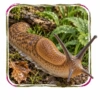
Snail in its natural Forests, deserts, gardens, caves, rivers, lakes, wetlands, shores, reefs, seafloors, and deep oceans worldwide habitat