
Snipe Facts for Kids
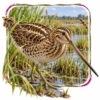
Snipes are compact, long-billed shorebirds that usually hide among grasses and sedges in marshes, bogs, wet meadows, and muddy shorelines. Most true snipes belong to the genus Gallinago, while a few relatives occupy other genera in the sandpiper family. Their sensitive bills locate small animals below the surface, their striped feathers disappear into vegetation, and several species make eerie courtship music with their tail feathers.
Quick Snipe Facts
- Scientific Group: True snipes in family Scolopacidae, especially genus Gallinago
- Animal Type: Bird, vertebrate, shorebird, and wader
- Body: Plump body, short legs, long straight bill, pointed wings, and striped brown plumage
- Size: Commonly about 18–32 centimetres long, depending on species
- Known For: Mud probing, camouflage, explosive zigzag flight, and tail-made winnowing sounds
- Range: Wetlands across much of the world, with species on every continent except Antarctica
- Habitat: Marshes, bogs, fens, wet grasslands, tundra pools, rice fields, muddy shores, and stream edges
- Diet: Earthworms, insect larvae, beetles, small crustaceans, mollusks, spiders, seeds, and other wetland foods
- Young: Downy chicks hatch from camouflaged eggs in a ground nest and can soon walk
- Conservation: Status varies by species; wetland drainage, altered water levels, disturbance, and hunting affect some populations
What You’ll Learn
Learn 10 secretive snipe facts for kids about long bills, camouflage, wetland feeding, zigzag flight, and marsh habitats, with a quiz, glossary, and activity
Simple explanations make them great for children, families, teachers, and young bird fans.
10 Fun Snipe Facts for Kids
1. Snipe Is a Bird Group
The name snipe covers several related long-billed birds in the sandpiper family rather than one worldwide species. Wilson’s snipe lives in the Americas, the common snipe spans Eurasia and Africa, and other species have smaller regional ranges.
Kid Decode: Two marshes on opposite sides of Earth may hide different kinds of snipe.
2. A Bill Can Feel Buried Food
The long bill contains dense touch receptors near its flexible tip. A snipe probes soft mud and can detect pressure changes made by worms, insect larvae, and other prey without needing to see them.
Kid Decode: The mud may look empty, but a snipe can feel dinner underground.
3. The Tip Opens Below the Mud
Special skull and bill joints allow a snipe to lift the upper bill near the tip while much of the bill remains pushed into the ground. This movement, called rhynchokinesis, helps grasp prey inside a narrow probe hole.
Kid Decode: A snipe can open just the underground end of its bill like tiny tweezers.
4. Striped Feathers Hide the Bird
Buff, brown, cream, and black stripes break up the outline of a resting snipe among dead grass and reeds. The bird often freezes and trusts this camouflage until a person or predator comes very close.
Kid Decode: A motionless snipe can look like a bundle of sunlit marsh grass.
5. A Startled Snipe Zigs and Zags
When flushed from cover, many snipes burst upward and rapidly change direction. The unpredictable path can confuse a pursuing falcon and is one reason the birds can be difficult to follow with the eyes.
Kid Decode: The snipe’s escape route looks like a lightning bolt drawn in the sky.
6. Tail Feathers Make Courtship Music
During an aerial display, several snipe species dive with their outer tail feathers spread. Air makes the feathers vibrate and creates a pulsing bleat or winnow that is produced mechanically rather than by the voice.
Kid Decode: A diving snipe turns its tail into a wind-powered musical instrument.
7. Eyes Watch a Wide Area
A snipe’s eyes sit high and toward the sides of its head. This placement provides a broad view for detecting danger while the bird keeps its long bill pointed down into mud.
Kid Decode: A feeding snipe can search below while keeping watch around the marsh.
8. Some Are Long-Distance Migrants
Many northern snipes breed in cool bogs, tundra, or wet meadows and fly to warmer wetlands for winter. Great snipes have been tracked making remarkably fast nonstop flights between northern Europe and sub-Saharan Africa.
Kid Decode: A small wetland bird may cross seas and deserts to reach its seasonal home.
9. The Nest Is Hidden on the Ground
A female usually places a grass-lined scrape among sedges or other low wetland plants. The blotched eggs blend with the nest, and adults may perform a broken-wing distraction display to lure danger away.
Kid Decode: The nest has no roof, but stripes, spots, and marsh plants help hide it.
10. Chicks Walk Soon After Hatching
Snipe chicks hatch covered in down with open eyes and sturdy legs. They leave the nest quickly and follow their parents, although adults continue guarding them and showing them suitable feeding areas.
Kid Decode: A baby snipe is ready for its first marsh walk on hatching day.
The Weirdest Snipe Fact
The English word “sniper” grew from the challenge of shooting a fast, zigzagging snipe. In the 1700s and 1800s, a hunter skilled enough to hit these difficult birds was called a snipe shooter and eventually a sniper. Today, watching or photographing wild snipes is a much friendlier test of sharp eyes.
Try This Snipe Activity
Design a Snipe Sensing Station
Draw a cross-section of a marsh with a snipe above and worms, larvae, and tiny crustaceans below the mud. Label the long bill, sensitive tip, flexible upper tip, high-set eyes, striped camouflage, short legs, and spreading tail feathers. Add three flight paths: a zigzag escape, a migration route, and a diving winnowing display.
Quick Snipe Quiz
- Which bird family includes true snipes? Answer: The sandpiper family, Scolopacidae.
- What do receptors in the bill detect? Answer: Buried prey in soft ground.
- What is opening the flexible bill tip called? Answer: Rhynchokinesis.
- What makes the winnowing sound? Answer: Vibrating outer tail feathers.
- Where is a snipe nest usually built? Answer: On the ground among wetland plants.
Mini Glossary
- Wader: A bird adapted to feed in shallow water or wet ground.
- Probe: To push the bill into soil or mud while searching for food.
- Rhynchokinesis: The ability to flex part of the upper bill independently.
- Winnowing: A pulsing display sound made as air vibrates special tail feathers.
- Precocial: Hatched with open eyes and the ability to move soon afterward.
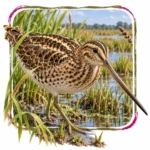
 Limpet Facts for Kids
 Barn Owl Facts for Kids
 Sea Hare Facts for Kids
 Nuralagus Facts for Kids
More Animal Facts for Kids
Visit the full animal facts library or explore a focused animal group.
More Extinct Animal Facts for Kids
Discover dinosaurs, Ice Age giants, prehistoric sea creatures, recently extinct species, and other animals from the past.
Fact check note: Fact checked against Cornell Lab of Ornithology All About Birds accounts for Wilson’s Snipe; AviList and IOC World Bird List taxonomy; BirdLife International species factsheets; British Trust for Ornithology migration and identification resources; Royal Society for the Protection of Birds snipe guidance; and peer-reviewed studies of bill-tip mechanoreceptors, rhynchokinesis, visual fields, winnowing, migration, nesting, and chick development. Group-level claims were separated from traits documented only in particular snipe species.

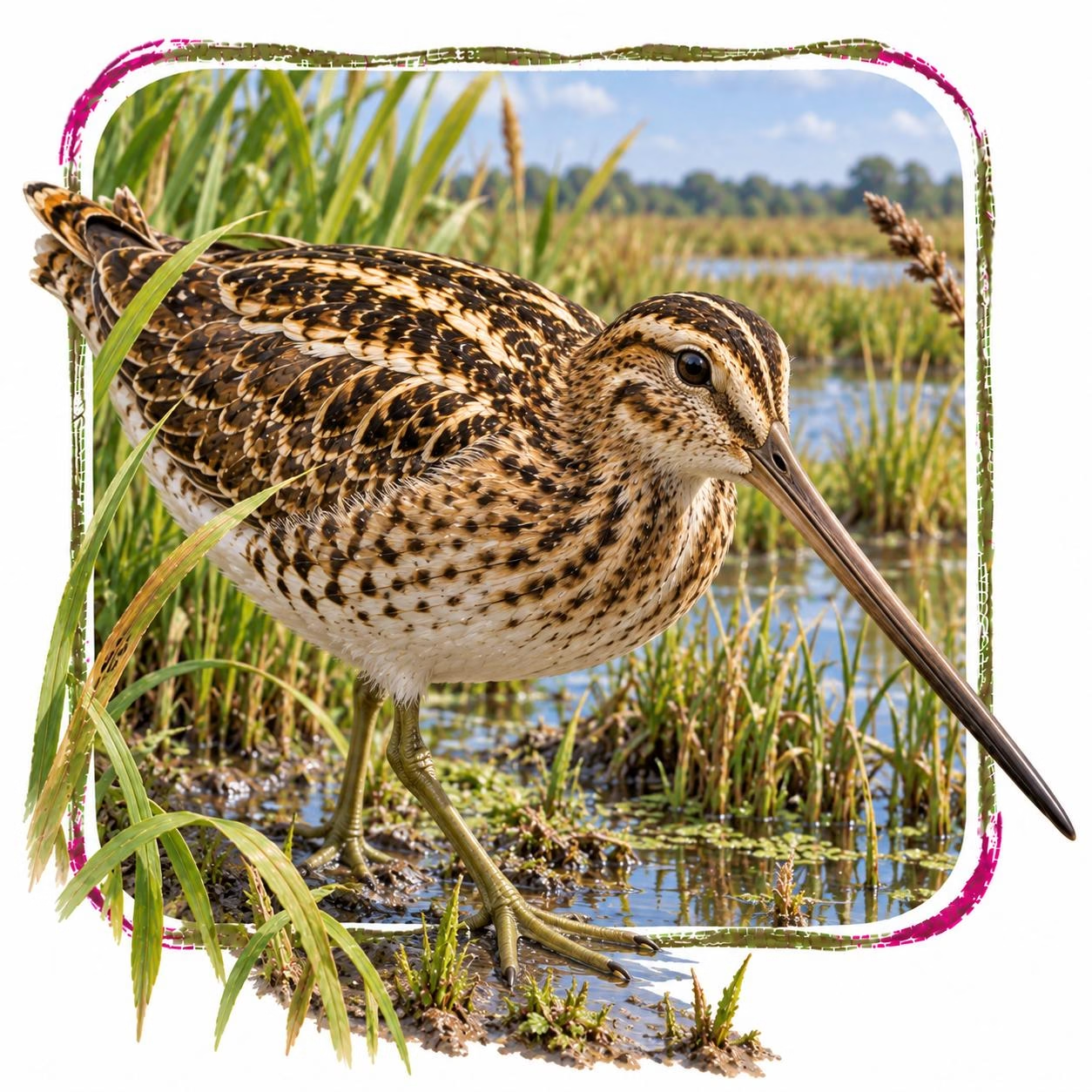
Snipe in its natural Marshes, bogs, fens, wet meadows, tundra pools, rice fields, muddy shores, and stream edges across much of the world habitat