
Snowshoe Hare Facts for Kids
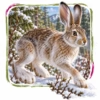
The snowshoe hare is a North American member of the rabbit family named for its exceptionally large, fur-covered hind feet. It lives mainly in boreal and mountain forests with thick shrubs where it can hide and find food. Many populations change from brown in summer to white in winter, but every snowshoe hare remains active all year and plays an enormous role as food for lynx, owls, foxes, coyotes, and other predators.
Quick Snowshoe Hare Facts
- Scientific Name: Lepus americanus
- Animal Type: Mammal, vertebrate, lagomorph, and hare
- Family: Leporidae, the rabbit and hare family
- Size: About 37–52 centimetres long and commonly 1.3–1.8 kilograms
- Known For: Broad furry hind feet and brown-to-white seasonal coat changes in many populations
- Range: Alaska and most of Canada south into parts of the northern and mountainous United States
- Habitat: Boreal forest, conifer woods, dense thickets, willow edges, bogs, and subalpine forest
- Diet: Herbivorous; grasses, herbs, leaves, twigs, buds, needles, and bark
- Young: Leverets are born furred, with open eyes, and able to move soon after birth
- Conservation: Globally widespread, but warmer winters and mismatched snow cover can create local challenges
What You’ll Learn
Discover 10 snowy snowshoe hare facts for kids about huge feet, seasonal coat changes, fast running, forest habitats, and deep-snow survival, plus a quiz, glossary, and activity
These facts are explained simply for kids, parents, teachers, and curious little fact-finders.
10 Fun Snowshoe Hare Facts for Kids
1. The Feet Work Like Snowshoes
The hind feet are long, broad, and covered with stiff fur. Spreading the toes increases their surface area, distributes the hare’s weight, and helps it travel across powdery snow without sinking as deeply as a narrow-footed animal.
Kid Decode: Each back foot is a furry snowshoe that the hare never has to strap on.
2. Many Change Color Twice a Year
Shortening autumn days trigger many snowshoe hares to replace brown summer fur with a mostly white winter coat. Lengthening spring days start the return to brown, and each gradual molt can take many weeks.
Kid Decode: The forest calendar tells the hare when to swap its brown jacket for a white one.
3. Not Every Winter Coat Is White
Snowshoe hares along parts of the Pacific coast may remain brown through winter because snow is less dependable there. Even in white-changing populations, a warm snowless autumn can leave a bright hare against dark ground.
Kid Decode: The name stays the same even where a snowshoe hare wears brown all year.
4. A Hare Is Not a Rabbit
Snowshoe hares belong to the rabbit family but are true hares. Their young are born covered in fur, with open eyes and strong legs, unlike many rabbit kits that begin life naked, blind, and helpless in a nest.
Kid Decode: A newborn leveret arrives wearing fur and ready to hop much sooner than a rabbit kit.
5. Winter Turns Twigs into Dinner
In summer, snowshoe hares browse grasses, herbs, leaves, and tender shoots. When snow covers those foods, they switch to buds, bark, and twigs from willow, birch, alder, spruce, and other woody plants.
Kid Decode: A bare-looking winter branch can be a crunchy hare salad.
6. Food Gets Digested Twice
Like other lagomorphs, a snowshoe hare produces nutrient-rich soft droppings called cecotropes and swallows them directly. Passing food through the digestive system again extracts vitamins and energy that were not available the first time.
Kid Decode: The hare recycles a meal inside its body so useful nutrients are not wasted.
7. Dusk Is a Busy Time
Snowshoe hares commonly rest beneath dense cover during much of the day and become active around dusk, dawn, and at night. Large ears, sensitive whiskers, and wide-set eyes help them notice danger in dim forest light.
Kid Decode: As the forest gets darker, the hidden hare starts its dinner rounds.
8. Numbers Rise and Fall in Cycles
Across much of the boreal forest, snowshoe hare numbers often climb and crash over roughly eight to eleven years. Food quality, stress, reproduction, and heavy predation interact, so no single cause explains the entire cycle.
Kid Decode: A forest can have crowds of hares one year and far fewer several years later.
9. Lynx Follow the Hare Cycle
Canada lynx depend strongly on snowshoe hares, and lynx numbers often change after hare numbers change. Great horned owls, goshawks, foxes, coyotes, bobcats, weasels, and other predators also share this important prey.
Kid Decode: Counting hares can help scientists predict how many lynx may live nearby later.
10. Several Litters Arrive Each Summer
A female may produce two to four litters during a northern spring and summer, depending on region, food, and year. Leverets hide separately in vegetation and gather briefly to nurse, reducing the chance that one predator finds them all.
Kid Decode: The baby hares use separate hiding spots instead of sharing one crowded nursery.
The Weirdest Snowshoe Hare Fact
A snowshoe hare’s coat-change clock listens mainly to day length, not to whether snow has actually fallen. As climate change shortens snowy seasons, a hare may become white while the forest floor remains brown. Researchers call this camouflage mismatch, and it can make the usually hidden animal much easier for predators to spot.
Try This Snowshoe Hare Activity
Build a Four-Season Hare Camouflage Wheel
Divide a circle into spring, summer, autumn, and winter forest scenes. Draw the same snowshoe hare in each section as its coat shifts from brown to patchy to white and back. Label the giant furry hind feet, black ear tips, side-set eyes, leveret, summer leaves, winter twigs, cecotrope digestion loop, hare-population curve, and a lynx curve following behind it.
Quick Snowshoe Hare Quiz
- What is the snowshoe hare’s scientific name? Answer: Lepus americanus.
- How do its broad hind feet help? Answer: They spread its weight over snow.
- What usually triggers the seasonal molt? Answer: Changing day length.
- What is a young hare called? Answer: A leveret.
- How often do many populations cycle? Answer: Roughly every eight to eleven years.
Mini Glossary
- Lagomorph: A mammal in the group containing rabbits, hares, and pikas.
- Boreal forest: A northern forest dominated largely by cold-tolerant conifers.
- Molt: The process of replacing old fur with new fur.
- Leveret: A young hare born furred and with open eyes.
- Cecotrope: A soft nutrient-rich dropping swallowed so food can be digested again.
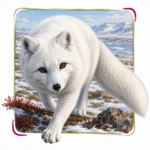 Arctic Fox Facts for Kids
 Pigeon Facts for Kids
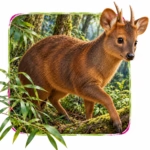 Southern Pudu Facts for Kids
 Elasmosaurus Facts for Kids
More Animal Facts for Kids
Visit the full animal facts library or explore a focused animal group.
More Extinct Animal Facts for Kids
Discover dinosaurs, Ice Age giants, prehistoric sea creatures, recently extinct species, and other animals from the past.
Fact check note: Fact checked against U.S. National Park Service snowshoe hare accounts for boreal range, feet, seasonal coats, diets, reproduction, leverets, and eight-to-eleven-year cycles; Yellowstone, Denali, Kobuk Valley, Olympic, and Gates of the Arctic National Park resources; Smithsonian and University of Michigan Animal Diversity Web mammal references; IUCN assessment material; and peer-reviewed research on photoperiod-driven molts, brown winter morphs, camouflage mismatch, cecotrophy, predator-prey cycles, and Canada lynx relationships.

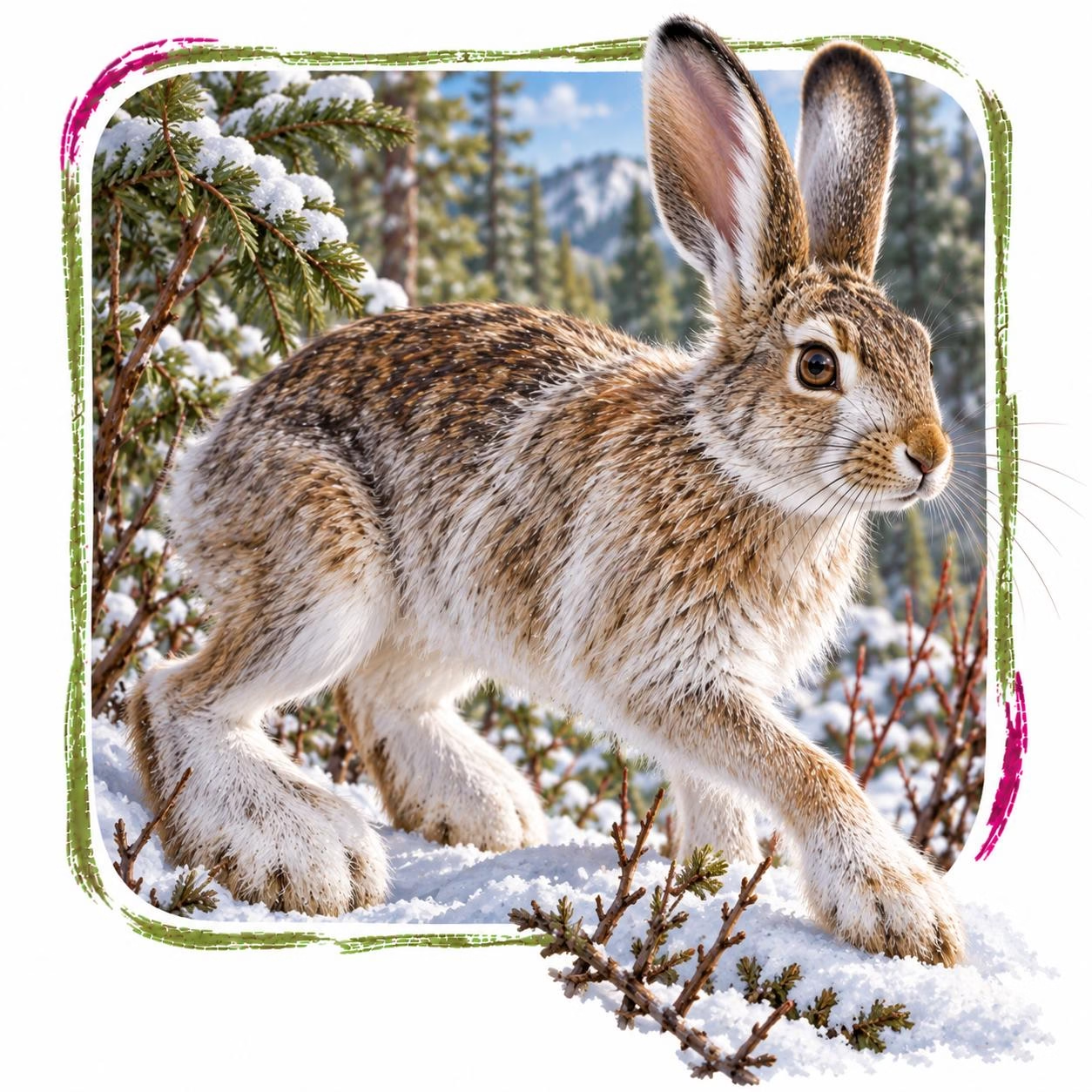
Snowshoe Hare in its natural Boreal forests, conifer woods, dense shrub thickets, willow edges, bogs, and subalpine forests across northern North America habitat