
Southern Elephant Seal Facts for Kids
The southern elephant seal is the largest seal and one of Earth’s most extreme diving mammals. It breeds and molts on subantarctic and southern coasts but spends most of its life roaming the cold Southern Ocean for fish and squid. An adult male can weigh several times as much as a female and develops the inflatable trunk-like nose that gives elephant seals their name.
Quick Southern Elephant Seal Facts
- Scientific Name: Mirounga leonina
- Animal Type: Mammal, vertebrate, marine mammal, pinniped, and true seal
- Family: Phocidae, the earless or true seals
- Size: Adult females about 2.6–3 metres and 400–900 kilograms; large males about 4.2–5.8 metres and 2,200–4,000 kilograms
- Known For: Enormous males, inflatable noses, long migrations, and exceptionally deep repetitive dives
- Range: Southern Ocean from subantarctic islands toward Antarctica and southern South America
- Habitat: Open ocean and deep continental-slope waters, with beaches and ice-free shores for breeding and molting
- Diet: Carnivorous; mainly fish and squid, with other cephalopods and occasional crustaceans
- Young: Usually one pup, nursed on exceptionally rich milk for only about three to four weeks
- Conservation: Globally Least Concern, but colonies and regional trends vary and marine change remains important
What You’ll Learn
Learn 10 enormous southern elephant seal facts for kids about giant males, deep dives, long underwater trips, beach colonies, and Southern Ocean life, plus a quiz, glossary, and activity
These simple facts are written for kids, parents, teachers, and curious young minds.
10 Fun Southern Elephant Seal Facts for Kids
1. Males Are the Largest Seals
A full-grown male may reach several tonnes and is far larger than a female. Southern elephant seals show one of the strongest size differences between the sexes among mammals because large males compete for access to breeding groups.
Kid Decode: One giant bull can weigh about as much as a large delivery truck.
2. The Nose Amplifies a Roar
A mature male develops an inflatable proboscis, or trunk-like nose. When he calls, the enlarged nose helps resonate deep roaring and rhythmic sounds used to identify rivals, advertise status, and avoid some physical contests.
Kid Decode: The floppy nose becomes a built-in bass speaker.
3. They Are True Seals Without Ear Flaps
Southern elephant seals belong to Phocidae, the true-seal family. They have no external ear flaps, and their hind flippers cannot rotate forward beneath the body, so they wriggle heavily on land but move powerfully in water.
Kid Decode: The clumsy beach crawler becomes a streamlined ocean athlete.
4. Most Dives Last About Half an Hour
At sea, elephant seals dive almost continuously, with many dives lasting around 20–30 minutes and reaching several hundred metres. They often spend only a few minutes breathing at the surface before descending again.
Kid Decode: A seal may finish one deep dive, take a tiny air break, and start the next.
5. Record Dives Reach Extreme Depths
Researchers have recorded southern elephant seals deeper than 1,500 metres and underwater for close to two hours. These are exceptional performances rather than the length and depth of every dive.
Kid Decode: A champion dive can descend far below the depth reached by most sunlight.
6. Oxygen Travels in Blood and Muscle
Large amounts of hemoglobin in the blood and myoglobin in the muscles store oxygen. During a dive, heart rate slows, blood flow favors vital organs, and flexible lungs compress as pressure increases.
Kid Decode: The seal carries much of its diving oxygen inside blood and muscle instead of one huge breath.
7. Ocean Journeys Cover Thousands of Kilometres
After leaving breeding or molting beaches, individuals roam widely across the Southern Ocean and return with precise timing. Satellite tags reveal different routes to continental shelves, deep ocean fronts, and waters near Antarctic sea ice.
Kid Decode: A beach nap may begin and end an ocean trip spanning thousands of kilometres.
8. Fish and Squid Hide in Deep Water
Elephant seals hunt fish and squid in dim mesopelagic and deep waters, often day and night. Their large sensitive eyes and whiskers help detect prey where vision is limited, while repeated diving keeps them near moving food layers.
Kid Decode: The seal visits the ocean’s twilight zone for dinner.
9. Pups Grow Fast on Rich Milk
A female usually gives birth to one pup and nurses it for only about three to four weeks while fasting ashore. Her very fatty milk lets the pup gain mass rapidly before it must begin learning to live at sea.
Kid Decode: An elephant-seal pup can more than double its birth mass in less than a month.
10. A Whole Coat Molts at Once
During the annual catastrophic molt, old hair and the outer skin layer peel away in patches. The seal remains ashore for weeks because blood flow to growing skin would drain heat too quickly in cold water.
Kid Decode: The shaggy seal replaces its coat in giant patches instead of a few hairs at a time.
The Weirdest Southern Elephant Seal Fact
During a very deep dive, increasing pressure compresses the flexible lungs and pushes air away from delicate gas-exchanging regions. Because much of the seal’s usable oxygen is stored in its blood and muscles, this controlled collapse helps it keep diving while also limiting the amount of nitrogen entering its bloodstream.
Try This Southern Elephant Seal Activity
Chart an Elephant Seal’s Year
Draw a circular calendar with breeding, pup nursing, ocean feeding, return to shore, catastrophic molt, and another feeding journey. Beside it, make a depth scale from the surface to 1,500 metres and plot a typical 30-minute dive, a rare record dive, a hunting dive, and a lung-compression diagram. Label the proboscis, true-seal flippers, blood and muscle oxygen stores, fish, squid, and a fast-growing pup.
Quick Southern Elephant Seal Quiz
- What is the southern elephant seal’s scientific name? Answer: Mirounga leonina.
- Which sex develops the large proboscis? Answer: Adult males.
- How long does a typical dive often last? Answer: About 20–30 minutes.
- Which proteins help store oxygen? Answer: Hemoglobin and myoglobin.
- What is its patchy annual skin-and-hair replacement called? Answer: A catastrophic molt.
Mini Glossary
- Pinniped: A member of the seal, sea lion, and walrus group.
- Proboscis: The adult male elephant seal’s enlarged inflatable nose.
- Myoglobin: A protein that stores oxygen in muscle.
- Mesopelagic: The dim ocean layer roughly 200–1,000 metres below the surface.
- Catastrophic molt: Rapid annual shedding of hair together with the outer skin layer.
 Bumblebee Facts for Kids
 Pufferfish Facts for Kids
 Katydid Facts for Kids
 Giant Ground Sloth Facts for Kids
More Animal Facts for Kids
Visit the full animal facts library or explore a focused animal group.
More Extinct Animal Facts for Kids
Discover dinosaurs, Ice Age giants, prehistoric sea creatures, recently extinct species, and other animals from the past.
Fact check note: Fact checked against Australian Antarctic Program southern elephant seal resources for size, distribution, diving, pup development, and time at sea; British Antarctic Survey seal guidance; Antarctic and Southern Ocean Coalition species information; IUCN Red List assessment material; Integrated Marine Observing System and peer-reviewed tracking studies; and published research on sexual size dimorphism, proboscis acoustics, true-seal locomotion, hemoglobin and myoglobin oxygen stores, lung compression, foraging, fasting, and catastrophic molt. Typical and record dive values were kept separate.

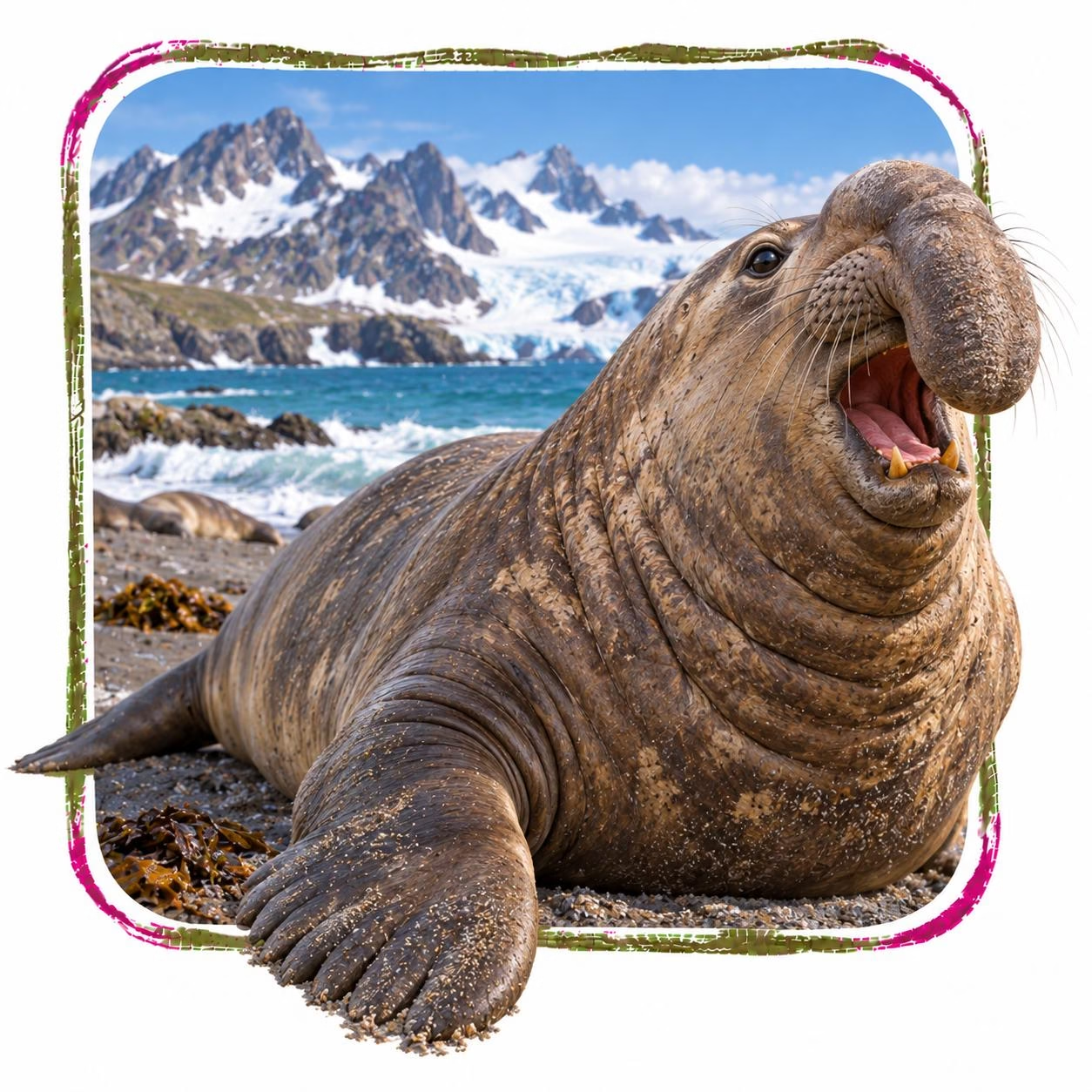
Southern Elephant Seal in its natural Southern Ocean, deep continental-slope and open-ocean waters, subantarctic islands, Antarctic coasts, and southern South American shores habitat