
Stoat Facts for Kids
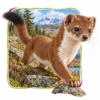
The stoat is a small, long-bodied predator in the weasel family. It is usually chestnut brown above and creamy white below, with a black tail tip that helps distinguish it from smaller weasels. In cold snowy regions many stoats grow a white winter coat called ermine, while their flexible bodies, sharp senses, rapid metabolism, and fearless hunting let them pursue rodents and rabbits through complex habitats.
Quick Stoat Facts
- Scientific Name: Mustela erminea in its modern narrower sense
- Animal Type: Mammal, vertebrate, carnivore, mustelid, and weasel relative
- Family: Mustelidae
- Size: Often about 17–33 centimetres from head to body, plus a 6–14-centimetre tail; males are substantially larger than females
- Known For: Long flexible body, bounding gait, black-tipped tail, bold hunting, and white ermine winter coat
- Range: Native across much of Europe and northern Asia and into Alaska; introduced to New Zealand and some other islands
- Habitat: Woodland edges, grasslands, moors, tundra, farms, hedgerows, dunes, wetlands, rocky slopes, and alpine areas
- Diet: Carnivorous; voles, mice, lemmings, rabbits, birds, eggs, insects, amphibians, reptiles, fish, and carrion
- Young: One spring litter of several blind, lightly furred kits after months of delayed implantation
- Conservation: Widespread overall, though local populations vary; introduced stoats seriously threaten native wildlife in New Zealand
What You’ll Learn
Discover 10 speedy stoat facts for kids about long bodies, quick hunting, seasonal white coats, dens, and the name ermine, with a quiz, glossary, and activity
These facts are explained simply for kids, parents, teachers, and curious little fact-finders.
10 Fun Stoat Facts for Kids
1. A Stoat Is a Mustelid
Stoats belong to the weasel family alongside ferrets, mink, martens, badgers, and otters. They are carnivores rather than rodents, even though their small size and quick movements may resemble the mice and voles they hunt.
Kid Decode: The tiny mouse-shaped blur is actually a relative of otters and badgers.
2. Modern Taxonomy Split the Old Ermine Map
Older books treated ermine across Eurasia and North America as one widespread species. Genetic work now commonly separates the Eurasian-and-Alaskan stoat, Mustela erminea, from the American ermine, Mustela richardsonii, and Haida ermine, Mustela haidarum.
Kid Decode: One familiar animal map became three species maps when DNA added new clues.
3. The Tail Tip Stays Black
A stoat has a longer tail than a least weasel, and its tip remains black in both summer and winter. The moving dark tip may draw a pursuing predator’s strike away from the stoat’s head and body.
Kid Decode: Even when the coat turns snowy white, the tail keeps its black paintbrush tip.
4. Ermine Is the White Winter Coat
In cold regions, shorter autumn days trigger replacement of brown fur with white fur that blends into snow. Warmer populations may remain brown, and unpredictable snow seasons can leave a white stoat standing out on dark ground.
Kid Decode: Stoat and ermine can be the same animal wearing different seasonal colors.
5. A Long Body Enters Narrow Tunnels
Short legs, a narrow skull, and a flexible spine let the stoat follow voles and other prey through burrows, rocks, roots, and dense vegetation. The tradeoff is rapid heat loss from a long thin body.
Kid Decode: The shape that fits a mouse tunnel also leaks body heat quickly.
6. It Can Hunt Animals Larger Than Itself
Stoats mainly take small mammals but can kill rabbits and hares much heavier than themselves. They approach quickly, grip with sharp claws, and deliver a precise bite near the back of the skull or neck.
Kid Decode: This pocket-sized hunter may tackle a rabbit many times its own weight.
7. High Energy Means Frequent Hunting
A fast metabolism keeps the small body warm but demands regular food. Stoats hunt by day or night, investigate holes and scent trails, and sometimes store extra prey in a den for later.
Kid Decode: The stoat’s inner furnace needs frequent fuel stops.
8. Dens Often Belonged to Other Animals
A stoat shelters in rodent tunnels, rabbit burrows, hollow logs, stone walls, tree roots, rock piles, or buildings. A female may line the nest chamber with grass and fur taken from prey before raising her kits.
Kid Decode: The new tenant may move into its prey’s old tunnel and redecorate with fur.
9. Pregnancy Includes a Long Pause
Mating usually happens in spring or summer, but the tiny embryo does not implant and resume development until late winter. This delayed implantation lets the kits arrive in spring when prey is becoming more plentiful.
Kid Decode: The embryo presses a months-long pause button before growing into a spring kit.
10. Stoats Climb and Swim Surprisingly Well
A stoat can bound over land, climb trees and stone walls, and swim across streams or wide water gaps. These abilities help it find food, escape danger, and reach islands, which is especially harmful where vulnerable native birds evolved without such predators.
Kid Decode: The little ground hunter can add climbing and swimming to its skill list.
The Weirdest Stoat Fact
European royal and ceremonial robes were traditionally decorated with white ermine fur dotted by black marks. Those dark marks represented the stoat’s black tail tips sewn into the pale winter pelts. A living stoat needs that tail for balance and communication, so today its coat is best admired on the animal itself.
Try This Stoat Activity
Design a Stoat’s Four-Season Territory
Draw summer and winter versions of the same habitat with the stoat changing from brown to white while its tail tip stays black. Add vole tunnels, a rabbit burrow den, rock pile, stream crossing, tree-climbing route, cached food, separated modern species maps, and a delayed-implantation calendar from summer mating to spring kits. Include a New Zealand panel showing a protected bird nesting area.
Quick Stoat Quiz
- What family contains the stoat? Answer: Mustelidae.
- What color is the tail tip all year? Answer: Black.
- What is the white winter coat called? Answer: Ermine.
- Why does the embryo pause development? Answer: So kits can arrive in favorable spring conditions.
- Which country’s native wildlife is badly affected by introduced stoats? Answer: New Zealand.
Mini Glossary
- Mustelid: A mammal in the weasel family, Mustelidae.
- Ermine: The name commonly used for a stoat in its white winter coat.
- Metabolism: The body’s chemical process for using food and releasing energy.
- Delayed implantation: A reproductive pause before an embryo attaches and resumes development.
- Introduced species: A species moved by people beyond its native range.
 House Sparrow Facts for Kids
 Adder Facts for Kids
 Lovebird Facts for Kids
 Japanese Sea Lion Facts for Kids
More Animal Facts for Kids
Visit the full animal facts library or explore a focused animal group.
More Extinct Animal Facts for Kids
Discover dinosaurs, Ice Age giants, prehistoric sea creatures, recently extinct species, and other animals from the past.
Fact check note: Fact checked against The Wildlife Trusts stoat species account; New Zealand Department of Conservation stoat biology and invasive-predator resources; University of Michigan Animal Diversity Web Mustela erminea account; IUCN assessment material; Mammal Diversity Database and peer-reviewed genomic work separating Mustela erminea, M. richardsonii, and M. haidarum; and studies of seasonal coat color, black tail-tip function, morphology, diet, metabolism, denning, delayed implantation, swimming, dispersal, and introduced impacts. Native and introduced ranges were identified separately.

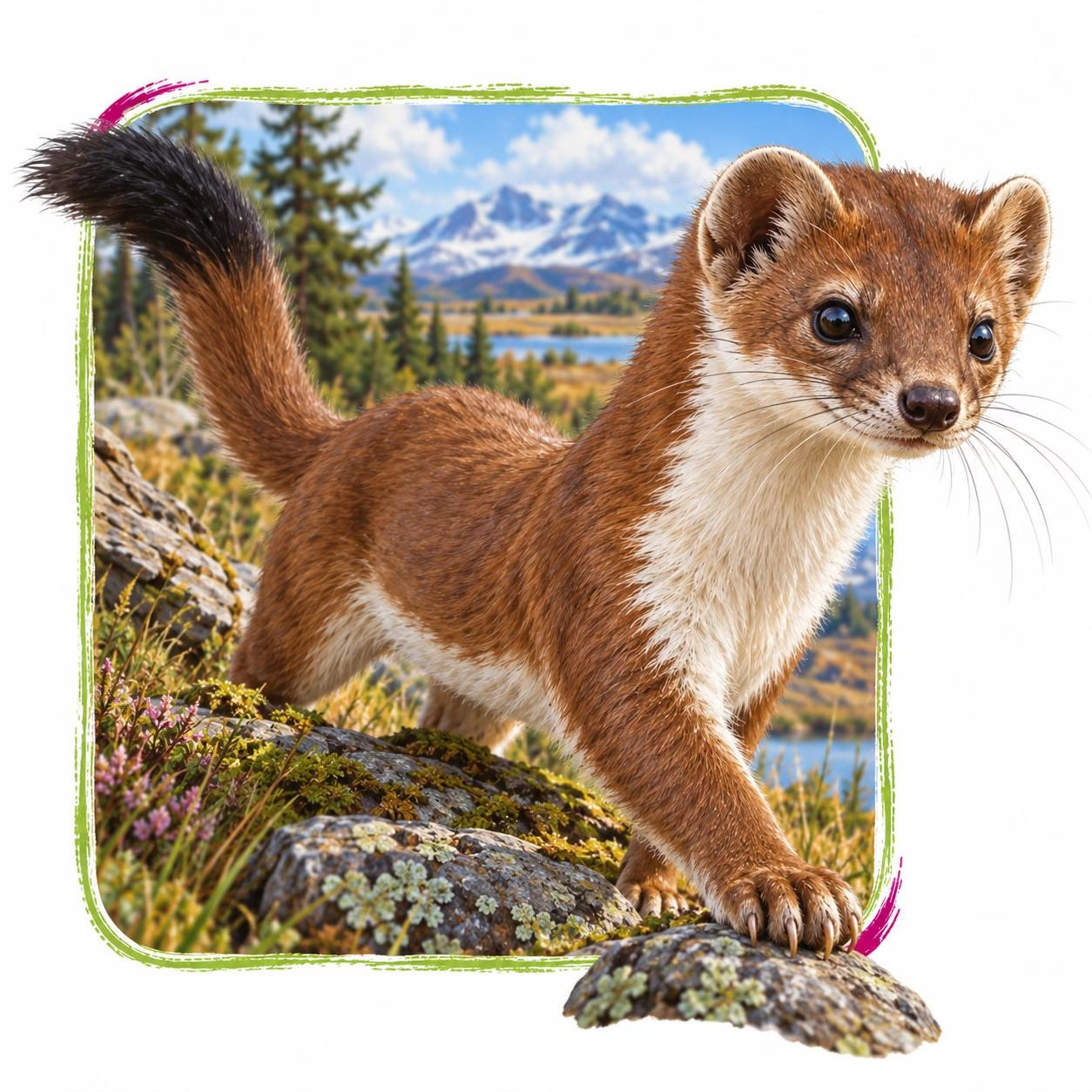
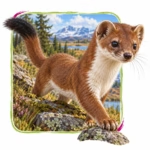
Stoat in its natural Woodland edges, grasslands, moors, tundra, farms, hedgerows, dunes, wetlands, rocky slopes, and alpine areas across northern Eurasia and Alaska, with introduced populations in New Zealand habitat