
Sumatran Rhino Facts for Kids
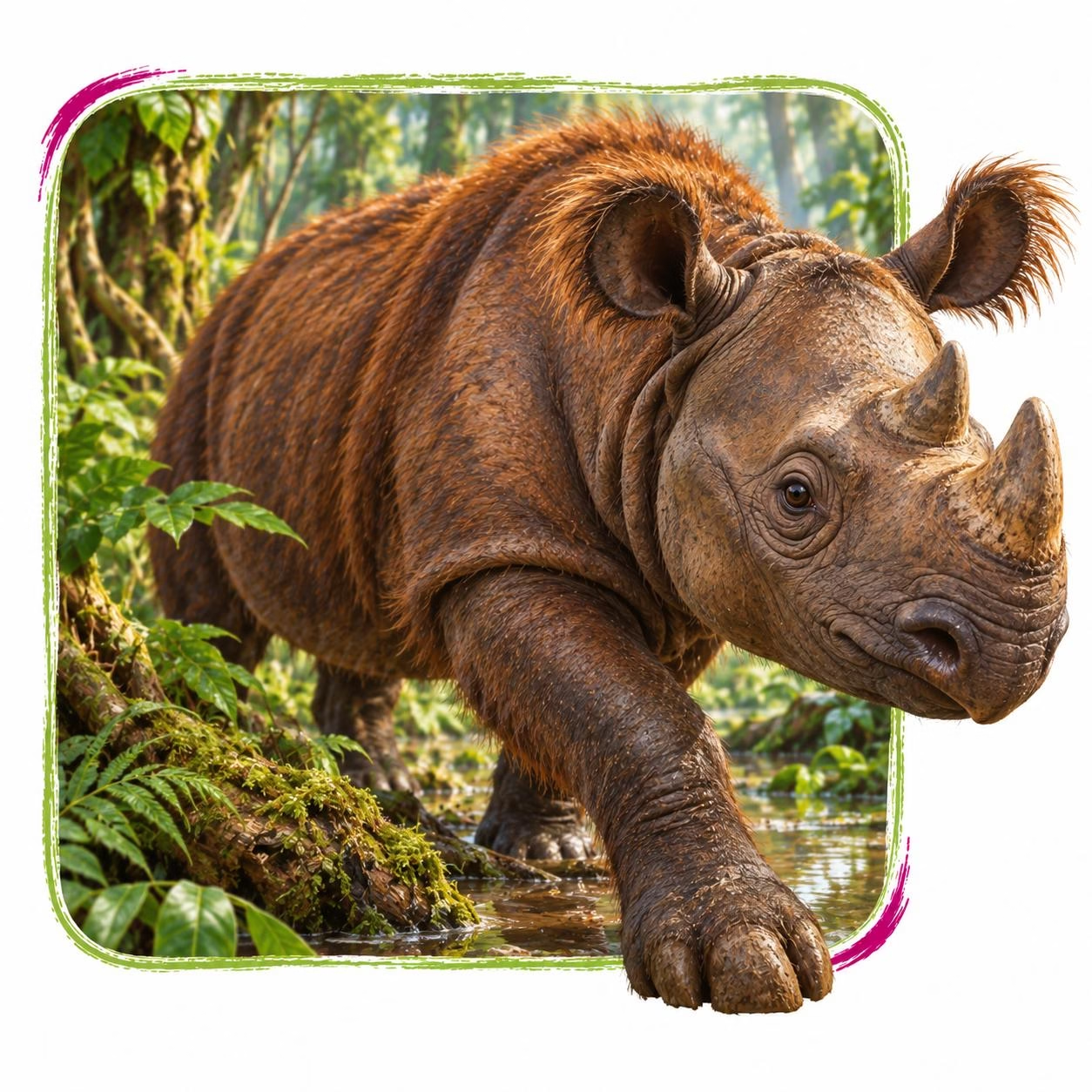
The Sumatran rhino is the smallest living rhinoceros and the only Asian rhino with two horns. Reddish hair covers much of its folded skin, giving it a wonderfully prehistoric look. Yet this shy Indonesian forest animal is Critically Endangered, so every calf and every protected patch of connected habitat matters.
Quick Sumatran Rhino Facts
- Scientific name: Dicerorhinus sumatrensis
- Animal group: Mammal; rhinoceros family
- Size: About 2.4–3.2 m long and 1–1.5 m tall at the shoulder
- Weight: Roughly 500–960 kg
- Range: Tiny, separated populations in Indonesia
- Habitat: Tropical rainforest, mountain forest, and swampy forest
- Diet: Herbivore—leaves, twigs, bark, shoots, and fruit
- Young: Usually one calf after about 15–16 months
- Estimated wild population: About 34–47 in the 2025 estimate
- Conservation status: Critically Endangered
What You’ll Learn
Learn 10 rare Sumatran rhino facts for kids about two horns, shaggy hair, rainforest browsing, small size, and conservation, with a quiz, glossary, and activity
These simple facts are written for kids, parents, teachers, and curious young minds.
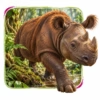
10 Fun Sumatran Rhino Facts for Kids
1. 1. It Is the Smallest Living Rhino
A grown Sumatran rhino is still heavy, but it is much smaller than the enormous white rhino. Adults generally stand only about as tall as a kitchen counter at the shoulder.
Kid Decode: Even the smallest rhino species can weigh about as much as a small car.
2. 2. It Is the Hairiest Rhino
Young animals may look especially shaggy, while adults have reddish-brown hair that can thin with age. Hair helps protect the skin in cool, wet mountain forests.
Kid Decode: A Sumatran rhino calf can look as though it is wearing a fuzzy brown coat.
3. 3. It Has Two Horns
Like African rhinos, the Sumatran rhino has a front horn and a smaller rear horn. Rhino horn is made of keratin, the same tough protein found in human hair and fingernails.
Kid Decode: Its rear horn may be only a small bump, especially in females.
4. 4. It Usually Travels Alone
Adults are mostly solitary except when courting or when a mother is raising a calf. They use trails, dung piles, bent plants, urine, and scents to communicate without meeting often.
Kid Decode: A forest path can carry a rhino message long after the animal has walked away.
5. 5. It Has a Surprising Voice
Sumatran rhinos make whistles, squeaks, hums, and long rising calls. In thick rainforest, sound can travel where sight is blocked by trees and leaves.
Kid Decode: Some calls sound more like a whale or a singing bird than a huge land mammal.
6. 6. Mud Is Its Sunscreen
A rhino rolls in muddy wallows to cool down and coat its skin. The mud can help protect against biting insects and strong sunlight and may keep the skin from drying and cracking.
Kid Decode: After wallowing, a Sumatran rhino may look like a moving lump of wet earth.
7. 7. A Gripping Lip Collects Leaves
Its flexible upper lip curls around leaves, twigs, and fruit. As a browser, the rhino eats many forest plants and helps shape pathways through thick vegetation.
Kid Decode: The pointed upper lip works a little like a short finger for picking food.
8. 8. Calves Take a Long Time to Arrive
Pregnancy lasts about 15–16 months and usually produces one calf. A female then spends years caring for the youngster before she can raise another, so the population grows very slowly.
Kid Decode: A baby may stay with its mother for roughly two to three years.
9. 9. Separation Makes Finding Mates Hard
The remaining rhinos live in tiny, scattered groups. When animals cannot find partners, births fall, and females that go too long without breeding can develop reproductive problems.
Kid Decode: Connecting and carefully managing populations can be just as important as stopping poaching.
10. 10. Conservation Teams Help Every Rhino
Protection includes rainforest patrols, habitat management, surveys, rescue decisions, veterinary care, and a carefully managed breeding program at the Sumatran Rhino Sanctuary.
Kid Decode: Five calves had been born at the sanctuary by late 2023, giving scientists valuable knowledge and hope.
The Weirdest Sumatran Rhino Fact
Its closest known rhino relatives include the extinct woolly rhinoceroses that once roamed Ice Age Eurasia. DNA studies place the Sumatran rhino on the same side of the rhino family tree, even though today it lives in steamy tropical rainforest rather than on a frozen steppe.
Try This Sumatran Rhino Activity
Reconnect the Rhino Forest
Draw two protected rainforest areas with rhinos living far apart. Design a safe habitat corridor between them. Include food plants, water, mud wallows, ranger patrols, and a wildlife crossing. Label how each feature helps rhinos survive and find mates.
Quick Sumatran Rhino Quiz
- How many horns does a Sumatran rhino have? Two.
- What makes it look shaggy? Reddish-brown hair.
- What does it use to grasp leaves? A flexible, pointed upper lip.
- Why does it roll in mud? To cool and protect its skin.
- What is its conservation status? Critically Endangered.
Mini Glossary
- Browser
- An animal that eats leaves, twigs, shoots, and other high-growing plant parts.
- Keratin
- The tough protein in rhino horn, hair, and fingernails.
- Solitary
- Usually living or traveling alone.
- Wallow
- A muddy place where an animal rolls or rests.
- Critically Endangered
- The IUCN category for a species facing an extremely high risk of extinction in the wild.
 Tiger Facts for Kids
 Cockatoo Facts for Kids
 Pipefish Facts for Kids
 Mauritian Blue Pigeon Facts for Kids
More Animal Facts for Kids
Visit the full animal facts library or explore a focused animal group.
More Extinct Animal Facts for Kids
Discover dinosaurs, Ice Age giants, prehistoric sea creatures, recently extinct species, and other animals from the past.
Fact check note: Sources checked: International Rhino Foundation, “State of the Rhino 2025” and Sumatran rhino species materials; IUCN Red List assessment for Dicerorhinus sumatrensis; IUCN Species Survival Commission Asian Rhino Specialist Group; peer-reviewed rhino phylogeny research. The 34–47 wild estimate is time-sensitive and should be rechecked before publication.

Sumatran Rhino in its natural Tropical lowland rainforest, mountain forest, and swampy forest habitat