
Terrapin Facts for Kids
What exactly is a terrapin? The answer depends on where you live. In Britain and some other places, people use the word for various freshwater or semi-aquatic turtles. In North America, “terrapin” usually means the diamondback terrapin, a special turtle of brackish coastal marshes. All terrapins are turtles, but terrapin is not one precise scientific group.
Quick Terrapin Facts
- Scientific classification: Various species in the turtle order Testudines
- Animal group: Reptiles
- Meaning: Usually a freshwater, brackish-water, or semi-aquatic turtle
- Size: Varies greatly by species
- Range: Wetlands in many parts of the world
- Habitat: Ponds, lakes, rivers, marshes, estuaries, and mangroves
- Diet: Often omnivorous; species differ
- Breathing: Uses lungs and must surface for air
- Young: Called hatchlings
- Conservation status: Varies by species and population
What You’ll Learn
Discover 10 fascinating terrapin facts for kids about shells, webbed feet, freshwater wetlands, basking, and how the name terrapin is used, with a quiz, glossary, and activity
These facts are explained simply for kids, parents, teachers, and curious little fact-finders.
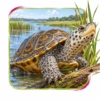
10 Fun Terrapin Facts for Kids
1. 1. Terrapin Is a Flexible Name
Terrapin is a common name rather than a single branch on the turtle family tree. It may describe several semi-aquatic turtles, while Americans most often use it for the diamondback terrapin.
Kid Decode: The same turtle might be called a terrapin in one country and a freshwater turtle in another.
2. 2. Every Terrapin Is a Turtle
Turtle is the broad name for reptiles in the order Testudines. Terrapins fit inside that group, alongside sea turtles, freshwater turtles, box turtles, and tortoises.
Kid Decode: Think of “turtle” as the big umbrella and “terrapin” as one everyday label underneath it.
3. 3. The Shell Is Part of Its Skeleton
A terrapin’s ribs and backbone are joined to the upper shell, called the carapace. The lower shell is the plastron, and bridges of bone and tissue connect the two.
Kid Decode: A terrapin cannot crawl out of its shell because the shell is part of its body.
4. 4. Webbed Feet Work Like Paddles
Most terrapins have toes joined by webbing, which pushes against the water while swimming. Their feet are better for ponds and marshes than the long flippers of sea turtles.
Kid Decode: Webbing turns a small foot into a wider swimming paddle.
5. 5. They Breathe Air
Even a terrapin that spends hours underwater has lungs, not gills. It must reach the surface to breathe, although a resting turtle can hold its breath much longer than an active one.
Kid Decode: A sleeping or inactive terrapin uses oxygen slowly and can stay submerged for a long time.
6. 6. Basking Warms the Body
Terrapins are ectotherms, so sunshine helps raise their body temperature. They often climb onto logs, rocks, or banks to warm up, digest food, and dry their shells.
Kid Decode: A row of terrapins on a log is using free solar heating.
7. 7. A Beak Replaces Teeth
Terrapins do not have teeth. Sharp keratin edges on the jaws form a beak that can snip plants, seize insects, or crush snails depending on the species.
Kid Decode: A diamondback terrapin has especially strong jaws for cracking shellfish.
8. 8. Eggs Must Be Laid on Land
Females leave the water and dig nests in soil or sand. After covering the eggs, they usually provide no parental care, so hatchlings must find water and shelter on their own.
Kid Decode: A newly hatched terrapin carries a small temporary egg tooth for breaking out of its shell.
9. 9. Temperature Can Affect Hatchlings
In many turtle species, nest temperature helps determine whether embryos develop as males or females. The exact temperature pattern differs among species.
Kid Decode: Warm sand can change more than hatching speed—it may influence the sex of the babies.
10. 10. Wetlands Need Safer Crossings
Terrapins face habitat loss, road traffic, pollution, collection for the pet trade, fishing gear, and abandoned traps. Protecting nesting banks and helping turtles cross roads safely can save adults and eggs.
Kid Decode: Never move a wild terrapin to a new pond; if safe help is needed, follow local wildlife guidance.
The Weirdest Terrapin Fact
Diamondback terrapins live where river water mixes with the sea. They can remove extra salt using special glands near their eyes and may drink the thin layer of fresh water that briefly floats on a marsh after rain. They have even been observed lifting their heads to catch raindrops in their mouths.
Try This Terrapin Activity
Build a Terrapin Wetland
Draw a pond or salt marsh from above. Include deep water, shallow feeding areas, plants, a sunny basking log, a sandy nesting bank, and a safe wildlife tunnel under a road. Add arrows showing how a terrapin moves among these places during the year.
Quick Terrapin Quiz
- Is terrapin one exact scientific group? No. It is a flexible common name.
- What is the upper shell called? The carapace.
- Do terrapins have gills? No. They breathe air with lungs.
- Why do they bask? To warm their bodies and help normal body functions.
- Where do females lay eggs? In nests dug on land.
Mini Glossary
- Brackish
- Slightly salty water where freshwater and seawater mix.
- Carapace
- The upper part of a turtle’s shell.
- Plastron
- The lower part of a turtle’s shell.
- Ectotherm
- An animal that relies mainly on outside heat to control body temperature.
- Bask
- To rest in warmth or sunlight.
 Gerenuk Facts for Kids
 Electric Eel Facts for Kids
 Buffalo Facts for Kids
 Gigantopithecus Facts for Kids
More Animal Facts for Kids
Visit the full animal facts library or explore a focused animal group.
More Extinct Animal Facts for Kids
Discover dinosaurs, Ice Age giants, prehistoric sea creatures, recently extinct species, and other animals from the past.
Fact check note: Sources checked: Florida Fish and Wildlife Conservation Commission diamondback terrapin profile; Massachusetts Division of Fisheries and Wildlife terrapin guidance; The Wetlands Institute terrapin conservation materials; standard turtle anatomy and life-history references. “Terrapin” varies by region, so this page separates the broad British usage from the North American diamondback terrapin.

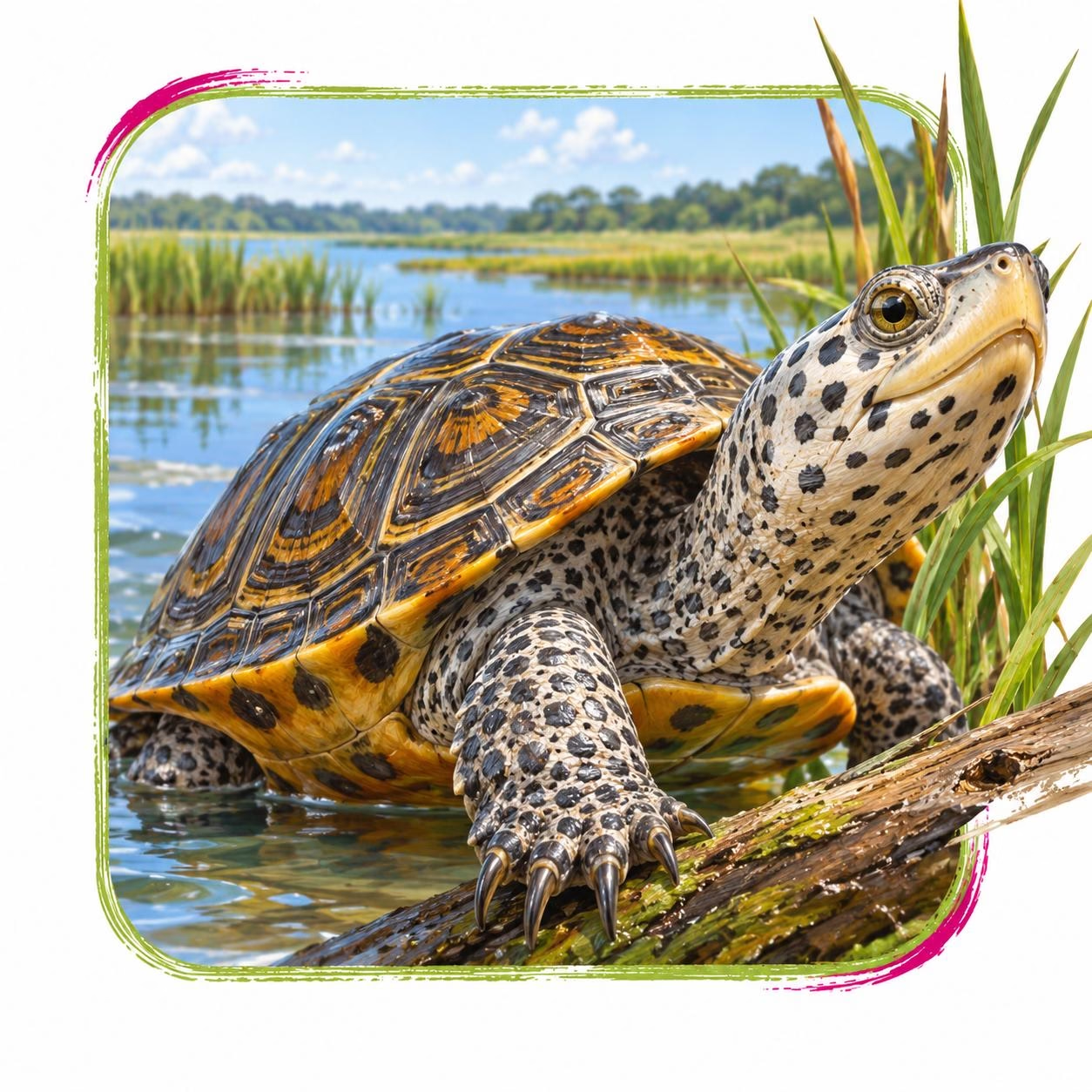
Terrapin in its natural Ponds, lakes, rivers, marshes, estuaries, mangroves, and nearby nesting banks habitat