
Turtle Facts for Kids
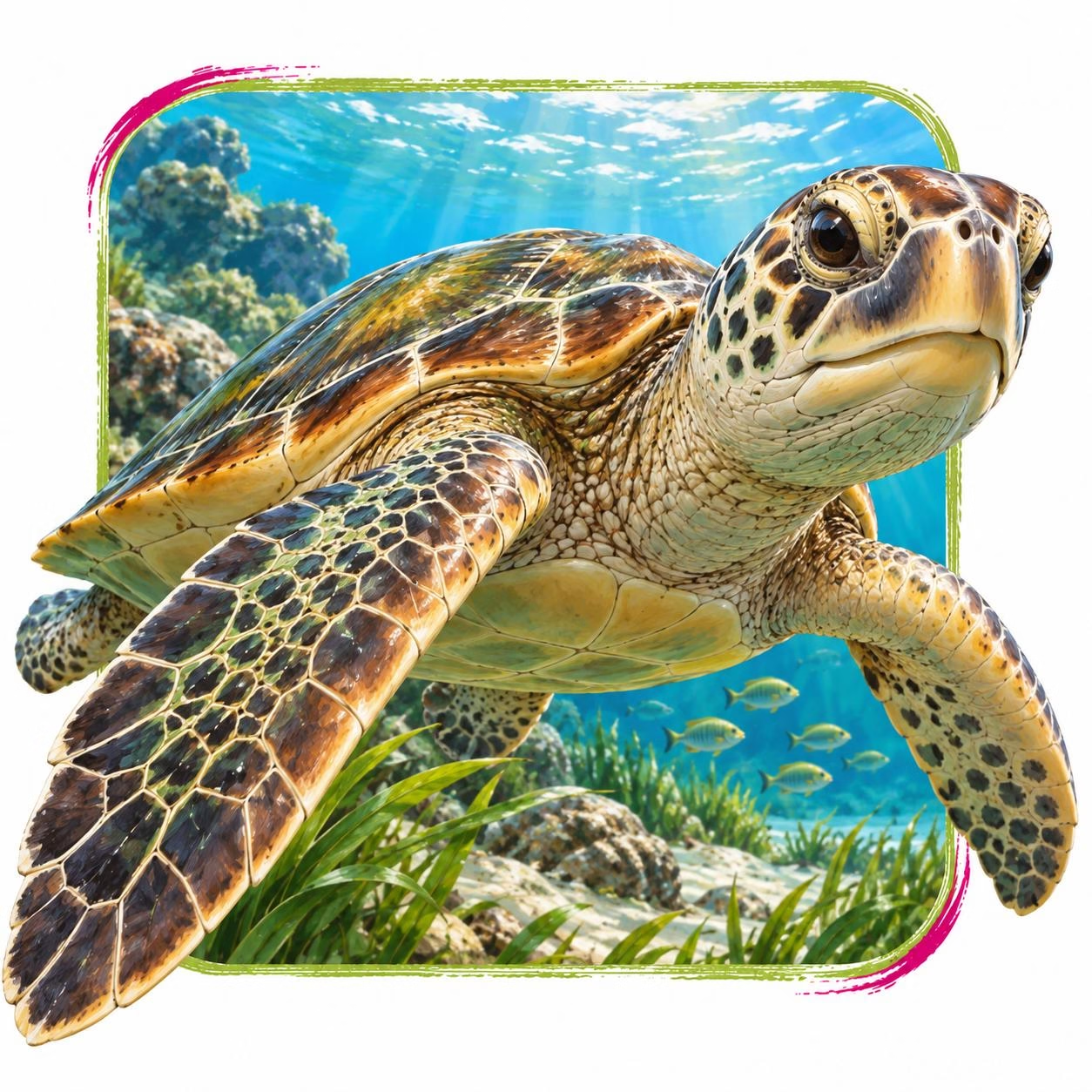
Turtles have traveled Earth for more than 200 million years. Their order includes sea turtles, freshwater turtles, terrapins, box turtles, and tortoises. From a tiny bog turtle to a giant leatherback, every species carries a remarkable shell that is built into its skeleton.
Quick Turtle Facts
- Scientific order: Testudines
- Animal group: Reptiles
- Diversity: More than 350 living species
- Range: Every continent except Antarctica; many oceans
- Habitat: Oceans, rivers, ponds, wetlands, forests, grasslands, and deserts
- Size: From under 10 cm to more than 2 m long
- Diet: Herbivore, carnivore, or omnivore depending on species
- Breathing: All living turtles have lungs
- Young: Called hatchlings
- Body temperature: Ectothermic
What You’ll Learn
Learn 10 amazing turtle facts for kids about living shells, toothless beaks, eggs, swimming, and species from oceans to deserts, with a quiz, glossary, and activity
These simple facts are written for kids, parents, teachers, and curious young minds.

10 Fun Turtle Facts for Kids
1. 1. Turtles Are Ancient Reptiles
Early turtle relatives appeared more than 200 million years ago, before many famous dinosaurs. Modern turtles still follow the same basic body plan: a beak, sturdy limbs, and a protective shell.
Kid Decode: Turtles had shelled ancestors walking Earth long before Tyrannosaurus rex evolved.
2. 2. The Shell Is Living Bone
The upper carapace includes broadened ribs and vertebrae, while the lower plastron protects the belly. Nerves and blood vessels run through the living tissues, so the shell is not an empty suit of armor.
Kid Decode: A turtle cannot leave its shell, and it can feel pressure or injury there.
3. 3. Shell Coverings Are Not All the Same
Most species have hard keratin plates called scutes covering the shell. Softshell turtles have leathery skin instead, and the leatherback sea turtle has a flexible, ridged covering.
Kid Decode: A leatherback is a true turtle even though it lacks a hard shell of large scutes.
4. 4. Turtles Have Beaks, Not Teeth
Living turtles use sharp jaw edges covered with keratin to bite food. Different beaks can cut seagrass, crush snails, tear jellyfish, or snip fruit and leaves.
Kid Decode: A snapping turtle’s powerful beak proves that an animal does not need teeth to deliver a strong bite.
5. 5. Every Turtle Breathes Air
Aquatic turtles must surface because they have lungs rather than gills. Some species can also absorb a little oxygen through skin or special tissues, especially while resting in cold water.
Kid Decode: Even a sea turtle that spends almost its whole life in the ocean must come up to breathe.
6. 6. Neck-Folding Splits Turtles into Two Groups
Hidden-necked turtles pull the head mostly straight back, while side-necked turtles bend it sideways beneath the shell edge. These two patterns represent the major living turtle branches.
Kid Decode: A side-necked turtle hides its head with a sideways wiggle instead of pulling it straight in.
7. 7. All Mothers Nest on Land
Sea turtles and freshwater turtles leave the water to dig nests, while land turtles already live there. Most mothers cover the eggs and depart, leaving hatchlings to emerge and survive independently.
Kid Decode: A baby sea turtle’s first journey is usually a dash from sand to waves.
8. 8. Nest Heat Can Shape a Generation
In many turtle species, incubation temperature influences whether hatchlings develop as males or females. Climate change can upset this balance and also flood or overheat nesting beaches.
Kid Decode: Sand temperature can help decide the mix of sons and daughters in a nest.
9. 9. Some Navigate Across Oceans
Sea turtles can return across thousands of kilometers to feeding areas and nesting regions. Evidence shows that they use Earth’s magnetic field like part of a built-in map and compass.
Kid Decode: A turtle may revisit the same stretch of coastline after years away at sea.
10. 10. Many Species Need Protection
Major threats include habitat loss, fishing bycatch, plastic, illegal trade, road deaths, invasive nest predators, and climate change. Protecting adults is especially important because many turtles mature slowly.
Kid Decode: Leaving wild turtles and nests undisturbed gives the next generation a better chance.
The Weirdest Turtle Fact
Some freshwater turtles can absorb oxygen through thin-walled sacs connected to the cloaca—the opening used for waste and reproduction. This unusual “bottom breathing” helps certain species remain underwater longer, especially during cold, quiet periods, but it does not replace their lungs.
Try This Turtle Activity
Design Four Turtle Body Plans
Draw a sea turtle, pond turtle, softshell turtle, and tortoise. Compare their limbs, shell shapes, colors, and habitats. Add arrows explaining how flippers help in open water, webbed feet help in ponds, and sturdy feet help on land.
Quick Turtle Quiz
- What is the scientific order of turtles? Testudines.
- Can a turtle leave its shell? No. The shell is part of its skeleton.
- Do living turtles have teeth? No. They have beaks.
- How do side-necked turtles hide the head? By bending it sideways under the shell edge.
- What natural force helps sea turtles navigate? Earth’s magnetic field.
Mini Glossary
- Carapace
- The upper part of a turtle’s shell.
- Plastron
- The lower part of a turtle’s shell.
- Scute
- A hard keratin plate covering the shell of many turtles.
- Ectotherm
- An animal that relies mainly on outside heat to regulate body temperature.
- Bycatch
- An animal caught accidentally by fishing gear intended for something else.




 Auk Facts for Kids
 Gaur Facts for Kids
 Egret Facts for Kids
 Laysan Rail Facts for Kids
More Animal Facts for Kids
Visit the full animal facts library or explore a focused animal group.
More Extinct Animal Facts for Kids
Discover dinosaurs, Ice Age giants, prehistoric sea creatures, recently extinct species, and other animals from the past.
Fact check note: Sources checked: Turtle Taxonomy Working Group reference materials; Smithsonian’s National Zoo and Conservation Biology Institute turtle resources; NOAA Fisheries sea-turtle biology and conservation pages; Mass Audubon turtle overview; peer-reviewed studies of turtle shell evolution, temperature-dependent sex determination, magnetoreception, and cloacal respiration. Living species totals change with taxonomy.

Turtle in its natural Oceans, coasts, rivers, ponds, wetlands, forests, grasslands, scrub, and deserts habitat