
Vampire Bat Facts for Kids
Vampire bats sound like storybook monsters, but the real animals are small, intelligent, and highly social. Only three bat species live entirely on blood, and all occur in the Americas. They do not suck like straws—instead, they make a tiny cut and lap the flowing blood while the host often remains asleep.
Quick Vampire Bat Facts
- Scientific group: Subfamily Desmodontinae
- Animal group: Mammals; leaf-nosed bats
- Species: Three living species
- Range: Mexico, Central America, and South America
- Habitat: Tropical and subtropical forest, grassland, farms, caves, and hollow trees
- Size: Common vampire bat body about 7–9 cm long
- Diet: Blood, a diet called sanguivory
- Activity: Nocturnal
- Young: Usually one pup
- Conservation status: All three species are currently Least Concern globally
What You’ll Learn
Discover 10 fascinating vampire bat facts for kids about heat sensing, sharp teeth, flight, blood-feeding, and remarkable food-sharing friendships, plus a quiz, glossary, and activity
Clear explanations make them ideal for children, families, teachers, and little fact-hunters.
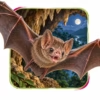
10 Fun Vampire Bat Facts for Kids
1. 1. Only Three Species Drink Blood
The common vampire bat, hairy-legged vampire bat, and white-winged vampire bat are the only living mammals that feed entirely on blood. The common species usually feeds on mammals, while the other two prefer birds.
Kid Decode: Fewer than one in 400 living bat species is a true vampire bat.
2. 2. They Live Only in the Americas
Wild vampire bats occur from Mexico through Central America and across much of South America. Warm climates provide active prey and safe roosts throughout the year.
Kid Decode: Real vampire bats do not naturally fly around castles in Europe.
3. 3. They Lap Instead of Suck
A bat lands near a sleeping animal, finds a thin patch of skin, and uses razor-edged front teeth to make a shallow cut. Its grooved tongue laps the blood that wells from the wound.
Kid Decode: The bite is more like a tiny scrape than two deep fang holes.
4. 4. Saliva Keeps the Meal Flowing
Vampire-bat saliva contains chemicals that slow clotting while the bat feeds. One well-known anticoagulant protein from common vampire bats is nicknamed draculin.
Kid Decode: Scientists study bat saliva because its clot-controlling molecules may inspire medical research.
5. 5. Heat Sensors Find Warm Spots
Pits around the common vampire bat’s nose detect infrared warmth. These sensors help locate areas where blood flows close beneath the skin.
Kid Decode: Its nose acts like a tiny heat map during a dark nighttime search.
6. 6. A Liquid Meal Must Be Processed Fast
Blood contains lots of water and protein but little fat or carbohydrate. Specialized kidneys remove excess water quickly, so a feeding bat begins producing dilute urine while it is still eating.
Kid Decode: Getting rid of extra water makes the bat light enough to take off after dinner.
7. 7. They Can Run and Jump
Vampire bats have strong thumbs, wrists, and hind legs. On the ground, they can walk, hop, and launch into the air with a quick jump powered largely by their forelimbs.
Kid Decode: A vampire bat is much nimbler on four limbs than most other bats.
8. 8. Hungry Friends Share Food
A vampire bat can starve after missing only a few meals. Well-fed roostmates sometimes regurgitate blood for hungry companions, including unrelated bats with whom they have strong social bonds.
Kid Decode: Regular sharing can build a bat friendship that lasts for years.
9. 9. Calls Help Them Recognize One Another
Vampire bats use echolocation to travel and also make social calls. Mothers and pups recognize voices, while adults use contact calls to find companions.
Kid Decode: To another bat, a squeak can work like a name and a “where are you?” message.
10. 10. Mothers Care for Pups for Months
A female usually gives birth to one pup after a pregnancy of about seven months. The pup drinks milk first and may later receive regurgitated blood while learning adult feeding skills.
Kid Decode: Vampire-bat childhood is long because finding food and managing friendships take practice.
The Weirdest Vampire Bat Fact
A common vampire bat can remember who helped it during a hungry night. Experiments show that sharing is influenced by past help and by lasting social relationships, so the roost operates more like a network of trusted partners than a random crowd of bats.
Try This Vampire Bat Activity
Map a Vampire Bat’s Night Tools
Draw a vampire bat leaving a cave and finding a safe route through darkness. Add and label its echolocation, heat-sensing nose, sharp incisors, grooved tongue, strong thumbs, and social roost. Use arrows to show which tool helps at each step.
Quick Vampire Bat Quiz
- How many living vampire-bat species are there? Three.
- Do vampire bats suck blood? No. They lap it from a small cut.
- What do nose pits detect? Infrared warmth.
- Why is draculin useful during feeding? It slows blood clotting.
- How can a well-fed bat help a hungry friend? By regurgitating and sharing some blood.
Mini Glossary
- Sanguivory
- A diet based on blood.
- Anticoagulant
- A substance that slows blood clotting.
- Infrared
- Invisible heat-related radiation that warm objects give off.
- Echolocation
- Using echoes from calls to sense surroundings.
- Regurgitate
- To bring swallowed food back up, sometimes to feed another animal.
 Toad Facts for Kids
 Muskrat Facts for Kids
 Sailfish Facts for Kids
 Japanese Sea Lion Facts for Kids
More Animal Facts for Kids
Visit the full animal facts library or explore a focused animal group.
More Extinct Animal Facts for Kids
Discover dinosaurs, Ice Age giants, prehistoric sea creatures, recently extinct species, and other animals from the past.
Fact check note: Smithsonian Tropical Research Institute research on vampire-bat social bonds and food sharing; Smithsonian bat fact resources; University of Wisconsin vampire-bat research summaries; peer-reviewed studies of infrared sensing, anticoagulant saliva, terrestrial locomotion, diet, and vocal recognition.

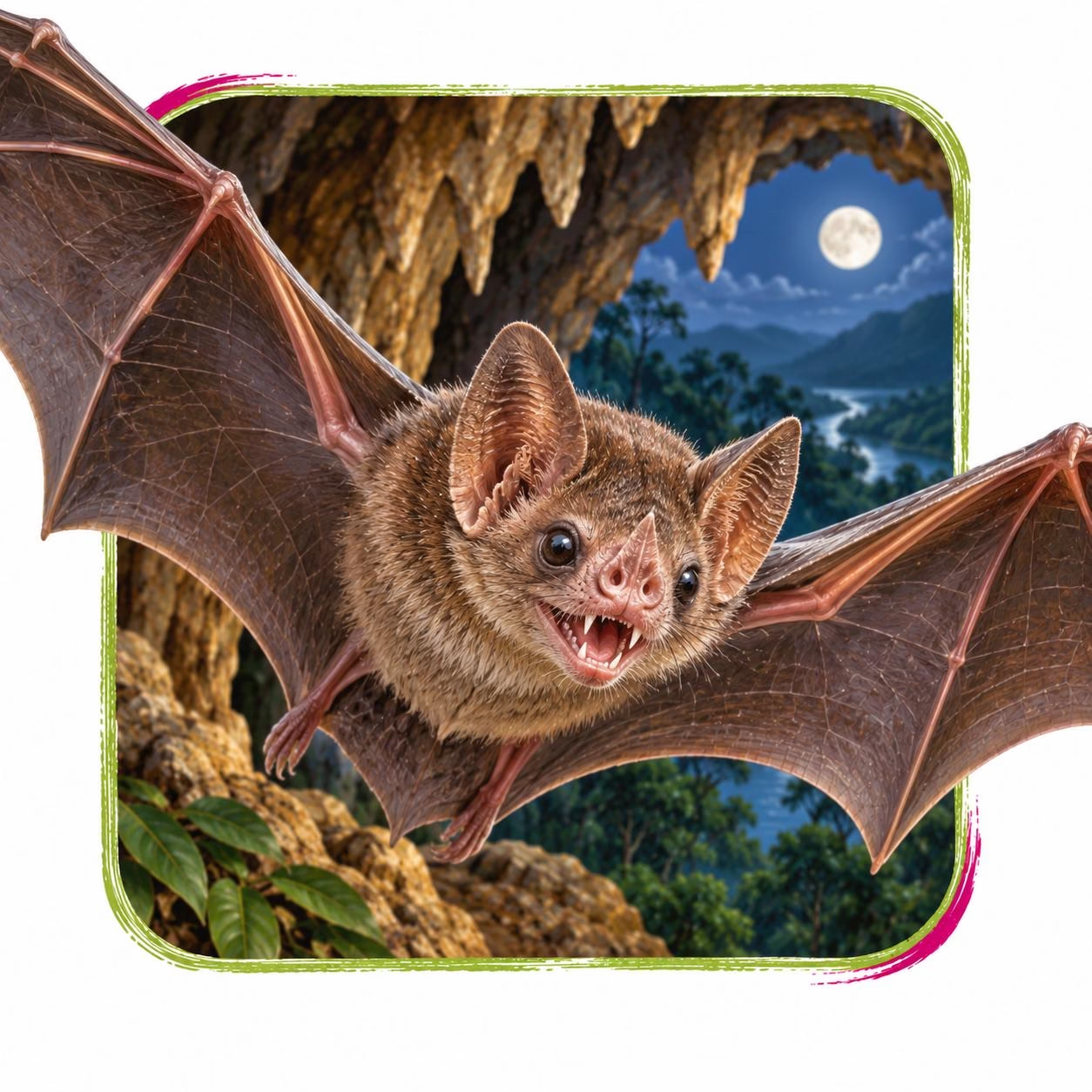
Vampire Bat in its natural Tropical and subtropical forest, savanna, grassland, farms, caves, hollow trees, and old buildings habitat