
Vicuña Facts for Kids
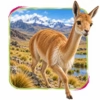
The vicuña is a slim wild relative of llamas and alpacas that lives far above the trees in the Andes Mountains. Thin air, freezing nights, fierce sunlight, and dry grasslands make its home challenging. Dense fleece, efficient movement, specialized blood, and close family groups help this national animal of Peru survive.
Quick Vicuña Facts
- Scientific name: Vicugna vicugna
- Animal group: Mammal; camelid family
- Size: About 1.4–1.6 m long and 75–90 cm at the shoulder
- Weight: Usually about 35–50 kg
- Range: High Andes of Peru, Bolivia, Chile, Argentina, and Ecuador
- Habitat: Cold, dry puna grassland about 3,200–4,800 m above sea level
- Diet: Herbivore—mainly short grasses and other low plants
- Young: One cria, usually born in the wet season
- Social life: Family groups and bachelor groups
- Conservation status: Least Concern globally; trade is controlled
What You’ll Learn
Learn 10 graceful vicuna facts for kids about incredibly fine fleece, slender bodies, herd life, high-altitude survival, and the Andes, plus a quiz, glossary, and activity
Simple explanations make them fun for children, families, teachers, and young animal explorers.
10 Fun Vicuña Facts for Kids
1. 1. It Is the Smallest Wild Camelid
Vicuñas belong to the South American camelid family with guanacos, llamas, and alpacas. Their light, slender bodies are smaller than those of the other three.
Kid Decode: A vicuña is much shorter and lighter than a llama but built for far higher mountains.
2. 2. Thin Air Is Normal to Them
High Andean air contains less oxygen than air at sea level. Vicuñas have large hearts and lungs and blood adapted to load and carry oxygen efficiently.
Kid Decode: A mountain that leaves a visitor breathless is everyday grazing land to a vicuña.
3. 3. Their Fleece Traps Warm Air
Extremely fine underfur grows beneath longer protective hairs. The dense layer traps insulating air close to the skin during cold nights, while a paler chest bib adds extra coverage.
Kid Decode: Fine fibers pack together so tightly that a lightweight coat can still be very warm.
4. 4. Vicuña Fiber Is Exceptionally Fine
Individual undercoat fibers are often only about 12 micrometers wide, finer than most sheep wool. Each animal produces a small amount, making legally obtained fiber rare and valuable.
Kid Decode: Several vicuña fibers placed side by side would barely span the width of one human hair.
5. 5. A Traditional Roundup Can Protect Them
During a managed chaccu or chaku, communities slowly guide wild vicuñas into an enclosure, shear eligible animals, and release them. Strict rules and monitoring allow fiber use without killing the herd.
Kid Decode: A conservation-friendly fleece harvest ends with the vicuña running back to the mountains.
6. 6. Families Defend Feeding Areas
A typical family includes one territorial male, several females, and their young. The male watches for danger, marks dung piles, and chases rivals away from the group’s feeding and resting places.
Kid Decode: Shared dung piles work like smelly boundary signs on the puna.
7. 7. Alarm Calls Sound Like Whistles
A watchful vicuña gives a sharp whistle when it spots danger. The group can sprint across rough ground, while tan upper fur and a pale underside blend with dry grass and rock.
Kid Decode: One whistle can turn a quietly grazing family into a fast-moving herd.
8. 8. Their Feet Protect Fragile Ground
Like other camelids, vicuñas walk on two padded toes rather than hard hooves. The broad, soft pads grip rocky slopes and press less harshly into delicate mountain soil.
Kid Decode: A vicuña wears built-in soft hiking pads instead of solid hooves.
9. 9. Crias Stand Soon After Birth
After a pregnancy of about 11 months, a female usually gives birth to one cria in daylight. The youngster stands and follows its mother quickly, which is important in open country with predators.
Kid Decode: A newborn mountain traveler must get moving within its first hours.
10. 10. Protection Brought a Remarkable Recovery
Hunting for valuable fiber pushed vicuñas close to extinction in the 1960s. International agreements, protected areas, anti-poaching work, and community management allowed numbers to rebound dramatically.
Kid Decode: The comeback shows how wildlife and local livelihoods can benefit from carefully enforced protection.
The Weirdest Vicuña Fact
Unlike the teeth of most hoofed mammals, a vicuña’s lower front incisors keep growing. Constant grazing on gritty, silica-rich mountain grasses wears the tooth tips down, while continued growth helps replace what is lost.
Try This Vicuña Activity
Pack a Vicuña Survival Kit
Draw a vicuña in a high-Andes scene with thin air, cold wind, bright sun, rocky ground, and short grass. Label five built-in survival tools—fine fleece, efficient lungs and blood, padded toes, camouflage, and an alarm whistle—and explain the problem each solves.
Quick Vicuña Quiz
- What animal family includes vicuñas? The camelid family.
- Where do vicuñas live? In high Andean puna grasslands.
- Why is the fleece special? Its undercoat fibers are exceptionally fine and warm.
- What is a chaccu or chaku? A managed roundup for shearing and releasing wild vicuñas.
- What are baby vicuñas called? Crias.
Mini Glossary
- Camelid
- A member of the camel family, including camels, llamas, alpacas, guanacos, and vicuñas.
- Puna
- Cold, dry high-elevation grassland in the central Andes.
- Micrometer
- One-millionth of a meter.
- Chaccu
- A traditional Andean roundup adapted for managing and shearing wild vicuñas.
- Cria
- A young South American camelid.
 Ibis Facts for Kids
 Firefly Facts for Kids
 Dik-Dik Facts for Kids
 Tylosaurus Facts for Kids
More Animal Facts for Kids
Visit the full animal facts library or explore a focused animal group.
More Extinct Animal Facts for Kids
Discover dinosaurs, Ice Age giants, prehistoric sea creatures, recently extinct species, and other animals from the past.
Fact check note: IUCN Red List assessment for Vicugna vicugna; CITES vicuña trade listings; Smithsonian and zoo camelid references; Peruvian conservation accounts of community chaccu management; peer-reviewed research on vicuña fiber, dentition, high-altitude physiology, and social organization.

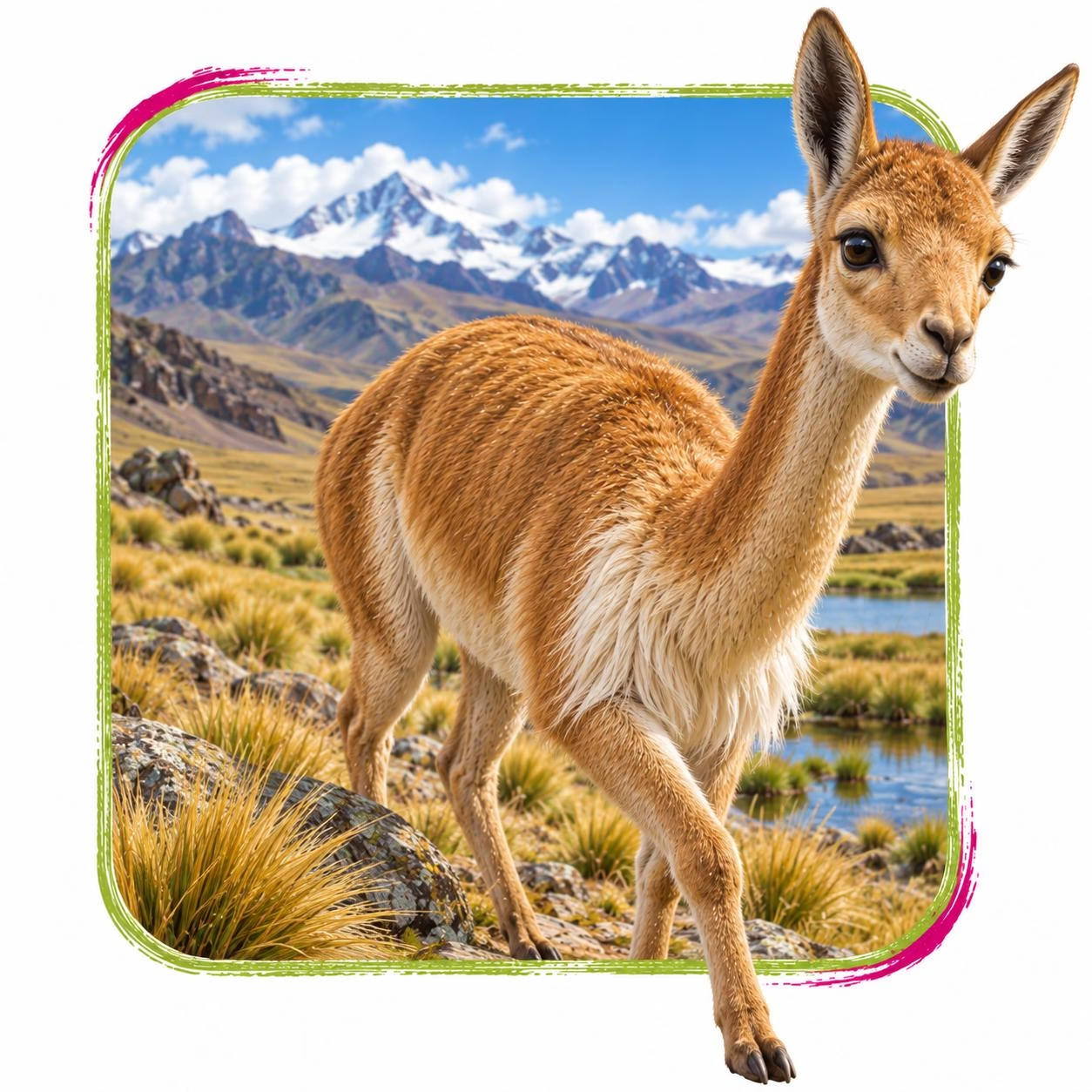
Vicuña in its natural High Andean puna grassland, alpine plains, rocky slopes, and wetlands around 3,200–4,800 m elevation habitat