
Weddell Seal Facts for Kids
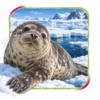
The Weddell Seal, Leptonychotes weddellii, is a large true seal that lives around Antarctica, especially beside stable coastal fast ice. It is the only living species in its genus and is famous for maintaining breathing holes with its teeth, making eerie underwater calls, and diving beneath sea ice for fish and other prey. Weddell Seals breed farther south than any other mammal, but they still need open cracks or holes because they breathe air. Their global IUCN category is Least Concern, while climate-driven changes to sea ice and food webs remain important long-term concerns.
Quick Weddell Seal Facts
- Animal Type: Marine mammal and true seal
- Scientific Name: Leptonychotes weddellii
- Known For: Antarctic fast-ice breeding, tooth-maintained breathing holes, long dives, underwater trills, thick blubber, and pups raised on sea ice
- Habitat: Coastal fast ice, pack ice, cracks, tide cracks, ice shelves, polynyas, and cold Southern Ocean waters around Antarctica
- Diet: Mainly fish, plus squid, krill, prawns, and other marine prey; unusual prey records vary by place
What You’ll Learn
Learn 10 amazing weddell seal facts for kids about swimming under Antarctic ice, breathing holes, diving, pups, and cold-water survival, with a quiz, glossary, and activity
These simple facts are written for kids, parents, teachers, and curious young minds.
10 Fun Weddell Seal Facts for Kids
1. It Is an Antarctic True Seal
Weddell Seals belong to the family Phocidae, the earless or true seals. They have no external ear flaps and swim mainly with their hind flippers, while movement across ice is slower and more wriggly.
Kid Decode: The underwater athlete trades walking legs for a powerful rear-flipper engine.
2. It Breeds Farther South Than Any Other Mammal
Weddell Seals breed on coastal sea ice around Antarctica and are widely described as the world’s southernmost breeding mammal. Their range circles the continent, with occasional wanderers recorded farther north.
Kid Decode: Few nurseries on Earth are closer to the South Pole.
3. Fast Ice Is Their Main Platform
Many Weddell Seals use fast ice attached to the coast rather than only drifting pack ice. Stable ice gives adults places to rest, mate, give birth, nurse pups, and reach familiar underwater feeding areas.
Kid Decode: The nursery floor is frozen ocean fastened to the continent.
4. Their Teeth Keep Breathing Holes Open
Weddell Seals rasp ice with their front teeth to maintain holes and cracks through which they breathe. Repeated ice cutting can wear their teeth heavily, especially in older seals.
Kid Decode: The seal’s winter doorway is carved with teeth instead of tools.
5. They Can Dive for Around 80 Minutes
Recorded Weddell Seal dives can approach 80 minutes and about 600 metres, although most dives are shorter and shallower. Dive length depends on activity, prey, age, condition, and local habitat.
Kid Decode: One breath can power a journey beneath a ceiling of ice.
6. The Body Saves Oxygen Underwater
During long dives, heart rate can slow and blood flow is prioritised toward organs such as the brain and heart. Oxygen stored in blood and muscle helps the seal stay submerged without breathing.
Kid Decode: The body switches from full-city lighting to emergency power.
7. They Make Science-Fiction-Like Calls
Weddell Seals whistle, trill, chirp, knock, and pulse underwater, especially during the breeding season. Some male trills help advertise or defend underwater territories and breathing-hole areas.
Kid Decode: Below the ice, the seal orchestra sounds built for another planet.
8. Fish Form Most of the Diet
Antarctic fish are major prey, while squid, krill, prawns, and other animals may also be eaten. Diet changes with location, season, depth, and which prey are available.
Kid Decode: The menu is written by whatever swims beneath that patch of ice.
9. Pups Grow Quickly on Rich Milk
A female usually gives birth to one pup on the ice. Pups commonly nurse for about five to seven weeks and gain weight rapidly on energy-rich milk before becoming independent.
Kid Decode: A small gray pup turns milk into insulation at remarkable speed.
10. Predators and Environmental Change Matter
Killer whales and leopard seals can prey on Weddell Seals, especially young animals. The species is currently globally Least Concern, but shifts in sea ice, prey, disease, disturbance, and ocean conditions can affect regional populations.
Kid Decode: Least Concern does not make an Antarctic food web unchangeable.
The Weirdest Weddell Seal Fact
Some Weddell Seal calls begin above the range of much human hearing and sweep downward into audible whistles and trills, creating an underwater soundtrack beneath solid sea ice.
Try This Weddell Seal Activity
Weddell Seal Under-Ice Activity
Draw a cross-section of Antarctic fast ice with a Weddell Seal resting beside a breathing hole and another diving below. Add mottled gray fur, short front flippers with claws, strong hind flippers, worn front teeth rasping ice, oxygen stores in blood and muscle, a slowing-heart icon, fish and squid, underwater trills, one mother with a gray pup, a leopard seal and killer whale at safe distances, and labels for fast ice, bradycardia, polynya, phocid, and trill.
Quick Weddell Seal Quiz
- What is the Weddell Seal’s scientific name? Answer: Leptonychotes weddellii.
- Why must Weddell Seals keep holes open in the ice? Answer: They are mammals and must surface to breathe air.
- What do they use to rasp breathing holes? Answer: Their front teeth.
- What forms much of their diet? Answer: Antarctic fish.
- What is their current global IUCN category? Answer: Least Concern.
Mini Glossary
- Fast Ice: Sea ice attached to a coast, island, ice shelf, or grounded iceberg.
- Phocid: A true or earless seal in the family Phocidae.
- Bradycardia: A slowing of the heart rate, including during a seal’s dive.
- Polynya: An area of open water surrounded by sea ice.
- Trill: A rapidly changing repeated sound used in communication.
 Monarch Butterfly Facts for Kids
 Gorilla Facts for Kids
 Tarantula Facts for Kids
 Dimetrodon Facts for Kids
More Animal Facts for Kids
Visit the full animal facts library or explore a focused animal group.
More Extinct Animal Facts for Kids
Discover dinosaurs, Ice Age giants, prehistoric sea creatures, recently extinct species, and other animals from the past.
Fact check note: Fact checked with the 2026 IUCN pre-publication assessment for Leptonychotes weddellii, Mammal Diversity Database, Australian Antarctic Program Weddell Seal resources, Australian Antarctic Magazine field studies, and peer-reviewed research on fast-ice breeding, breathing-hole maintenance, diving physiology, underwater vocalisations, diet, and pup development.

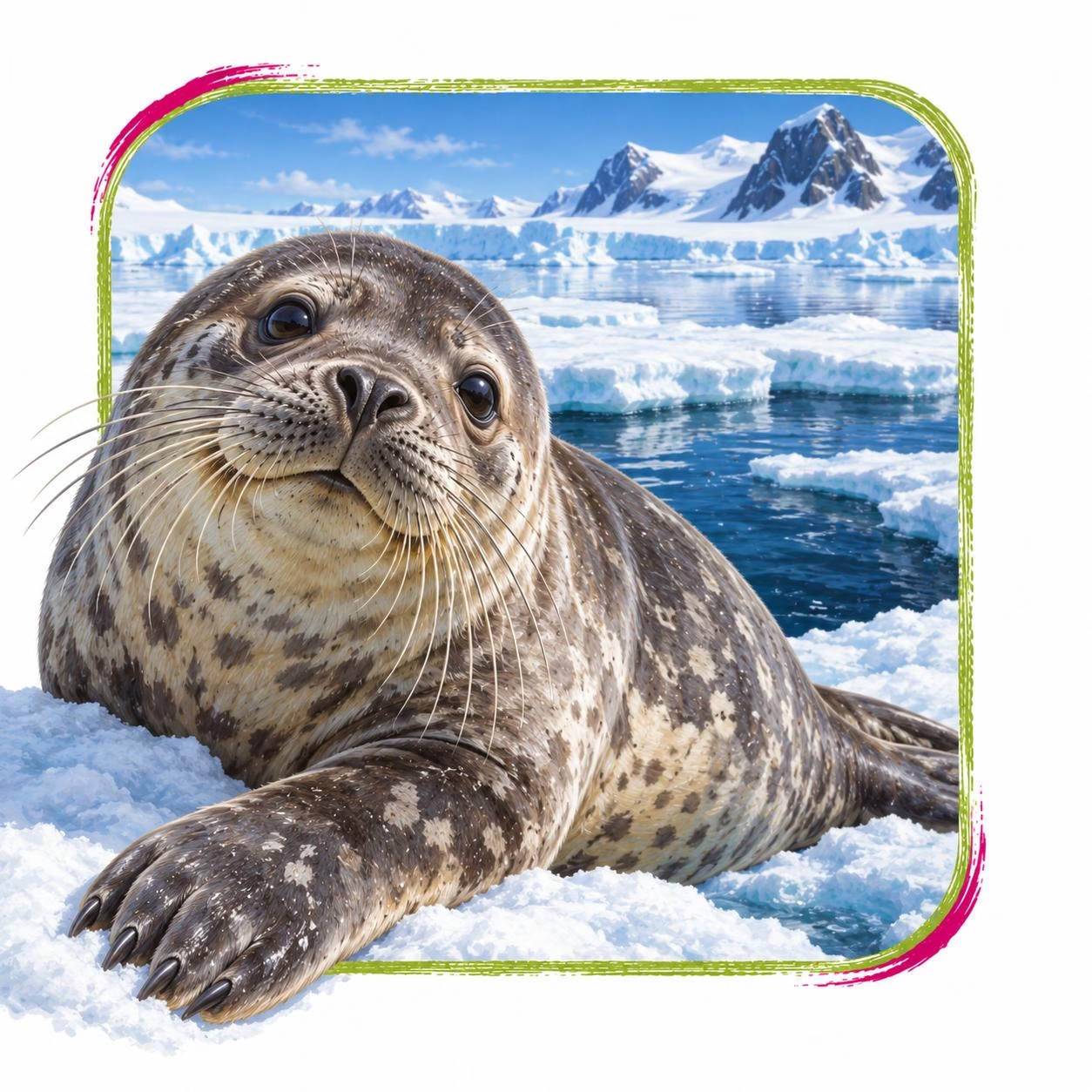
Weddell Seal in its natural Coastal fast ice, pack ice, tide cracks, breathing holes, polynyas, ice-shelf edges, and cold Southern Ocean waters around Antarctica habitat