
Western Diamondback Rattlesnake Facts for Kids
The Western Diamondback Rattlesnake, Crotalus atrox, is a large venomous pit viper of the southwestern United States and northern and central Mexico. Its heavy body is patterned with dark diamond-shaped blotches edged in pale scales, and the tail ends with bold black-and-white bands followed by a segmented rattle. Between each eye and nostril is a heat-sensing pit that detects infrared radiation from warm animals, helping the snake hunt mammals and birds even in dim light. Long hollow fangs fold against the roof of the mouth when not in use and swing forward during a strike. Western Diamondbacks are ambush predators and generally rely first on camouflage and avoidance; rattling is a warning when the snake feels threatened. Females give birth to live young rather than laying eggs. The species is currently considered Least Concern.
Quick Western Diamondback Rattlesnake Facts
- Animal Type: Reptile, snake, and pit viper
- Scientific Name: Crotalus atrox
- Known For: Diamond back pattern, black-and-white tail bands, segmented rattle, heat-sensing pits, folding hollow fangs, venom, and ambush hunting
- Habitat: Desert, grassland, scrub, rocky hillsides, open woodland, coastal plain, and other dry or semi-dry habitats
- Diet: Mainly rodents and rabbits, plus birds, lizards, and other small vertebrates
What You’ll Learn
Discover 10 Western Diamondback Rattlesnake facts for kids with accurate pit-viper science, quick facts, a quiz, glossary, drawing activity, and desert wildlife links for curious young reptile explorers.
Clear explanations make them useful for children, families, teachers, and young reptile fans.
10 Fun Western Diamondback Rattlesnake Facts for Kids
1. Dark Diamonds Give the Snake Its Name
The back usually carries a row of dark brown or gray diamond-shaped blotches bordered by lighter scales. Body color can vary from gray and tan to brown or pinkish shades, helping the snake blend into rock, sand, soil, and dry vegetation.
Kid Decode: The famous diamonds are camouflage first and decoration second.
2. Black-and-White Tail Bands Are a Strong Clue
Near the rattle, the tail has sharply contrasting pale and dark rings. On Western Diamondbacks these bands are especially bold and often look almost black and white.
Kid Decode: Before you reach the rattle, the tail looks as if it has been wrapped in warning tape.
3. Heat Pits Detect Warm Animals
A loreal pit sits between the eye and nostril on each side of the face. The thin membrane inside can detect tiny temperature differences, giving the snake directional information about warm-bodied prey even when light is poor.
Kid Decode: The snake carries two tiny infrared detectors on its face.
4. The Fangs Fold Away When Not Needed
Western Diamondbacks have long hollow fangs hinged to the front of the upper jaw. When the mouth closes, the fangs fold backward against the roof; during a strike they rotate forward to deliver venom from glands behind the eyes.
Kid Decode: The venom needles have their own folding storage position.
5. Venom Helps Stop and Digest Prey
The venom is a complex mixture of proteins and enzymes that damages tissues and disrupts normal body functions in prey. The snake can release the bitten animal and later follow chemical cues to find it before swallowing it whole.
Kid Decode: The bite is part capture tool and part head start on digestion.
6. The Rattle Is Made From Keratin
The hollow interlocking rattle segments are made from keratin, the same basic protein found in claws and human fingernails. Rapid tail muscles shake the segments against one another to create the familiar buzzing warning.
Kid Decode: A fingernail-like material becomes one of nature’s loudest warning instruments.
7. Rattle Segments Do Not Tell the Snake’s Age
A new segment is added when the snake sheds, but young snakes may shed several times in a year and older rattle pieces frequently break off. Counting segments therefore cannot reliably reveal age.
Kid Decode: The rattle is a wear-and-tear record, not a birthday calendar.
8. They Hunt by Waiting
Western Diamondbacks often choose a promising spot near rodent trails or cover and remain motionless until prey approaches. Smell, tongue flicking, vision, and heat sensing work together during hunting.
Kid Decode: The hunting strategy is patience, camouflage, then one explosive second.
9. Babies Are Born Alive
Females retain developing young inside the body and give birth to live snakes, usually in late summer or around the monsoon season in parts of the range. Newborns have functional venom systems and a single smooth tail button rather than a full rattle.
Kid Decode: A baby begins with one button and builds its rattle after later skin sheds.
10. Rattling Is a Warning, Not an Invitation to Fight
Western Diamondbacks usually depend on camouflage and may remain silent when danger passes nearby. If threatened at close range, a snake may coil, rattle, and defend itself. The species is Least Concern, but wild snakes should always be left alone and given plenty of space.
Kid Decode: The buzz means back away, not come closer for a better look.
The Weirdest Western Diamondback Rattlesnake Fact
A rattlesnake can vibrate specialized tail muscles more than 60 times each second, making hollow keratin segments collide so rapidly that separate taps blur into a continuous buzz.
Try This Western Diamondback Rattlesnake Activity
Western Diamondback Desert-Senses Activity
Draw a Western Diamondback Rattlesnake coiled beside a rocky desert rodent trail. Add dark pale-edged diamonds, bold black-and-white tail rings, a segmented rattle, triangular head, vertical pupils, and one heat-sensing pit between each eye and nostril. Include an inset of a folded fang rotating forward, a safe infrared-style view of a warm rodent, a newborn with one tail button, and a myth-buster explaining why rattle segments cannot reveal exact age. Add a large respectful-distance symbol rather than showing people handling the snake.
Quick Western Diamondback Rattlesnake Quiz
- What is the Western Diamondback Rattlesnake’s scientific name? Answer: Crotalus atrox.
- What do the pits between its eyes and nostrils detect? Answer: Infrared heat.
- Can rattle segments tell the snake’s exact age? Answer: No.
- Does this species lay eggs in a nest? Answer: No, females give birth to live young.
- What should you do if you encounter one? Answer: Leave it alone and give it plenty of space.
Mini Glossary
- Pit Viper: A venomous snake with heat-sensing facial pits.
- Loreal Pit: A heat-sensing organ between the eye and nostril.
- Venom: A toxic secretion actively delivered through a bite or sting.
- Keratin: A tough protein found in structures such as claws, scales, hair, and rattles.
- Ambush Predator: A hunter that waits for prey to come within striking distance.
 Bandicoot Facts for Kids
 Mako Shark Facts for Kids
 Albatross Facts for Kids
 Thalassodromeus Facts for Kids
More Animal Facts for Kids
Visit the full animal facts library or explore a focused animal group.
More Extinct Animal Facts for Kids
Discover dinosaurs, Ice Age giants, prehistoric sea creatures, recently extinct species, and other animals from the past.
Fact check note: Fact checked with the Reptile Database for accepted Crotalus atrox taxonomy; Arizona-Sonora Desert Museum for current range, habitat, heat-sensing loreal pits, typical 3-to-5-foot size, rattle construction, live birth, newborn maternal attendance, prey and current Least Concern treatment; and Animal Diversity Web for diamond pattern, black-and-white tail bands, folding hollow fangs, ambush feeding, live young and venom delivery. Safety language follows museum guidance that rattlesnakes usually rely on camouflage and warning behavior and should be left undisturbed.

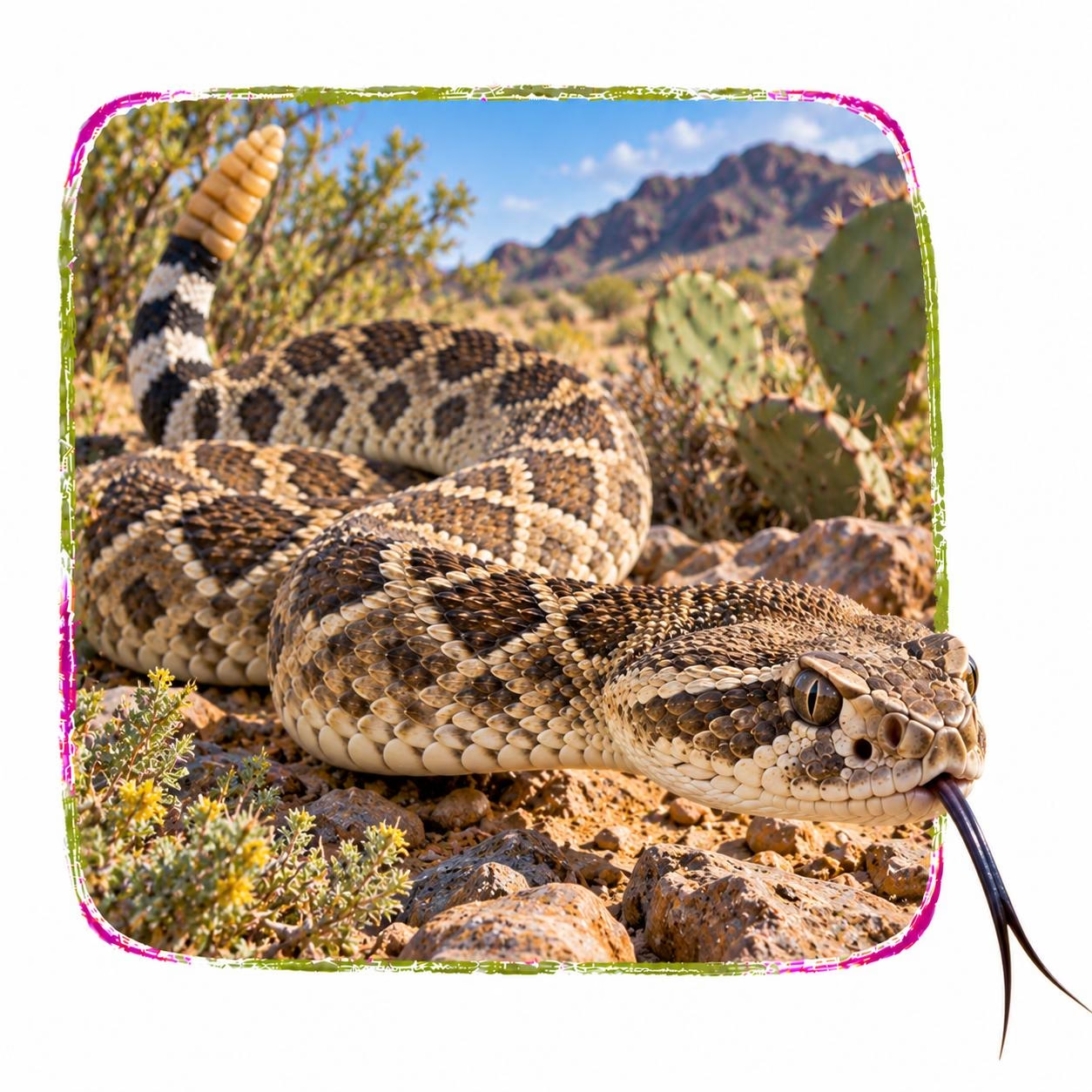
Western Diamondback Rattlesnake in its natural Desert, grassland, scrub, chaparral, rocky hillsides, open woodland, coastal plain, and other dry to semi-dry habitats of the southwestern United States and Mexico habitat