
White-Tailed Deer Facts for Kids
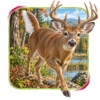
The White-Tailed Deer, Odocoileus virginianus, is a highly adaptable deer native from southern Canada through much of the United States, Mexico, Central America, and into northern South America. Its famous tail is brown above and bright white below, flashing like a flag when raised. White-tailed deer live in forests, grasslands, farms, wetlands, deserts, suburbs, and tropical habitats. They browse nutritious leaves, shoots, fruits, acorns, fungi, crops, and other plants, digest food in a four-part ruminant stomach, and communicate through scent, posture, sounds, and tail movements. Size, breeding season, coat, antlers, habitat, predators, and conservation needs vary greatly across the species’ enormous range.
Quick White-Tailed Deer Facts
- Animal Type: Mammal
- Scientific Name: Odocoileus virginianus
- Known For: White alarm tail, branching antlers on most adult males, spotted fawns, powerful leaps, scent communication, seasonal coats, and wide habitat tolerance
- Habitat: Forests, woodland edges, grasslands, shrublands, farms, wetlands, mountains, deserts, tropical habitats, parks, and suburbs
- Diet: Leaves, shoots, twigs, buds, acorns, fruits, fungi, grasses, crops, and other plant material
What You’ll Learn
Learn 10 graceful white-tailed deer facts for kids about flashing white tails, antlers, fawns, forest-edge habitats, and seasonal behavior, plus a quiz, glossary, and activity
Simple explanations make them great for children, families, teachers, and young wildlife fans.
10 Fun White-Tailed Deer Facts for Kids
1. Its White Tail Flashes a Warning
When alarmed, a white-tailed deer may raise its tail and expose the bright white underside. This flagging can alert nearby deer, help group members follow a fleeing animal, and show a predator that it has been detected.
Kid Decode: One lifted tail turns into a bouncing white warning flag.
2. The Species Spans Much of the Americas
White-tailed deer occur naturally from southern Canada through most of the United States, Mexico, Central America, and parts of northern South America. They have also been introduced outside their native range.
Kid Decode: One deer species crosses snowy woods, tropical forests, farms, swamps, and deserts.
3. Antlers Are Living Bone While They Grow
Most adult males grow a new set of antlers each year. Growing antlers are covered in blood-rich velvet; after the bone hardens, the velvet is shed, and the antlers are later dropped. Females usually lack antlers, although exceptions occur.
Kid Decode: The buck builds a branching bone crown, drops it, and starts again.
4. Their Stomach Has Four Compartments
White-tailed deer are ruminants. Microbes help break down plant material in a four-compartment stomach, and the deer regurgitates partly digested food as cud to chew it again.
Kid Decode: Lunch makes a return trip for a second round of chewing.
5. They Select the Best Plant Parts
White-tailed deer are mainly browsers and selective feeders rather than simple grass grazers. They choose nutritious leaves, shoots, buds, fruits, acorns, mushrooms, crops, and other foods that change with season and region.
Kid Decode: The forest buffet is inspected leaf by leaf for the richest bites.
6. Fawns Wear Camouflage Spots
Newborn fawns have rows of pale spots that break up their outline in sun-dappled vegetation. A mother often leaves a young fawn hidden while she feeds and returns to nurse it, so a quiet fawn alone is not automatically abandoned.
Kid Decode: The baby deer’s coat copies flickering dots of sunlight on the forest floor.
7. They Communicate With More Than Their Tails
White-tailed deer use scent from several glands, urine, droppings, facial expressions, ear position, foot stamps, snorts, grunts, and body posture. During the breeding season, bucks rub antlers and foreheads on vegetation and scrape the ground.
Kid Decode: A deer message can be stamped, rubbed, sniffed, snorted, or flashed.
8. The Rut Changes Their Behavior
During the rut, bucks search for females, make scrapes, follow scent, spar, and may travel farther than usual. Timing varies strongly by latitude and population, so the familiar autumn rut and spring fawning pattern does not describe every tropical white-tailed deer.
Kid Decode: The breeding calendar changes as the map moves from snow country toward the tropics.
9. They Can Run, Leap, and Swim
Long legs, flexible joints, and strong muscles help white-tailed deer sprint and bound over obstacles. They are also capable swimmers and may cross rivers, marsh channels, or short stretches between islands.
Kid Decode: The forest jumper can also switch into river-crossing mode.
10. A Common Species Can Still Face Local Problems
White-tailed deer are widespread and abundant in many places, yet individual subspecies and local populations can be rare or endangered. Vehicles, habitat fragmentation, severe winters, predators, overabundance, and diseases such as chronic wasting disease create very different management challenges across the range.
Kid Decode: One county may protect scarce deer while another must manage too many.
The Weirdest White-Tailed Deer Fact
A buck’s antlers are among the fastest-growing bones in the animal world: they grow as living tissue under velvet, harden into bare bone, and are then shed so the cycle can begin again.
Try This White-Tailed Deer Activity
White-Tailed Deer Seasons Activity
Draw one white-tailed deer habitat across four seasons. Add a reddish summer coat and gray-brown winter coat, a buck growing velvet antlers and later shedding them, a doe with a spotted fawn hidden in vegetation, the raised white tail alarm flag, a four-part stomach diagram, cud chewing, acorns and leaves, scent rubs and ground scrapes, a forest leap, a river swim, predators at a safe distance, a wildlife crossing over a road, and a careful chronic-wasting-disease information symbol.
Quick White-Tailed Deer Quiz
- What is the White-Tailed Deer’s scientific name? Answer: Odocoileus virginianus.
- What does the deer reveal when it raises its tail? Answer: The bright white underside.
- What covers growing antlers? Answer: Velvet supplied with blood vessels and nerves.
- Why are fawns spotted? Answer: The spots help camouflage them in broken light and vegetation.
- What kind of disease is chronic wasting disease? Answer: A fatal prion disease affecting deer and related animals.
Mini Glossary
- Ruminant: A plant-eating mammal that ferments food in a specialised stomach and rechews cud.
- Velvet: Blood-rich skin covering an antler while it grows.
- Rut: The breeding season when deer court, compete, and mate.
- Browser: An animal that feeds mainly on leaves, shoots, twigs, buds, and other selected plant parts.
- Prion: An abnormally folded protein that can cause diseases such as chronic wasting disease.
 Booby Facts for Kids
 Asian Palm Civet Facts for Kids
 Margay Facts for Kids
 Pyrotherium Facts for Kids
More Animal Facts for Kids
Visit the full animal facts library or explore a focused animal group.
More Extinct Animal Facts for Kids
Discover dinosaurs, Ice Age giants, prehistoric sea creatures, recently extinct species, and other animals from the past.
Fact check note: Fact checked with the Mammal Diversity Database taxonomy for Odocoileus virginianus, Animal Diversity Web’s White-Tailed Deer account, U.S. National Park Service and U.S. Fish and Wildlife Service resources on diet, fawns, antlers, and behavior, U.S. Forest Service species reviews, and the CDC’s January and May 2026 chronic-wasting-disease guidance.

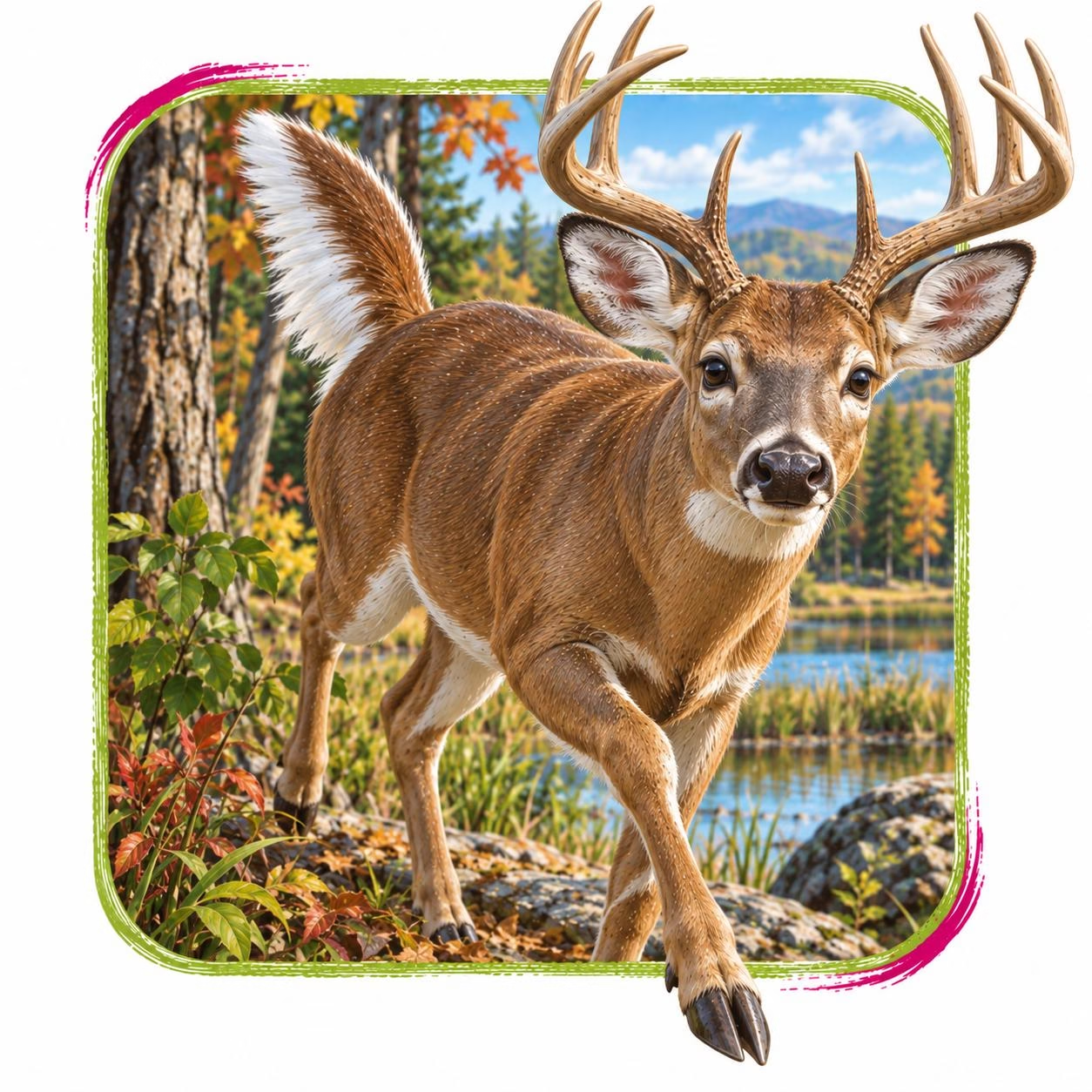
White-Tailed Deer in its natural Temperate, tropical, and subtropical forests, woodland edges, grasslands, shrublands, wetlands, farms, mountains, deserts, parks, suburbs, and river corridors habitat