
Wild Dog Facts for Kids
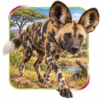
The Wild Dog on this page is the African Wild Dog, Lycaon pictus, also called the painted dog or painted hunting dog. It is a long-legged canid of sub-Saharan Africa, not a feral domestic dog, wolf, fox, jackal, or hyena. Every animal carries a different patchwork of black, brown, tan, yellow, and white fur, along with enormous rounded ears and only four toes on each foot. African Wild Dogs live in close cooperative packs that hunt, protect pups, feed pack members, and make group movement decisions together. They are globally Endangered and survive in scattered populations, mainly in eastern and southern Africa. Conservation groups often cite fewer than about 7,000 animals, but the widely repeated estimate is not a fresh continent-wide census and should be treated as approximate.
Quick Wild Dog Facts
- Animal Type: Mammal and wild canid
- Scientific Name: Lycaon pictus
- Known For: Unique painted coats, huge rounded ears, four-toed feet, cooperative packs, endurance hunting, shared pup care, food regurgitation, and sneeze-linked group decisions
- Habitat: Savannas, grasslands, open woodlands, scrublands, semi-deserts, montane areas, and some forest habitats across fragmented parts of sub-Saharan Africa
- Diet: Mainly medium-sized antelopes and other mammals, with prey varying by pack size, region, season, and opportunity
What You’ll Learn
Explore 10 amazing wild dog facts for kids about painted coats, pack teamwork, communication, hunting, and African conservation, plus a quiz, glossary, and activity
Easy explanations make them fun for children, families, teachers, and young animal explorers.
10 Fun Wild Dog Facts for Kids
1. It Is the Only Living Species in Lycaon
The African Wild Dog is Lycaon pictus, the sole living species in its genus. It belongs to the dog family Canidae but represents a distinct evolutionary branch rather than a colourful breed of domestic dog.
Kid Decode: This painted hunter occupies a one-species branch of the dog family tree.
2. Every Painted Coat Is Different
Black, brown, tan, yellow, and white patches form an irregular coat pattern that differs from one animal to another. Researchers can use markings, scars, and tail patterns to help recognize individuals.
Kid Decode: Each dog wears a natural patchwork jersey made only once.
3. They Have Only Four Toes on Each Foot
African Wild Dogs lack the front dewclaw found in many other canids, leaving four weight-bearing toes on every foot. Long legs and compact feet suit sustained travel and pursuit across open ground.
Kid Decode: The painted runner enters every chase with four toes on each paw.
4. Huge Ears Gather Sound and Release Heat
Large rounded ears help detect calls and movement across grassland. Their broad blood-rich surfaces can also assist heat loss, although cooling depends on behavior, panting, shade, weather, and activity as well.
Kid Decode: Two satellite-dish ears listen to the savanna while helping the runner cool.
5. The Pack Is a Cooperative Family
Packs contain related and unrelated adults, yearlings, and pups connected by strong social bonds. Members greet one another, rest together, defend the den, share food, and care for young, injured, or dependent pack mates.
Kid Decode: The pack works as hunting team, nursery staff, and neighborhood watch.
6. They Hunt Through Coordination and Endurance
A pack can spread out, communicate, pursue prey, and adjust direction as a chase develops. Hunting success varies with prey, habitat, pack size, temperature, and human disturbance, so one dramatic speed or success percentage should not be treated as universal.
Kid Decode: The chase is a moving puzzle solved by many legs and watchful eyes.
7. Food Is Carried Home Inside the Stomach
After a hunt, adults and older pack members may return to the den and regurgitate meat for pups, the nursing female, and pack members that did not feed. This transports food without carrying a carcass through the landscape.
Kid Decode: The pack’s takeaway container is a hunter’s stomach.
8. Pups Grow Up in a Shared Den
A breeding female gives birth in a den, often an old aardvark or other burrow. One dominant pair commonly produces most pups, but reproduction is not perfectly identical in every pack, and many adults help guard, feed, and teach the litter.
Kid Decode: One underground nursery may employ nearly the whole pack.
9. Females Often Leave Their Birth Pack
In many packs, young females are more likely than males to disperse from the group where they were born. Dispersers may travel long distances before joining others and forming a new pack, a risky journey through fragmented habitat.
Kid Decode: The daughters often become the long-distance founders of tomorrow’s pack.
10. Fragmentation Turns Survival Into an Obstacle Course
African Wild Dogs need large connected landscapes, yet roads, farms, fences, conflict, accidental snaring, prey loss, disease from domestic animals, and competition with lions and hyenas can break populations into small vulnerable pieces. The species is globally Endangered and still decreasing.
Kid Decode: The pack can outrun prey more easily than it can outrun a shrinking map.
The Weirdest African Wild Dog Fact
Research on free-ranging packs in Botswana found that sneezes during energetic social rallies helped build a quorum for group departure: as more dogs sneezed, the pack became more likely to stop resting and move away together.
Try This Wild Dog Activity
African Wild Dog Pack Activity
Draw an African Wild Dog pack crossing a connected savanna landscape. Give every animal a different black, brown, tan, yellow, and white coat pattern, huge rounded ears, long legs, a white-tipped tail, and exactly four toes on each foot. Add a cooperative hunt without gore, a den with pups, one adult returning to regurgitate food, greeting behavior, a sneeze-filled departure rally, a dispersing female, antelope prey, lions and hyenas at safe distances, and a wildlife corridor crossing beneath a road between protected habitats.
Quick Wild Dog Quiz
- What is the African Wild Dog’s scientific name? Answer: Lycaon pictus.
- How many toes does it have on each foot? Answer: Four.
- How do pack members deliver meat to pups at the den? Answer: They regurgitate food after returning from a hunt.
- What unusual signal can contribute to a pack’s decision to leave? Answer: Sneezing during a social rally.
- What is the species’ global IUCN category? Answer: Endangered.
Mini Glossary
- Canid: A member of the dog family, including dogs, wolves, foxes, jackals, and African Wild Dogs.
- Pack: A social group that travels, hunts, rests, and raises young together.
- Regurgitate: Bring swallowed food back up from the stomach, here so another pack member can eat it.
- Disperse: Leave a birth group or area to seek a new place or social group.
- Quorum: Enough group support or signals for a collective action to become likely.
 Markhor Facts for Kids
 Grass Snake Facts for Kids
 Bushbuck Facts for Kids
 Pinta Island Tortoise Facts for Kids
More Animal Facts for Kids
Visit the full animal facts library or explore a focused animal group.
More Extinct Animal Facts for Kids
Discover dinosaurs, Ice Age giants, prehistoric sea creatures, recently extinct species, and other animals from the past.
Fact check note: Fact checked with the American Society of Mammalogists Mammal Diversity Database version 2.4 entry for Lycaon pictus, the IUCN Red List African Wild Dog assessment and current search record, African Wildlife Foundation and African Wildlife Conservation Fund species accounts, Animal Diversity Web’s Lycaon pictus account, the Convention on Migratory Species climate-change fact sheet, and Walker, King, McNutt and Jordan’s 2017 Proceedings of the Royal Society B study on sneeze-facilitated quorum decisions.

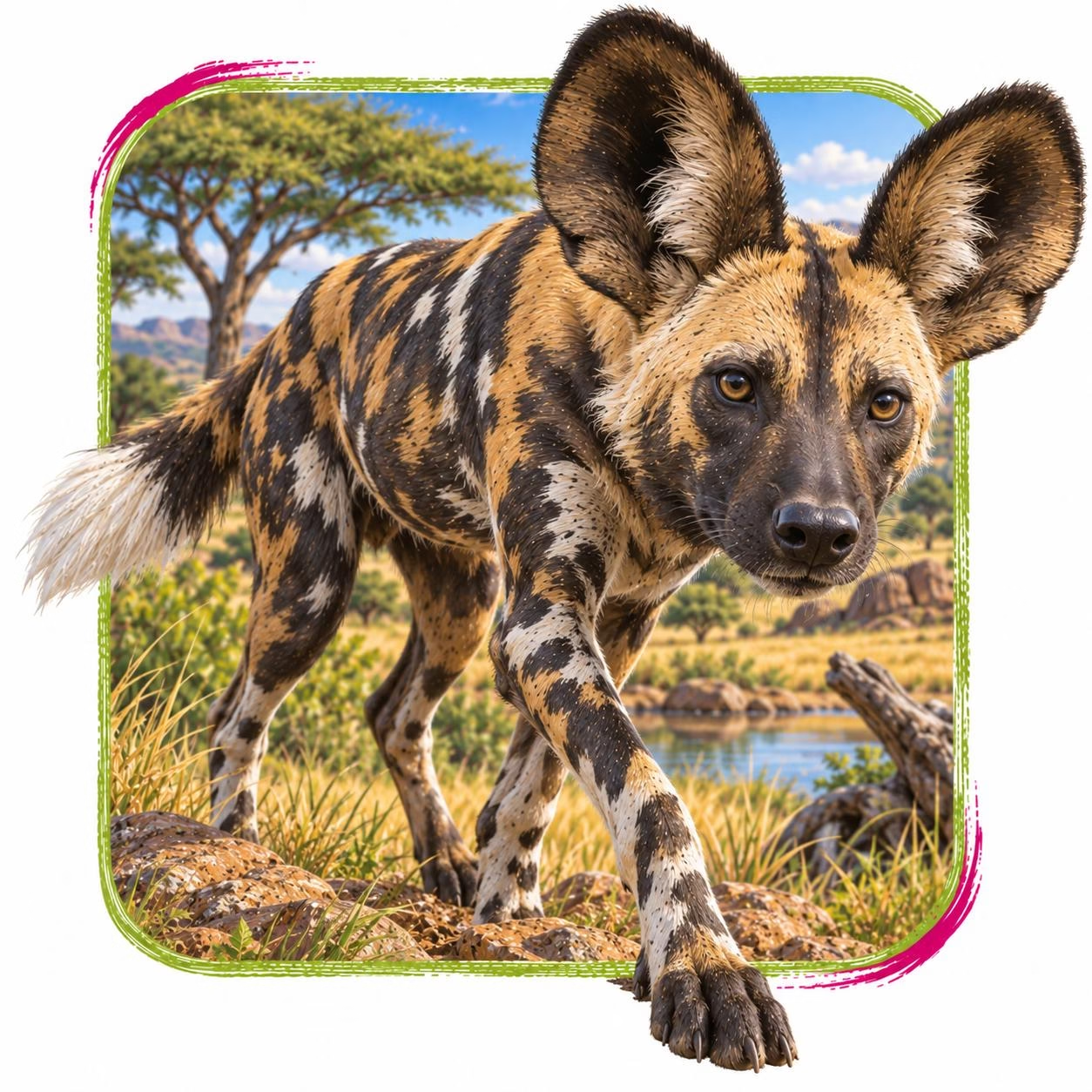
Wild Dog in its natural Savannas, grasslands, open woodlands, scrublands, semi-deserts, montane areas, and some forest habitats within large connected landscapes habitat