
Woodcock Facts for Kids
Woodcocks are eight living species of plump, long-billed birds in the genus Scolopax and the sandpiper family Scolopacidae. Unlike many shorebird relatives, they spend much of their time in woodland, forest edge, scrub, and damp ground where mottled feathers hide them among leaves. The widespread Eurasian Woodcock and American Woodcock are the best studied, while six species live on islands or restricted parts of Asia and New Guinea. Woodcocks probe soil for earthworms and other small animals, become especially active around dusk or at night, and perform remarkable courtship flights. Exact size, calls, migration, breeding behaviour, and conservation status differ by species.
Quick Woodcock Facts
- Animal Type: Bird
- Group: Eight living species in Scolopax, family Scolopacidae
- Known For: Long sensitive bills, eyes set high and far back, leaf-litter camouflage, earthworm probing, dusk activity, courtship flights, and ground nests
- Habitat: Damp woodland, young forest, forest edge, scrub, heath, old fields, mountain forest, and moist feeding grounds depending on species
- Diet: Earthworms, insect larvae, beetles, spiders, snails, and other small invertebrates, with some seeds or plant material in certain species
What You’ll Learn
Learn 10 secretive woodcock facts for kids about long bills, camouflage, woodland feeding, unusual courtship flights, and forest habitats, with a quiz, glossary, and activity
These simple facts are written for kids, parents, teachers, and curious young minds.
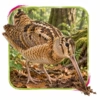
10 Fun Woodcock Facts for Kids
1. Woodcock Is a Group of Eight Species
The name woodcock covers eight living species in the genus Scolopax. Two have broad continental ranges, while the Amami, Bukidnon, Javan, Moluccan, New Guinea, and Sulawesi woodcocks have much smaller island or regional ranges.
Kid Decode: One woodland-bird name opens eight different doors on the world map.
2. They Are Woodland Shorebirds
Woodcocks belong to the sandpiper family, but they are not mainly beach birds. Many use damp forest floors, young woodland, thickets, forest clearings, and nearby fields where soft soil holds abundant invertebrate prey.
Kid Decode: This shorebird branch traded open mudflats for shadowy woodland floors.
3. Mottled Feathers Make Leaf-Litter Camouflage
Brown, buff, black, gray, and reddish markings break up a woodcock’s outline among dead leaves, twigs, and patches of light. A resting bird may remain almost invisible until it suddenly flushes.
Kid Decode: The feather pattern turns a round bird into a pile of autumn leaves.
4. A Long Bill Probes Beneath the Ground
Woodcocks push their long straight bills into soft soil to find earthworms and other invertebrates. Sensitive structures near the bill tip help detect hidden prey, and the American Woodcock can flex the tip to grasp food while much of the bill remains underground.
Kid Decode: The bill works like underground tweezers fitted with a food detector.
5. Their Eyes Sit High and Far Back
Woodcocks have large eyes positioned high and toward the back of the skull. This gives a broad field of view and helps a feeding bird watch for danger while its bill points into the soil.
Kid Decode: The bird nearly carries eyes in the back of its head while lunch is underground.
6. Earthworms Are Important Food
Earthworms form a major part of the diet of the widespread woodcocks, while insects, larvae, spiders, snails, and other invertebrates add variety. Food changes with species, season, soil, rainfall, and location.
Kid Decode: A damp patch of soil can become a hidden noodle bowl for a woodcock.
7. Many Become Active at Dusk and Night
Woodcocks often rest in dense cover during daylight and move to feeding or display areas near dusk, at night, or around dawn. Activity patterns vary with weather, disturbance, breeding, migration, and local food.
Kid Decode: When the woodland dims, the long-billed floor patrol clocks in.
8. Courtship Flights Fill the Twilight
Male Eurasian Woodcocks perform roding flights over woodland routes while calling. Male American Woodcocks give nasal peent calls from the ground, spiral upward with twittering wings, and zigzag down while chirping. Other species are less completely studied.
Kid Decode: One twilight show follows a woodland route, while another spirals into the sky.
9. The Chicks Leave the Nest Quickly
Woodcock nestlings hatch covered in down with open eyes and soon leave their simple ground nest. The female leads and protects them while they learn to find food; in American Woodcocks, males provide no parental care.
Kid Decode: The fluffy chicks trade the nest for forest-floor lessons almost immediately.
10. Migration and Conservation Differ Greatly
Many Eurasian and American Woodcocks migrate, but distances and routes vary, while several tropical island species move far less. There is no single conservation category for all woodcocks: widespread species and restricted island species face different pressures.
Kid Decode: Some woodcocks cross countries, while others live on one small piece of the map.
The Weirdest Woodcock Fact
An American Woodcock can open the flexible tip of its bill to seize an earthworm while the rest of the bill remains pushed deep into the soil.
Try This Woodcock Activity
Woodcock Forest-Floor Activity
Draw a damp woodland floor with a camouflaged woodcock probing for earthworms. Add a plump body, short legs, long straight bill with a flexible-tip close-up, large eyes set high and far back, mottled leaf-coloured feathers, worms and insect larvae beneath the soil, a female with downy chicks leaving a ground nest, a Eurasian Woodcock roding route, an American Woodcock peent-and-sky-dance panel, and a small world map showing two widespread species and six restricted Asian or New Guinea species.
Quick Woodcock Quiz
- How many living woodcock species are recognised in Scolopax? Answer: Eight.
- What bird family contains woodcocks? Answer: The sandpiper family, Scolopacidae.
- What food do widespread woodcocks often probe for? Answer: Earthworms.
- Why are their eyes placed high and far back? Answer: To provide a broad view while the bill probes the ground.
- Do all woodcock species share one conservation category? Answer: No, conservation status differs by species.
Mini Glossary
- Scolopacidae: The bird family containing sandpipers, snipes, woodcocks, and several related waders.
- Probe: Push a bill into soil, mud, or another material while searching for food.
- Cryptic Plumage: Feather colours and patterns that help a bird blend into its surroundings.
- Roding: The dusk courtship flight and calling behaviour of male Eurasian Woodcocks.
- Precocial: Hatching relatively developed, with open eyes and the ability to move soon afterward.
 Mosquito Facts for Kids
 Ape Facts for Kids
 Prawn Facts for Kids
 Cretoxyrhina Facts for Kids
More Animal Facts for Kids
Visit the full animal facts library or explore a focused animal group.
More Extinct Animal Facts for Kids
Discover dinosaurs, Ice Age giants, prehistoric sea creatures, recently extinct species, and other animals from the past.
Fact check note: Fact checked with IOC World Bird List version 15.2 taxonomy for Scolopax, Cornell Lab of Ornithology’s American Woodcock overview and life-history accounts, British Trust for Ornithology and RSPB Eurasian Woodcock resources, BirdLife DataZone species assessments, and current ornithological references on woodcock bill-tip sensitivity, rear-set eyes, earthworm feeding, camouflage, roding, American sky dances, precocial chicks, migration, and island endemism.

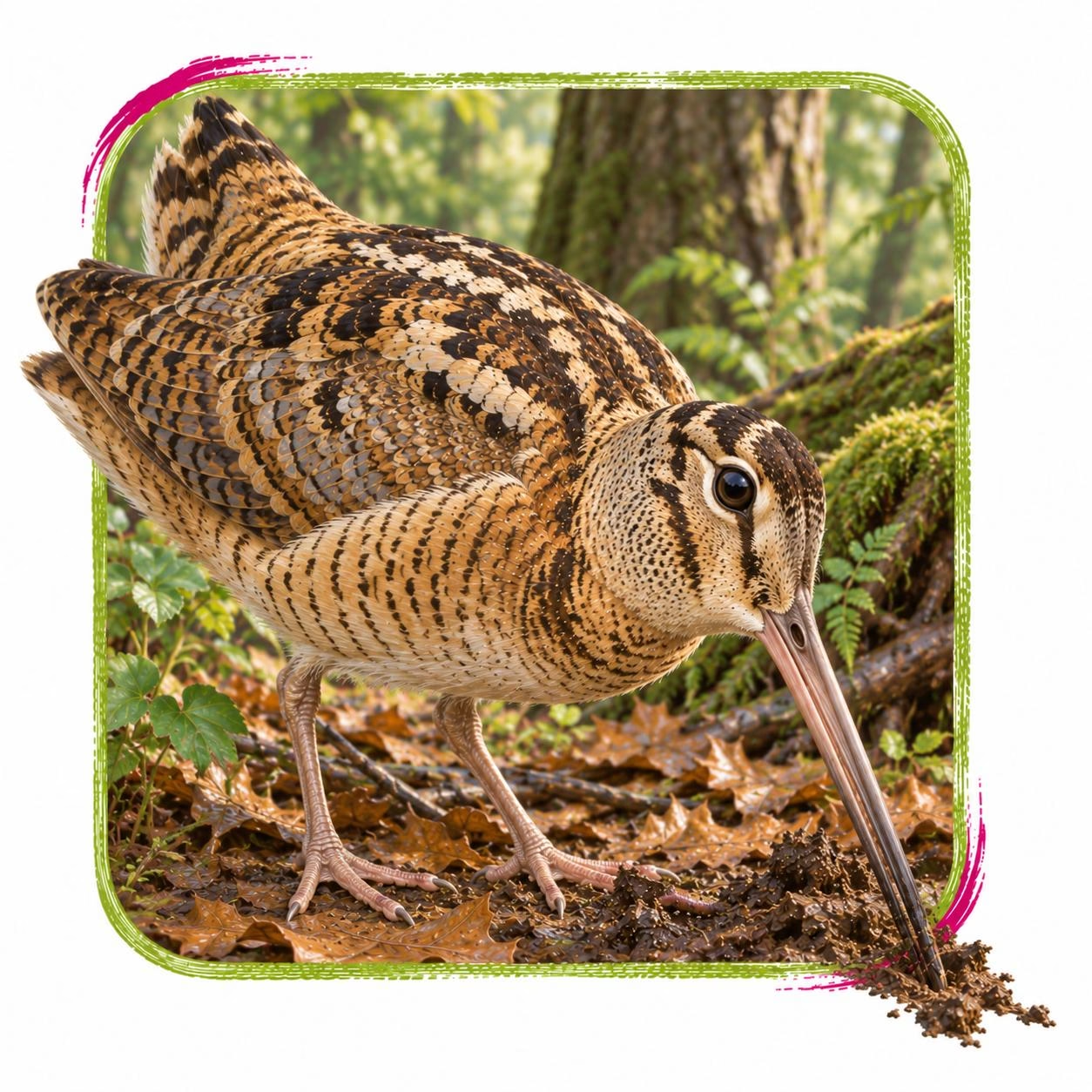
Woodcock in its natural Damp woodland, young forest, forest edge, thickets, scrub, heath, old fields, mountain forest, leaf litter, and moist feeding grounds depending on species habitat