
Worm Facts for Kids
Worm is a common name for many soft, elongated animals rather than one scientific group. Familiar earthworms and leeches are annelids, but flatworms, roundworms, ribbon worms, acorn worms, peanut worms, and other worm-shaped animals belong to distant branches of the animal family tree. They live in soil, freshwater, oceans, rotting material, and inside or on other organisms. Some are decomposers, grazers, filter feeders, predators, scavengers, or parasites. This page uses earthworms as the familiar example while clearly separating traits that do not belong to every animal called a worm.
Quick Worm Facts
- Animal Type: Invertebrates from several unrelated animal groups
- Group: Not one taxonomic group; examples include annelids, flatworms, roundworms, and ribbon worms
- Known For: Long soft bodies, legless movement, burrowing, decomposition, soil mixing, marine diversity, unusual regeneration, and many different feeding styles
- Habitat: Soil, leaf litter, compost, freshwater, seafloor mud, reefs, deep ocean, rotting wood, plants, and animal hosts
- Diet: Decaying matter, microbes, algae, tiny particles, plants, fungi, other animals, blood, or host tissues depending on the species
What You’ll Learn
Discover 10 wriggly worm facts for kids about soft bodies, burrowing, movement, earthworms, and the many different animals called worms, plus a quiz, glossary, and activity
Clear explanations make them ideal for children, families, teachers, and little fact-hunters.
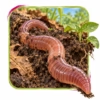
10 Fun Worm Facts for Kids
1. Worm Is a Shape, Not One Family Tree
Animals called worms occur in several distantly related phyla. Their long, soft, legless shapes evolved many times, so an earthworm is more closely related to a leech and marine bristle worm than to a roundworm or ribbon worm.
Kid Decode: The word worm describes a body plan assembled on many different branches.
2. Not Every Worm Is Segmented
Earthworms, leeches, and marine bristle worms are annelids with bodies built from repeated segments. Flatworms, roundworms, and ribbon worms have different body construction and should not be drawn as ringed earthworms.
Kid Decode: Some worms wear body rings, while others arrive as smooth ribbons or threads.
3. Earthworms Move With Muscles and Tiny Bristles
An earthworm alternately lengthens and shortens sections of its body using circular and lengthwise muscles. Tiny bristles called setae grip the ground in most earthworms, while leeches move differently and lack the ordinary earthworm arrangement.
Kid Decode: Muscle waves push the body while microscopic grappling hooks hold the soil.
4. Earthworms Breathe Through Moist Skin
Earthworms exchange oxygen and carbon dioxide across moist skin supplied with blood vessels. They have no lungs, so drying can prevent gas exchange, but prolonged flooding can also be dangerous when water contains too little oxygen.
Kid Decode: The whole damp body becomes a quiet breathing surface.
5. A Clitellum Helps Make Egg Cocoons
A mature earthworm has a thickened band called the clitellum, which produces material for a cocoon containing fertilised eggs. Many earthworms are hermaphrodites with male and female reproductive organs, but they commonly exchange sperm with a partner.
Kid Decode: The pale body band operates a tiny cocoon workshop.
6. Burrows and Castings Change Soil
Earthworms swallow soil and decaying organic material, then release digested material as castings. Their tunnels can create routes for air, water, and roots, while their feeding mixes organic matter with mineral soil.
Kid Decode: A worm tunnel becomes a miniature subway for water, air, and plant roots.
7. Earthworms Can Be Helpers or Invaders
Earthworms can support many farms, gardens, and ecosystems, but benefits are not universal. Non-native earthworms may rapidly remove leaf litter and alter soil, fungi, plants, and food webs in forests that evolved without them.
Kid Decode: A useful underground engineer in one habitat can remodel the wrong forest too quickly.
8. Most Worms Live Beyond the Garden
The ocean contains spectacular tube worms, bristle worms, scale worms, ribbon worms, and free-swimming forms. Some build tubes, carry jaws, wave feeding tentacles, glow, live at hydrothermal vents, or partner with other sea animals.
Kid Decode: The garden worm has ocean cousins dressed as feathers, scales, tubes, and glowing ribbons.
9. Not All Worms Are Parasites
Some flatworms, roundworms, and annelids live as parasites, but enormous numbers of worms are free-living predators, scavengers, deposit feeders, filter feeders, or decomposers. The word worm does not mean disease-causing.
Kid Decode: Most worm-shaped animals are busy living their own lives rather than borrowing yours.
10. Cutting a Worm Does Not Make Two Healthy Worms
Regeneration varies enormously. Some flatworms and ribbon worms can regrow impressive missing parts, while many earthworms survive only certain injuries and may die if vital organs are lost. The separated tail does not simply become a complete second earthworm.
Kid Decode: The famous two-worm trick is mostly a myth wearing a lab coat.
The Weirdest Worm Fact
Some free-swimming marine worms in the family Tomopteridae can produce yellow bioluminescent light, an unusual colour for ocean animals.
Try This Worm Activity
Many Kinds of Worm Activity
Draw a split habitat showing an earthworm in soil, a colourful marine bristle worm, a flatworm, a roundworm, and a ribbon worm. Give only the annelids repeated body segments. Add earthworm muscles, tiny setae, moist skin breathing, a clitellum, an egg cocoon, leaf litter, castings, roots using burrows, a compost area, an invasive-forest warning, a tube-building sea worm, a glowing Tomopteris-style worm, and a regeneration panel explaining that cutting an earthworm does not reliably make two complete animals.
Quick Worm Quiz
- Is worm one scientific animal group? Answer: No, it is a common name used for several unrelated groups.
- Which worm group includes earthworms and leeches? Answer: Annelids.
- What tiny structures help many earthworms grip soil? Answer: Setae.
- What is the thick reproductive band on a mature earthworm called? Answer: The clitellum.
- Does cutting an earthworm always create two complete worms? Answer: No.
Mini Glossary
- Annelid: A segmented worm such as an earthworm, leech, or marine bristle worm.
- Setae: Tiny bristles that help many annelids grip surfaces or move.
- Clitellum: A thickened band on a mature earthworm that helps form egg cocoons.
- Castings: Material that has passed through an earthworm’s digestive system.
- Regeneration: Regrowth of a missing or damaged body part.
 Snow Goose Facts for Kids
 Cowfish Facts for Kids
 Puffin Facts for Kids
 Haast's Eagle Facts for Kids
More Animal Facts for Kids
Visit the full animal facts library or explore a focused animal group.
More Extinct Animal Facts for Kids
Discover dinosaurs, Ice Age giants, prehistoric sea creatures, recently extinct species, and other animals from the past.
Fact check note: Fact checked with Natural History Museum earthworm education and Earthworm Watch resources, USDA Natural Resources Conservation Service and USDA Climate Hubs earthworm publications, Animal Diversity Web accounts for Annelida and marine polychaetes, Smithsonian Ocean resources on ribbon worms, scale worms, tube worms, and Tomopteridae, and scientific references on segmentation, setae, skin respiration, clitellum cocoons, castings, soil engineering, invasive earthworms, free-living and parasitic worm diversity, and regeneration.

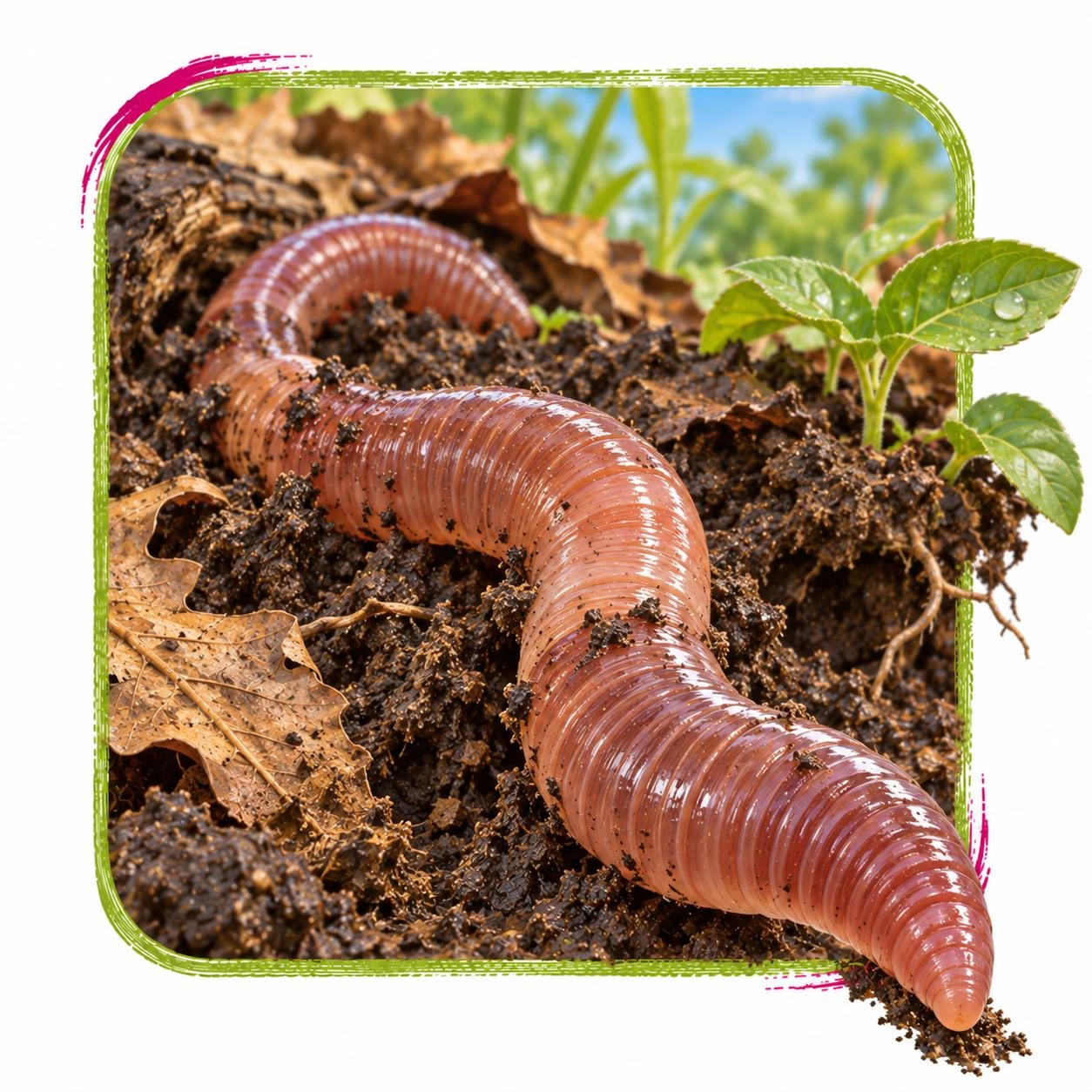
Worm in its natural Soil, leaf litter, compost, freshwater, wetlands, seafloor mud, reefs, deep ocean, hydrothermal vents, rotting wood, plants, and animal hosts depending on group habitat