
Slow Worm Facts for Kids
The slow worm, Anguis fragilis, is neither a worm nor a snake. It is a harmless legless lizard with smooth shiny scales, blinking eyelids, a slightly notched tongue, and the ability to shed its tail. Slow worms spend much of life hidden in grass, soil, compost, leaf litter, or beneath sun-warmed objects while hunting slugs and other invertebrates.
Quick Slow Worm Facts
- Scientific Name: Anguis fragilis
- Animal Type: Reptile and legless lizard in family Anguidae
- Size: Commonly up to about 40–50 centimetres long
- Appearance: Cylindrical body, smooth glossy scales, small head, eyelids, and no external legs
- Range: Much of Europe; related populations once grouped with it are now recognized as separate species in some regions
- Habitat: Grasslands, heaths, woodland edges, scrub, gardens, allotments, compost heaps, and road or rail verges
- Diet: Carnivorous; mainly slugs, snails, earthworms, spiders, and insect larvae
- Activity: Often active around dusk and hidden beneath warm cover during the day
- Young: Up to about 12 live young that hatch from thin membranes during birth
- Conservation: Globally Least Concern, but habitat loss, machinery, roads, fires, pesticides, and pet cats can harm local populations; legally protected in the UK
What You’ll Learn
Explore 10 surprising slow worm facts for kids about legless bodies, movable eyelids, tail dropping, garden habitats, and why they are lizards rather than snakes, with a quiz, glossary, and activity
Easy explanations make them great for children, families, teachers, and young nature explorers.
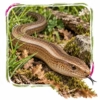
10 Fun Slow Worm Facts for Kids
1. It Is a Lizard Without Legs
Slow worms belong to Anguidae, a family of lizards that also contains glass lizards and alligator lizards. Their ancestors lost their limbs as elongated bodies became useful for burrowing and moving through dense vegetation.
Kid Decode: A slow worm is a lizard whose family traded running legs for a tunneling shape.
2. Blinking Gives Away Its Identity
A slow worm has movable eyelids and can blink, while a snake’s eyes are covered by fixed transparent scales. Its tongue is only shallowly notched, and it must open the mouth to extend it.
Kid Decode: If the shiny “snake” blinks at you, it may be a slow worm.
3. Smooth Scales Help It Move Backward
The glossy scales lie smoothly rather than overlapping strongly like those of many snakes. This arrangement reduces snagging when the animal pushes forward or backward through loose soil and rotting vegetation.
Kid Decode: A sleek scale coat helps the legless lizard reverse through its underground tunnel.
4. It Warms Up Under a Roof
As an ectotherm, a slow worm depends on outside warmth, but it often avoids exposed sun. A flat stone, log, compost heap, board, or metal sheet can trap heat and provide sheltered basking conditions.
Kid Decode: A warm roof can become a private reptile sunbed.
5. Gardens Can Be Important Habitat
Long grass, dense ground plants, compost, logs, stones, and pesticide-free invertebrates make gardens and allotments useful refuges. Careful mowing and checking compost before turning it protect hidden animals.
Kid Decode: A slightly untidy garden can become a slow-worm neighborhood.
6. Backward Teeth Grip Slippery Meals
Slow worms eat slugs, snails, earthworms, spiders, and insect larvae. Small backward-curving teeth hold soft wriggling prey while the lizard gradually works the meal into its mouth.
Kid Decode: A slimy slug has trouble escaping teeth that point the wrong way for retreat.
7. The Tail Can Break Away
When seized, a slow worm may detach the tail at a weak point. The separated part thrashes for several minutes and distracts the predator, while the survivor escapes and later grows a shorter replacement.
Kid Decode: The tail keeps wiggling so the lizard’s head can get away.
8. Babies Are Born Alive
Females retain thin-shelled eggs inside the body, where embryos develop for several months. Up to about 12 young arrive in late summer wrapped in membranes that soon split, and each newborn is only around 4 centimetres long.
Kid Decode: A baby slow worm hatches at the same moment its mother gives birth.
9. Winter Is Spent Underground
From roughly autumn to early spring, slow worms enter brumation in insulated holes, banks, old burrows, root systems, or compost. Several individuals may share a safe winter shelter below the frost.
Kid Decode: A pile of legless lizards may sleep through winter in one hidden chamber.
10. Protection Matters Locally
The species is globally Least Concern, but gardens and connected rough vegetation can support important local groups. In the United Kingdom it is illegal to intentionally kill, injure, or sell a slow worm.
Kid Decode: Even a widespread lizard benefits when people protect the exact patch where it lives.
The Weirdest Slow Worm Fact
Slow worms can live for decades. Wild lifespan estimates often reach 20–30 years, and one individual was reported to have survived at least 54 years at Copenhagen Zoo, an extraordinary age for such a small lizard.
Try This Slow Worm Activity
Plan a Slow-Worm-Safe Garden
Draw a connected route through long grass, native ground plants, a log pile, flat warming stone, compost heap, and frost-free winter shelter. Add a slow worm with eyelids and a notched tongue, plus slug and earthworm prey. Mark a high mower setting, pesticide-free zone, careful compost-check point, cat-safe refuge, and a reminder never to lift or grab the animal by its tail.
Quick Slow Worm Quiz
- Is a slow worm a snake? Answer: No, it is a legless lizard.
- What feature lets it blink? Answer: Movable eyelids.
- What slippery garden animal does it eat? Answer: Slugs or snails.
- Why does it drop its tail? Answer: To distract a predator and escape.
- What winter resting state does it enter? Answer: Brumation.
Mini Glossary
- Legless lizard: A lizard lineage that evolved without external legs.
- Ectotherm: An animal whose body temperature depends mainly on outside heat.
- Autotomy: Deliberately detaching a body part such as the tail.
- Brumation: A reptile’s cold-season period of greatly reduced activity.
- Ovoviviparous: Retaining eggs inside the parent until the young hatch around birth.
 Vulture Facts for Kids
 Weedy Seadragon Facts for Kids
 Hog Facts for Kids
 Scutosaurus Facts for Kids
More Animal Facts for Kids
Visit the full animal facts library or explore a focused animal group.
More Extinct Animal Facts for Kids
Discover dinosaurs, Ice Age giants, prehistoric sea creatures, recently extinct species, and other animals from the past.
Fact check note: Fact checked against Amphibian and Reptile Conservation’s Anguis fragilis profile; Natural History Museum London’s slow-worm biology feature; The Wildlife Trusts species account; IUCN European reptile assessments; UK Wildlife and Countryside Act guidance; and peer-reviewed work on Anguis taxonomy, limb loss, scales, thermoregulation, diet, autotomy, reproduction, brumation, longevity, habitat use, and garden management. Legless-lizard identity, blinking eyelids, adult size, late-summer live young, diet, shorter regenerated tails, multi-animal winter refuges, Least Concern assessment, reported 54-year captive record, and UK protection were cross-checked.

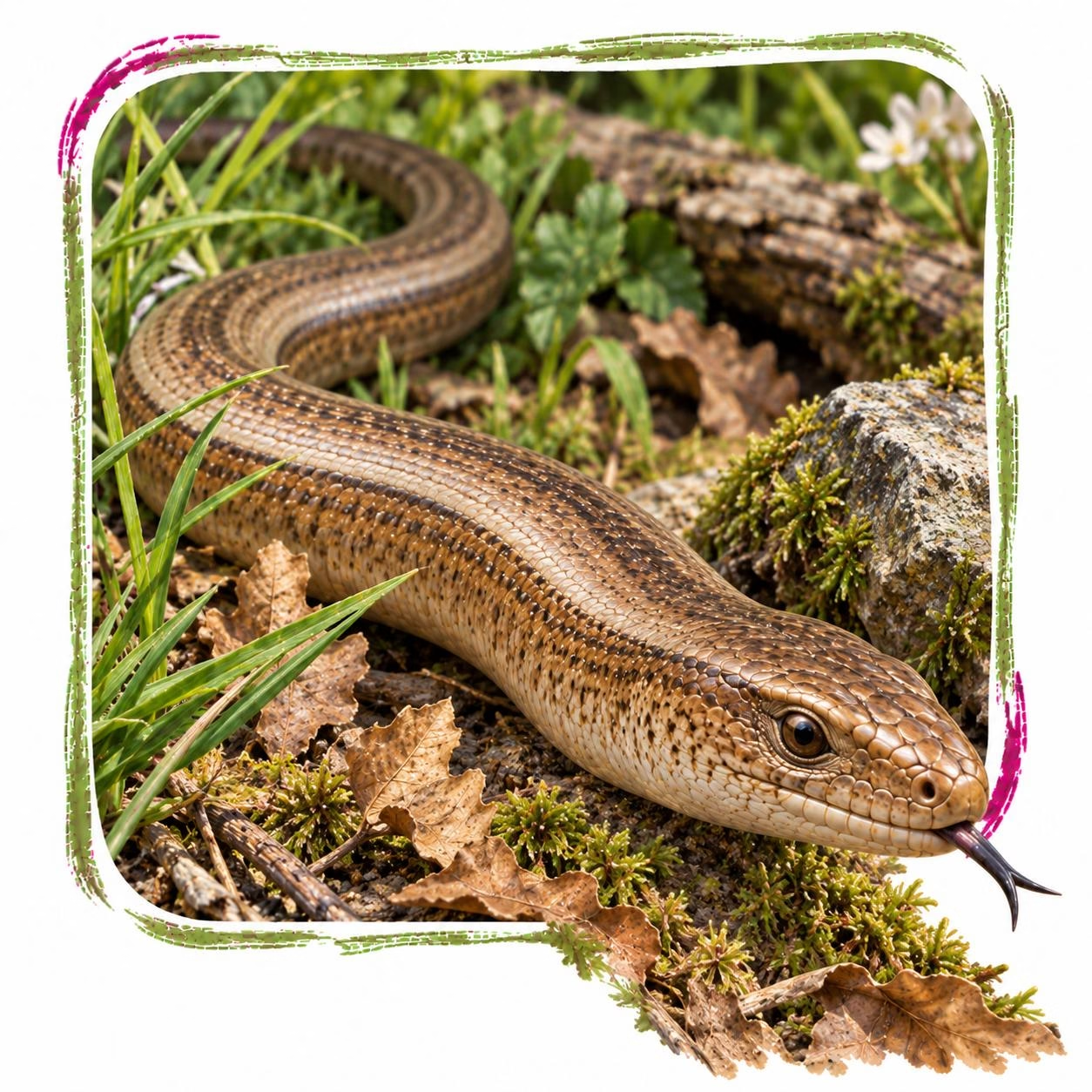
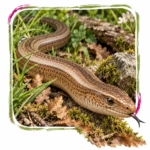
Slow Worm in its natural Grasslands, heaths, woodland edges, scrub, gardens, allotments, compost heaps, embankments, leaf litter, and loose soil across much of Europe habitat