
Amphicyon Facts for Kids
Amphicyon was a large amphicyonid carnivoran commonly called a bear-dog. It was not a hybrid of a bear and a dog, and it did not belong to either living family. Different species combined powerful jaws, broad feet, flexible bodies, and limbs with both ambush and pursuit features, creating formidable predators and scavengers across the Miocene world.
Quick Amphicyon Facts
- Animal Type: Extinct carnivoran mammal
- Group: Amphicyonid or bear-dog
- Known For: Massive body, strong jaws, crushing and slicing teeth, broad feet, and mixed locomotor adaptations
- Lived During: Mainly Early to Late Miocene, roughly 20–8 million years ago
- Diet: Meat-heavy diet with bone and possibly some plant food, varying by species
What You’ll Learn
Explore 10 mighty amphicyon facts for kids about bear-like size, dog-like features, strong jaws, hunting, and prehistoric forests, with a quiz, glossary, and activity
These simple facts are written for kids, parents, teachers, and curious young animal lovers.
10 Fun Amphicyon Facts for Kids
1. Amphicyon Was a Bear-Dog
Amphicyon belonged to Amphicyonidae, an extinct carnivoran family nicknamed bear-dogs because members combined bear-like and dog-like features.
Kid Decode: It looked assembled from two familiar predators while belonging to neither modern family.
2. It Was Not a Bear-Dog Hybrid
Amphicyon was its own evolutionary animal, not the offspring or direct mixture of a bear and a dog.
Kid Decode: The nickname describes the silhouette, not a prehistoric crossbreeding experiment.
3. Species Varied Greatly in Size
Some Amphicyon species were large-bear sized, while one study estimated the giant North American Amphicyon ingens at about 547 kilograms.
Kid Decode: The genus ranged from formidable predator to half-tonne carnivore colossus.
4. Its Skull Was Massive
Large species had deep skulls, broad cheek arches, and extensive attachment areas for powerful jaw-closing muscles.
Kid Decode: Its head provided plenty of room for a heavyweight bite engine.
5. Its Teeth Could Slice and Crush
Sharp carnassials cut flesh, while broad rear teeth and strong premolars could process hard foods and sometimes bone.
Kid Decode: The mouth carried steak knives in front and a heavy-duty crusher farther back.
6. It Probably Ate Mostly Meat
Dental proportions and wear indicate a strongly carnivorous or meat-heavy diet in many species, although some may also have eaten plant foods.
Kid Decode: The bear-dog menu leaned toward meat without necessarily banning berries.
7. It Was Not a Specialised Long-Distance Runner
Amphicyon major had relatively short lower limb segments and a heavy skeleton, features better suited to power than wolf-like endurance.
Kid Decode: It arrived with wrestling strength rather than racing shoes.
8. Its Limbs Combined Different Hunting Features
Postcranial studies found a mixture of ambush adaptations and features useful for moving efficiently during pursuit.
Kid Decode: The body plan sat between sudden pounce and determined chase.
9. It Could Scavenge and Break Bones
Strong jaws and robust teeth would have allowed Amphicyon to tear carcasses and reach nutrients inside some bones.
Kid Decode: A leftovers problem could become a marrow opportunity.
10. It Spread Across Several Continents
Amphicyon fossils are known from Europe, Asia, Africa, and North America, reflecting several dispersal events during the Miocene.
Kid Decode: The bear-dog passport accumulated stamps across much of the Northern Hemisphere and Africa.
The Weirdest Amphicyon Fact
One body-mass study estimated the giant Amphicyon ingens at about 547 kilograms, making it heavier than most living land predators.
Try This Amphicyon Activity
Amphicyon Drawing Activity
Draw Amphicyon crossing a Miocene woodland edge. Add a huge bear-like trunk, dog-like muzzle, broad feet, muscular shoulders, a long tail, slicing carnassials and crushing rear teeth in a cutaway, a carcass with cracked bones, hoofed prey, and a world map marking four continents.
Quick Amphicyon Quiz
- Was Amphicyon a bear-dog hybrid? Answer: No, it belonged to its own extinct carnivoran family.
- How heavy was the giant Amphicyon ingens estimated to be? Answer: About 547 kilograms in one study.
- What jobs did its teeth perform? Answer: Slicing flesh and crushing hard food, including some bone.
- Was it built like a wolf for long-distance running? Answer: No, it had a heavier, more power-focused body.
- On which continents are Amphicyon fossils known? Answer: Europe, Asia, Africa, and North America.
Mini Glossary
- Amphicyonid: A member of the extinct carnivoran family commonly called bear-dogs.
- Carnassial: A blade-like cheek tooth used to slice meat.
- Mesocarnivore: A meat eater whose diet can also include substantial non-meat food.
- Postcranium: All parts of a skeleton behind the skull.
- Plantigrade: Walking with most or all of the sole placed on the ground.
 Andean Condor Facts for Kids
 Sumatran Rhino Facts for Kids
 Stingray Facts for Kids
 Steller's Sea Cow Facts for Kids
More Animal Facts for Kids
Visit the full animal facts library or explore a focused animal group.
More Extinct Animal Facts for Kids
Discover dinosaurs, Ice Age giants, prehistoric sea creatures, recently extinct species, and other animals from the past.
Fact check note: Fact checked with Argot’s 2010 postcranial study of Amphicyon major, Sorkin’s 2006 ecomorphology analysis, Figueirido and colleagues’ 2011 body-mass study, and Hunt’s research on Miocene amphicyonid dispersal.

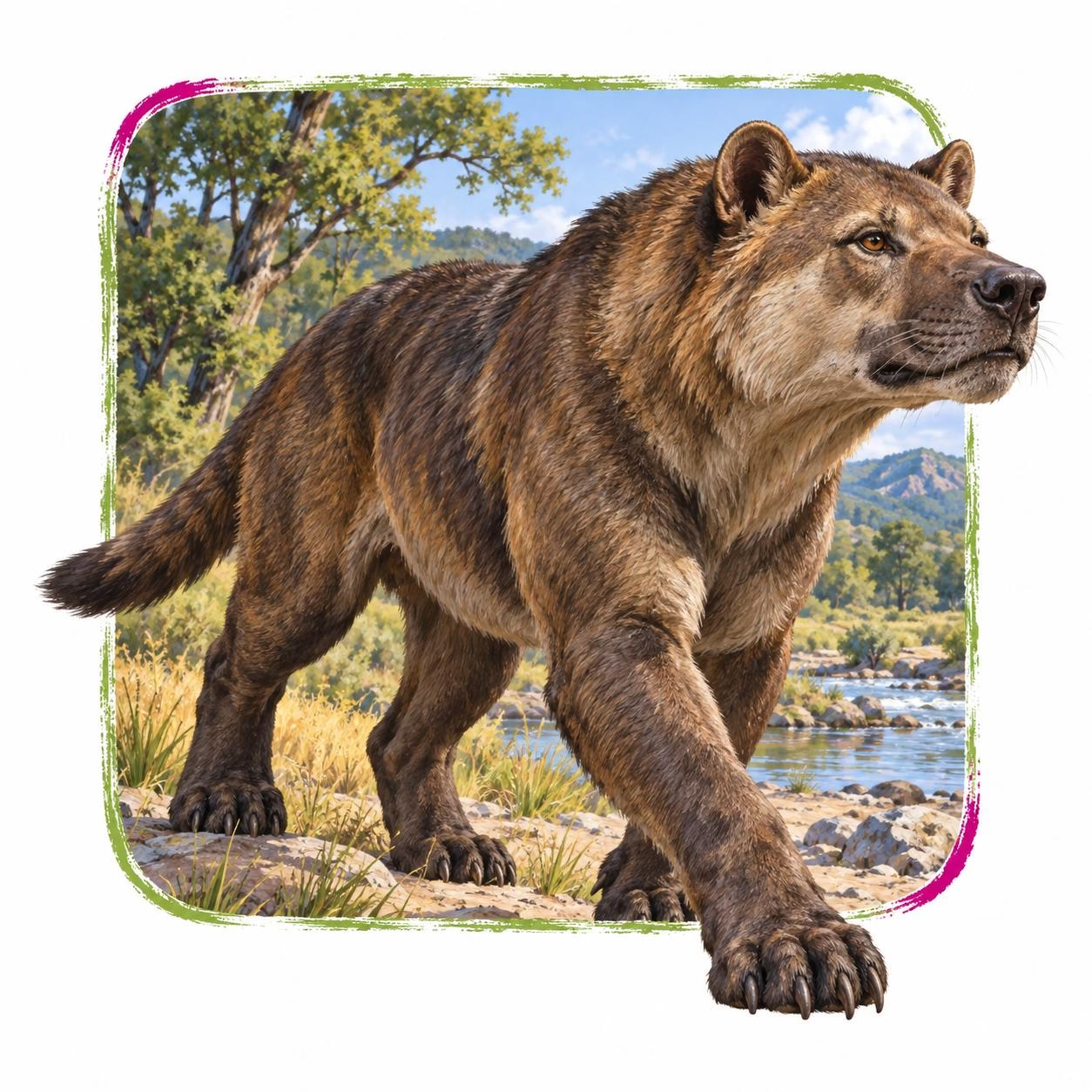
Amphicyon in its natural Miocene woodlands, forest edges, wooded grasslands, river valleys, open plains, and mixed terrestrial habitats habitat