
Archaeopteryx Facts for Kids
Archaeopteryx was a famous early avialan from Late Jurassic Germany. It was not a modern bird, and it was not a giant dinosaur. It sat close to the bird-dinosaur transition, with feathers and wings like a bird, but also teeth, a long bony tail, and clawed fingers like small theropod dinosaurs.
Quick Archaeopteryx Facts
- Animal Type: Early prehistoric avialan
- Group: Early bird-like feathered dinosaur relative
- Known For: Feathers, wings, teeth, wing claws, long bony tail, wishbone, Solnhofen fossils, bird-dinosaur transition, and Jurassic flight clues
- Lived During: Late Jurassic, about 150 million years ago
- Diet: Insects, small reptiles, small animals, and possibly other tiny foods
What You’ll Learn
Discover 10 incredible archaeopteryx facts for kids about feathers, wings, claws, teeth, and its mix of bird and dinosaur features, plus a quiz, glossary, and activity
Clear explanations make them ideal for children, families, teachers, and little fact-hunters.
10 Fun Archaeopteryx Facts for Kids
1. Archaeopteryx Was an Early Avialan
Archaeopteryx belonged close to the base of the bird branch of the dinosaur family tree.
Kid Decode: Not quite modern bird, not ordinary dinosaur, just fossil bridgework with feathers.
2. It Had Feathers
Archaeopteryx fossils preserve flight feathers, including wing and tail feathers.
Kid Decode: The feathers were so clear that they helped rewrite the bird-origin story.
3. It Had Teeth
Unlike living birds, Archaeopteryx had small sharp teeth in its jaws.
Kid Decode: This bird-like creature still kept a dinosaur grin.
4. It Had Claws on Its Wings
Archaeopteryx had three clawed fingers on each wing, a feature modern birds do not show in the same way.
Kid Decode: Wing claws made it look like flight was still under construction.
5. It Had a Long Bony Tail
Modern birds have short tail bones, but Archaeopteryx had a long tail with feathers along it.
Kid Decode: The tail was part balancing pole, part feather display.
6. It Lived in Jurassic Germany
Archaeopteryx fossils come from Solnhofen limestone deposits in Bavaria, Germany.
Kid Decode: These fine rocks preserved feathers like nature’s own photocopier.
7. It Was About Raven-Sized
Archaeopteryx was small, roughly around the size of a raven or magpie, not eagle-sized or giant.
Kid Decode: Famous does not always mean huge.
8. It May Have Flown in Short Bursts
Scientists debate exactly how well it flew, but its feathers and wing anatomy suggest some kind of powered or assisted flight.
Kid Decode: Flight was probably real, but not modern-seagull smooth.
9. It Helped Prove Birds Evolved From Dinosaurs
Archaeopteryx became one of the most famous fossils because it mixed bird-like and dinosaur-like features.
Kid Decode: It is basically the fossil world’s “look closer” sign.
10. Baby Archaeopteryx Were Chicks
Baby Archaeopteryx can be called chicks because it was a bird-line animal that hatched from eggs.
Kid Decode: A chick with teeth and tiny wing claws would be hard to forget.
The Weirdest Archaeopteryx Fact
Archaeopteryx had flight feathers like a bird, but also teeth, claws, and a long bony tail like its dinosaur relatives.
Try This Archaeopteryx Activity
Archaeopteryx Drawing Activity
Draw Archaeopteryx on a Jurassic island branch. Add feathered wings, wing claws, teeth, long feathered tail, small prey, limestone fossil slab, Solnhofen lagoon clue, and a “bird-dinosaur transition” label.
Quick Archaeopteryx Quiz
- Was Archaeopteryx a modern bird? Answer: No, it was an early avialan near the bird-dinosaur transition.
- Where were its fossils found? Answer: In Solnhofen limestone in Germany.
- What did it have in its jaws? Answer: Small teeth.
- What covered its wings? Answer: Feathers.
- What did its fossils help scientists understand? Answer: How birds evolved from feathered dinosaurs.
Mini Glossary
- Avialan: A member of the bird-line group of dinosaurs.
- Solnhofen Limestone: Fine German rock famous for preserving Archaeopteryx fossils.
- Wishbone: A forked bone in birds and some dinosaurs, also called a furcula.
- Chick: A baby bird.
- Late Jurassic: A time near the end of the Jurassic Period.
 Lion Facts for Kids
 Iberian Lynx Facts for Kids
 Glass Frog Facts for Kids
 Machimosaurus Facts for Kids
More Animal Facts for Kids
Visit the full animal facts library or explore a focused animal group.
More Extinct Animal Facts for Kids
Discover dinosaurs, Ice Age giants, prehistoric sea creatures, recently extinct species, and other animals from the past.
Fact check note: Fact checked with UC Berkeley Archaeopteryx notes, Field Museum/Natural History Museum fossil summaries, Solnhofen fossil references, and trusted early bird evolution education sources.

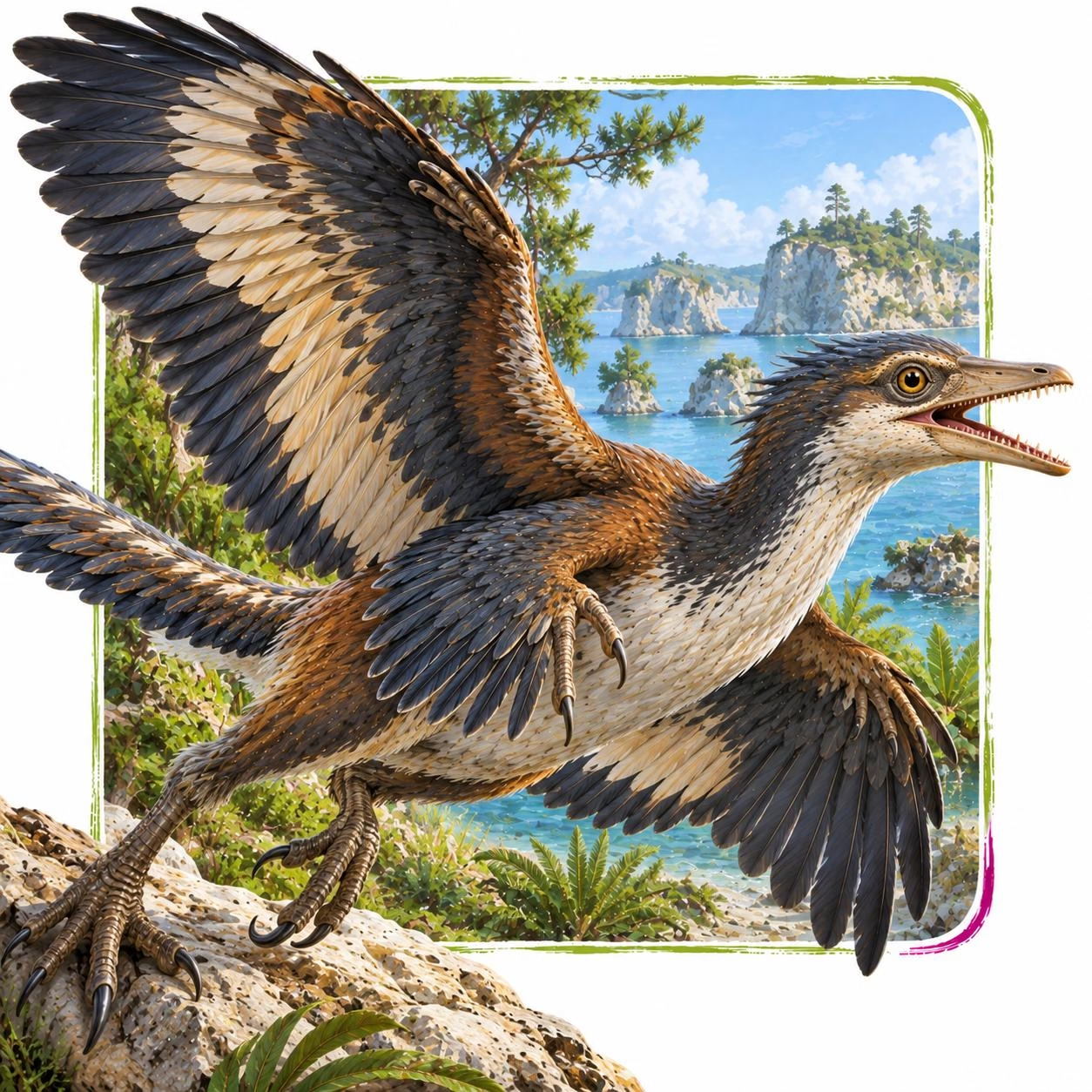
Archaeopteryx in its natural Late Jurassic Solnhofen archipelago, German limestone lagoon islands, coastal forests, rocky shores, low island habitats, tropical lagoons, and fossil-rich limestone environments habitat