
Cryptoclidus Facts for Kids
Cryptoclidus was a long-necked plesiosaur that lived in warm seas covering part of what is now England during the Middle Jurassic. It was not a dinosaur. Adults were around 4 metres long and had a small head, a barrel-shaped body, four powerful flippers, and many slender teeth that could trap small, slippery prey.
Quick Cryptoclidus Facts
- Animal Type: Prehistoric marine reptile
- Group: Cryptoclidid plesiosaur
- Known For: Long neck, small head, many slender interlocking teeth, four flippers, and abundant Oxford Clay fossils
- Lived During: Middle Jurassic, about 166–163 million years ago
- Diet: Small fish, crustaceans, cephalopods, and other marine animals
What You’ll Learn
Discover 10 graceful cryptoclidus facts for kids about its long neck, small head, four flippers, fish diet, and Jurassic oceans, plus a quiz, glossary, and activity
These facts are explained simply for kids, parents, teachers, and curious little fact-finders.
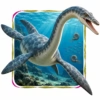
10 Fun Cryptoclidus Facts for Kids
1. Cryptoclidus Was a Plesiosaur
Cryptoclidus belonged to the plesiosaur group of marine reptiles. It was not a dinosaur, fish, dolphin, or whale.
Kid Decode: It carried a long-necked sea-monster outline on a reptile family tree.
2. It Lived in the Middle Jurassic
Cryptoclidus swam in seas during the Callovian Age of the Middle Jurassic, more than 160 million years ago.
Kid Decode: Its ocean existed while many famous Jurassic dinosaurs walked far away on land.
3. Its Fossils Are Common in the Oxford Clay
Many Cryptoclidus fossils come from the Oxford Clay Formation of England, including individuals of different ages.
Kid Decode: The muddy seafloor saved enough skeletons to create a plesiosaur family album.
4. Adults Were About Four Metres Long
Adult Cryptoclidus eurymerus were moderately sized plesiosaurs measuring roughly 4 metres from snout to tail.
Kid Decode: It was longer than a car, but far smaller than the biggest ocean reptiles.
5. It Had a Long but Controlled Neck
Its neck contained many vertebrae, but computer studies suggest it could not twist around like a snake and had a limited range of motion.
Kid Decode: Long neck did not mean underwater rubber hose.
6. Its Teeth Formed a Prey Trap
Numerous narrow teeth pointed outward and interlocked when the jaws closed, helping hold small slippery animals.
Kid Decode: The mouth worked like a spiky basket that snacks found difficult to escape.
7. It Probably Ate Small Marine Animals
Cryptoclidus likely caught small fish, crustaceans, squid-like animals, and other prey rather than attacking giant sea reptiles.
Kid Decode: Its menu leaned toward bite-sized ocean wrigglers.
8. It Swam With Four Flippers
Like other plesiosaurs, Cryptoclidus used four paddle-shaped limbs in a swimming style sometimes compared with underwater flight.
Kid Decode: Four flippers turned the whole body into a Jurassic swimming machine.
9. It Had a Small Head
The skull was relatively small compared with the long neck and broad trunk, keeping the end of the neck lighter.
Kid Decode: A compact head sat at the end of a very extended delivery system.
10. It Probably Gave Birth at Sea
Direct embryos are not known for Cryptoclidus, but fossil evidence from another plesiosaur shows that the group gave birth to live young in the water.
Kid Decode: Its babies likely began life at sea without a trip to a nesting beach.
The Weirdest Cryptoclidus Fact
Cryptoclidus is known from young, mature, and old individuals, making it one of the best-understood plesiosaurs in the fossil record.
Try This Cryptoclidus Activity
Cryptoclidus Drawing Activity
Draw Cryptoclidus swimming through a Middle Jurassic sea. Add a long controlled neck, small head, barrel-shaped body, four flippers, slender interlocking teeth, small fish, crustaceans, ammonites, muddy seafloor, and an Oxford Clay fossil slab.
Quick Cryptoclidus Quiz
- Was Cryptoclidus a dinosaur? Answer: No, it was a plesiosaur and marine reptile.
- Where are many of its fossils found? Answer: The Oxford Clay Formation of England.
- How long was an adult? Answer: About 4 metres.
- What helped it hold slippery prey? Answer: Many slender interlocking teeth.
- How many flippers did it have? Answer: Four.
Mini Glossary
- Plesiosaur: A prehistoric marine reptile with four flippers.
- Cryptoclidid: A family of mostly long-necked Jurassic plesiosaurs.
- Vertebra: One of the bones forming the spine or neck.
- Cephalopod: A squid, octopus, ammonite, or related animal.
- Oxford Clay: A fossil-rich Middle Jurassic rock formation in England.
 Corn Snake Facts for Kids
 Auk Facts for Kids
 Common Warthog Facts for Kids
 Elasmotherium Facts for Kids
More Animal Facts for Kids
Visit the full animal facts library or explore a focused animal group.
More Extinct Animal Facts for Kids
Discover dinosaurs, Ice Age giants, prehistoric sea creatures, recently extinct species, and other animals from the past.
Fact check note: Fact checked with Brown’s 1981 Oxford Clay plesiosaur review, Wintrich and colleagues’ 2019 Cryptoclidus neck-mobility study, the Plesiosaur Directory specimen summary, and O’Keefe and Chiappe’s plesiosaur live-birth research.

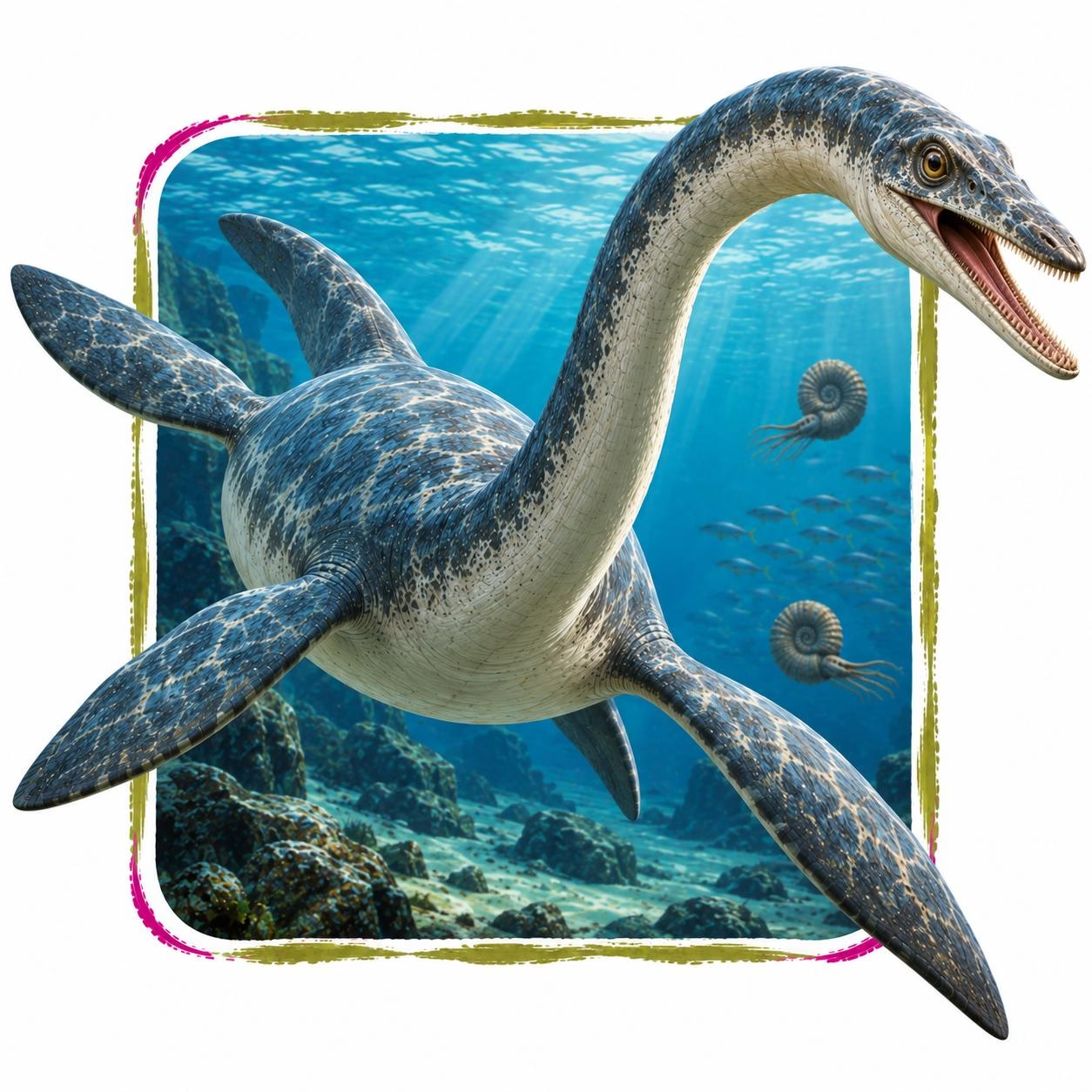
Cryptoclidus in its natural Middle Jurassic shallow seas, warm continental shelf waters, offshore mud-bottom habitats, coastal channels, island margins, and ammonite-rich marine environments habitat