
Borophagus Facts for Kids
Borophagus was a stocky bone-crushing dog that lived in North America during the later Miocene and Pliocene. It was a true canid, but it belonged to the extinct borophagine branch rather than the wolf, fox, or domestic-dog branch. A deep skull, strong jaw muscles, and enlarged crushing teeth allowed it to eat flesh, crack bones, and reach nutritious marrow.
Quick Borophagus Facts
- Animal Type: Extinct canid mammal
- Group: Borophagine bone-crushing dog
- Known For: Deep skull, domed forehead, enlarged premolars, bone-filled coprolites, and powerful jaws
- Lived During: Late Miocene to Pliocene, roughly 12–2 million years ago
- Diet: Meat, carrion, bones, and marrow from medium and large animals
What You’ll Learn
Discover 10 fascinating borophagus facts for kids about crushing teeth, strong jaws, dog relatives, scavenging, and prehistoric grasslands, with a quiz, glossary, and activity
These easy facts are made for kids, parents, teachers, and curious little learners.
10 Fun Borophagus Facts for Kids
1. Borophagus Was a True Dog
Borophagus belonged to Canidae, the mammal family containing wolves, foxes, coyotes, and domestic dogs.
Kid Decode: It was a genuine dog relative with a jaw toolkit that wandered into hyena territory.
2. It Was Not a Hyena
Its short face and bone-crushing teeth looked hyena-like, but those similarities evolved separately in two different carnivore families.
Kid Decode: Evolution built a similar bone cracker twice using different family-tree instructions.
3. It Lived Only in North America
Borophagus fossils are known across much of North America, from Mexico and the United States into parts of Central America.
Kid Decode: Its fossil trail spread across a continent before the genus finally disappeared.
4. Its Skull Was Deep and Powerful
Derived Borophagus species had a broad forehead, short muzzle, wide cheek arches, and large attachment areas for jaw-closing muscles.
Kid Decode: Its head looked compact because most of the spare room had been rented to the bite engine.
5. Its Premolars Crushed Bone
Robust premolars, especially the enlarged lower fourth premolar, helped crack hard skeletal material while other teeth sliced meat.
Kid Decode: The mouth brought cutting tools and a portable bone press to the same meal.
6. Fossil Dung Proves It Ate Bone
Coprolites attributed to Borophagus parvus contain many crushed bone fragments, providing direct evidence of bone consumption.
Kid Decode: Prehistoric poop preserved the meal receipt in a surprisingly crunchy format.
7. Borophagus parvus Weighed About Twenty-Four Kilograms
Estimates from the California coprolite study place Borophagus parvus near 24 kilograms, about the mass of a medium-sized modern dog.
Kid Decode: It achieved heavyweight dental performance without needing a gigantic body.
8. It Tackled Fairly Large Prey
The same study estimated that B. parvus could exploit animals weighing roughly 35 to 100 kilograms.
Kid Decode: A coyote-sized predator may have tackled dinner several times heavier than itself.
9. It Probably Hunted and Scavenged
Its teeth suited killing prey and thoroughly consuming carcasses, but fossils cannot reveal exactly how often it hunted, scavenged, or fed socially.
Kid Decode: The jaws were certain; the dinner-acquisition schedule remains unwritten.
10. Its Name Means Gluttonous Eater
Borophagus is commonly translated as gluttonous eater, an appropriate name for an animal able to consume flesh and splintered bone.
Kid Decode: The scientific name arrives already sounding hungry.
The Weirdest Borophagus Fact
Bone-packed Borophagus coprolites provide rare direct proof that this extinct dog crushed and swallowed skeletal fragments instead of merely leaving tooth marks on bones.
Try This Borophagus Activity
Borophagus Drawing Activity
Draw Borophagus parvus beside a Late Miocene North American carcass. Add a stocky dog-like body, short deep muzzle, domed forehead, powerful jaw muscles, enlarged crushing premolars, cracked bones exposing marrow, hoofed prey, open woodland, and a coprolite cutaway filled with tiny bone fragments.
Quick Borophagus Quiz
- Was Borophagus a true dog? Answer: Yes, it was an extinct canid.
- Was it a hyena? Answer: No, its hyena-like features evolved independently.
- What did its enlarged premolars help it do? Answer: Crack and process bone.
- How heavy was Borophagus parvus estimated to be? Answer: About 24 kilograms.
- What direct evidence reveals its diet? Answer: Coprolites containing crushed bone fragments.
Mini Glossary
- Canid: A member of the dog family.
- Borophagine: A member of an extinct North American branch of canids.
- Durophagy: Feeding on hard materials such as bone or shell.
- Coprolite: Fossilised dung.
- Marrow: Nutrient-rich tissue found inside many bones.
 Komodo Dragon Facts for Kids
 Tree Kangaroo Facts for Kids
 Chamois Facts for Kids
 Beipiaosaurus Facts for Kids
More Animal Facts for Kids
Visit the full animal facts library or explore a focused animal group.
More Extinct Animal Facts for Kids
Discover dinosaurs, Ice Age giants, prehistoric sea creatures, recently extinct species, and other animals from the past.
Fact check note: Fact checked with Wang and colleagues’ 2018 eLife study of Borophagus parvus coprolites, Tseng and Wang’s 2010 cranial-functional study, Wang and Tedford’s borophagine systematics, and Bōgner and colleagues’ 2022 Borophagus ecology research.

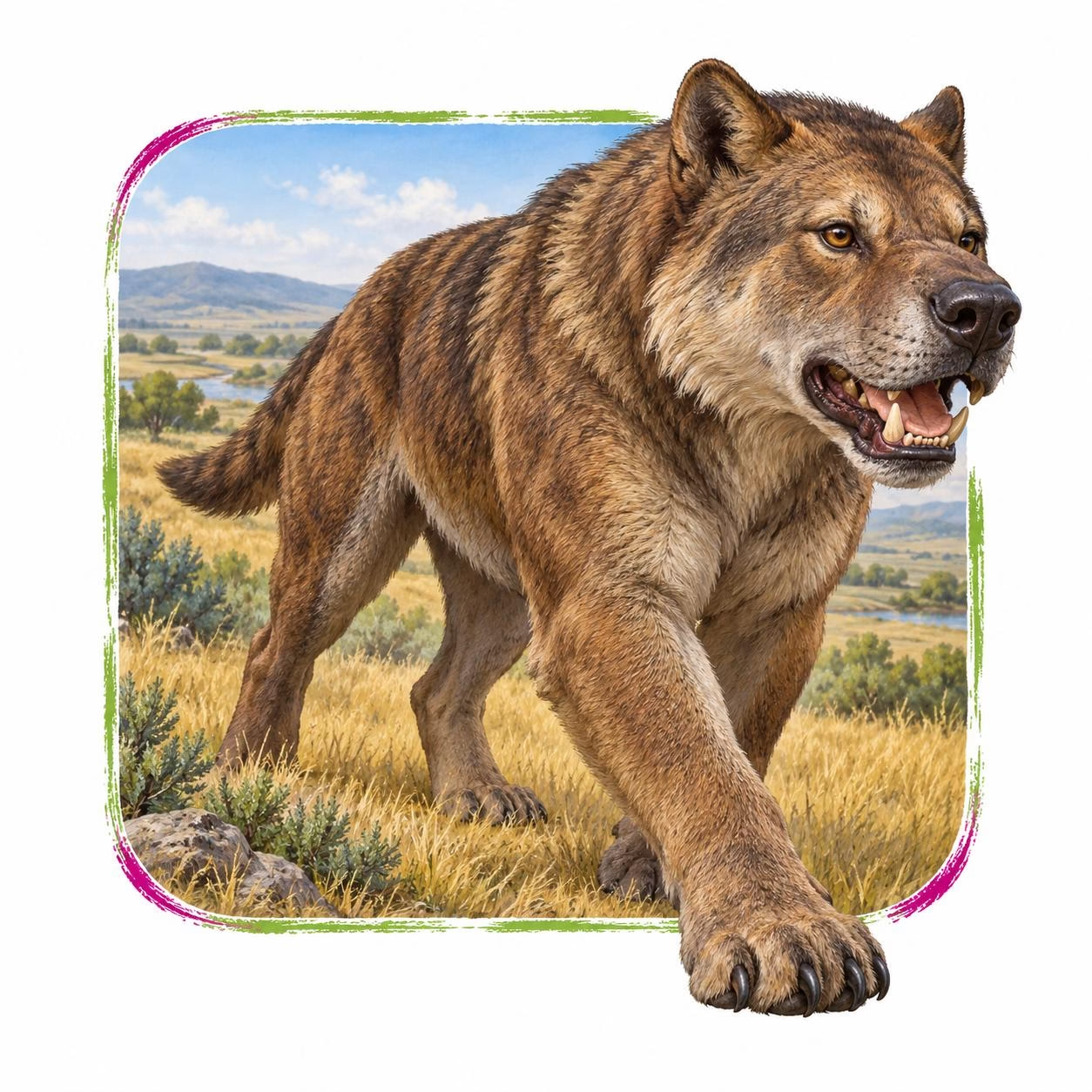
Borophagus in its natural Late Miocene and Pliocene grasslands, open woodlands, river valleys, scrub, seasonal plains, and mixed terrestrial habitats across North America habitat