
Cameroceras Facts for Kids
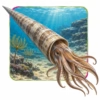
Cameroceras was a straight-shelled cephalopod that lived mainly in warm Ordovician seas. It was a mollusc related to modern octopuses, squid, cuttlefish, and nautiluses, not a fish or dinosaur. Its cone-shaped shell was divided into chambers and contained an unusually large siphuncle that helped control buoyancy. Some shells exceeded 2 metres, but famous claims of 9-metre Cameroceras are not securely supported.
Quick Cameroceras Facts
- Animal Type: Extinct cephalopod mollusc
- Group: Endocerid orthocone
- Known For: Long straight shell, large siphuncle, internal chambers, endocones, and disputed giant-size stories
- Lived During: Mainly Middle to Late Ordovician, about 470–445 million years ago
- Diet: Probably fish, trilobites, and other marine animals
What You’ll Learn
Discover 10 enormous cameroceras facts for kids about long straight shells, tentacles, jet propulsion, hunting, and ancient oceans, with a quiz, glossary, and activity
Clear explanations make them fun for children, families, teachers, and little fact-hunters.
10 Fun Cameroceras Facts for Kids
1. Cameroceras Was a Cephalopod
Cameroceras belonged to the mollusc class Cephalopoda, the same broad group as living octopuses, squid, cuttlefish, and nautiluses.
Kid Decode: Its distant family reunion would contain tentacles, shells, ink, and several very complicated name tags.
2. Its Shell Was Long and Straight
The shell, or conch, formed a mostly straight tapering cone rather than the spiral seen in many later cephalopods.
Kid Decode: It carried a giant pointed traffic cone through the Ordovician sea.
3. The Shell Contained Many Chambers
Walls called septa divided most of the shell into gas- and fluid-filled chambers, while the animal lived in a body chamber at the wide open end.
Kid Decode: Most of the shell was a buoyancy building, and the cephalopod occupied the front room.
4. It Had an Enormous Siphuncle
A tube-like structure called the siphuncle ran through the chambers and could reach nearly half the shell’s diameter in some specimens.
Kid Decode: Its shell came with internal plumbing on an unusually grand scale.
5. Endocones Strengthened the Siphuncle
Cone-shaped mineral deposits called endocones formed inside the siphuncle and are a defining feature of endocerid cephalopods.
Kid Decode: The tube contained a stack of nested cones, a fossil puzzle hidden inside another fossil puzzle.
6. Some Shells Exceeded Two Metres
Well-documented Cameroceras shells can exceed about 2 metres, although many species and specimens were much smaller.
Kid Decode: Even the evidence-based version was longer than many grown-ups are tall.
7. The Famous Nine-Metre Claim Is Doubtful
Old books sometimes described Cameroceras as 9 or 10 metres long, but that estimate came from uncertain material and may involve the related genus Endoceras.
Kid Decode: This fossil giant lost several imaginary metres when scientists checked the measuring tape.
8. It Lived in Tropical Ordovician Seas
Cameroceras fossils occur in rocks formed around ancient Laurentia, Baltica, and Siberia, where warm shallow seas covered broad areas.
Kid Decode: Its ocean map later became pieces of North America, Europe, and Asia.
9. It Was Probably a Predator
Cameroceras is generally reconstructed as a meat eater that used tentacles to capture fish, trilobites, and other marine animals, although its soft parts are not preserved.
Kid Decode: The shell survives; the tentacle-powered dinner method requires careful scientific reconstruction.
10. Its Name Means Chambered Horn
Cameroceras combines Greek words for chamber and horn, referring to its long chambered shell.
Kid Decode: The name describes the fossil neatly: one very large horn divided into rooms.
The Weirdest Cameroceras Fact
Cameroceras became famous as a 9-metre sea monster, but securely documented shells are far smaller and the largest old reports may actually belong to Endoceras.
Try This Cameroceras Activity
Cameroceras Drawing Activity
Draw Cameroceras cruising through an Ordovician sea. Add a long straight cone-shaped shell, chamber lines, a cutaway showing the giant siphuncle and nested endocones, a soft head with tentacles at the wide opening, trilobites, early fish, brachiopods, and a size chart correcting the doubtful 9-metre story.
Quick Cameroceras Quiz
- Was Cameroceras a fish? Answer: No, it was a cephalopod mollusc.
- What shape was its shell? Answer: Long, straight, and cone-shaped.
- What divided the shell into chambers? Answer: Walls called septa.
- What large tube ran through the chambers? Answer: The siphuncle.
- Are the famous 9-metre estimates secure? Answer: No, they are doubtful and may involve Endoceras.
Mini Glossary
- Cephalopod: A mollusc belonging to the group that includes octopuses, squid, cuttlefish, and nautiluses.
- Orthocone: A cephalopod with a mostly straight cone-shaped shell.
- Septum: A wall dividing one shell chamber from another.
- Siphuncle: A tube running through shell chambers that helped control fluid and gas.
- Endocone: A cone-shaped deposit formed inside the siphuncle of an endocerid.
 Aardwolf Facts for Kids
 Harlequin Duck Facts for Kids
 Hawk Facts for Kids
 Azhdarcho Facts for Kids
More Animal Facts for Kids
Visit the full animal facts library or explore a focused animal group.
More Extinct Animal Facts for Kids
Discover dinosaurs, Ice Age giants, prehistoric sea creatures, recently extinct species, and other animals from the past.
Fact check note: Fact checked with the Atlas of Ordovician Life Cameroceras account, Kröger’s Boda Limestone cephalopod research, Teichert and Kummel’s endocerid size study, and Klug and colleagues’ cephalopod body-size review.

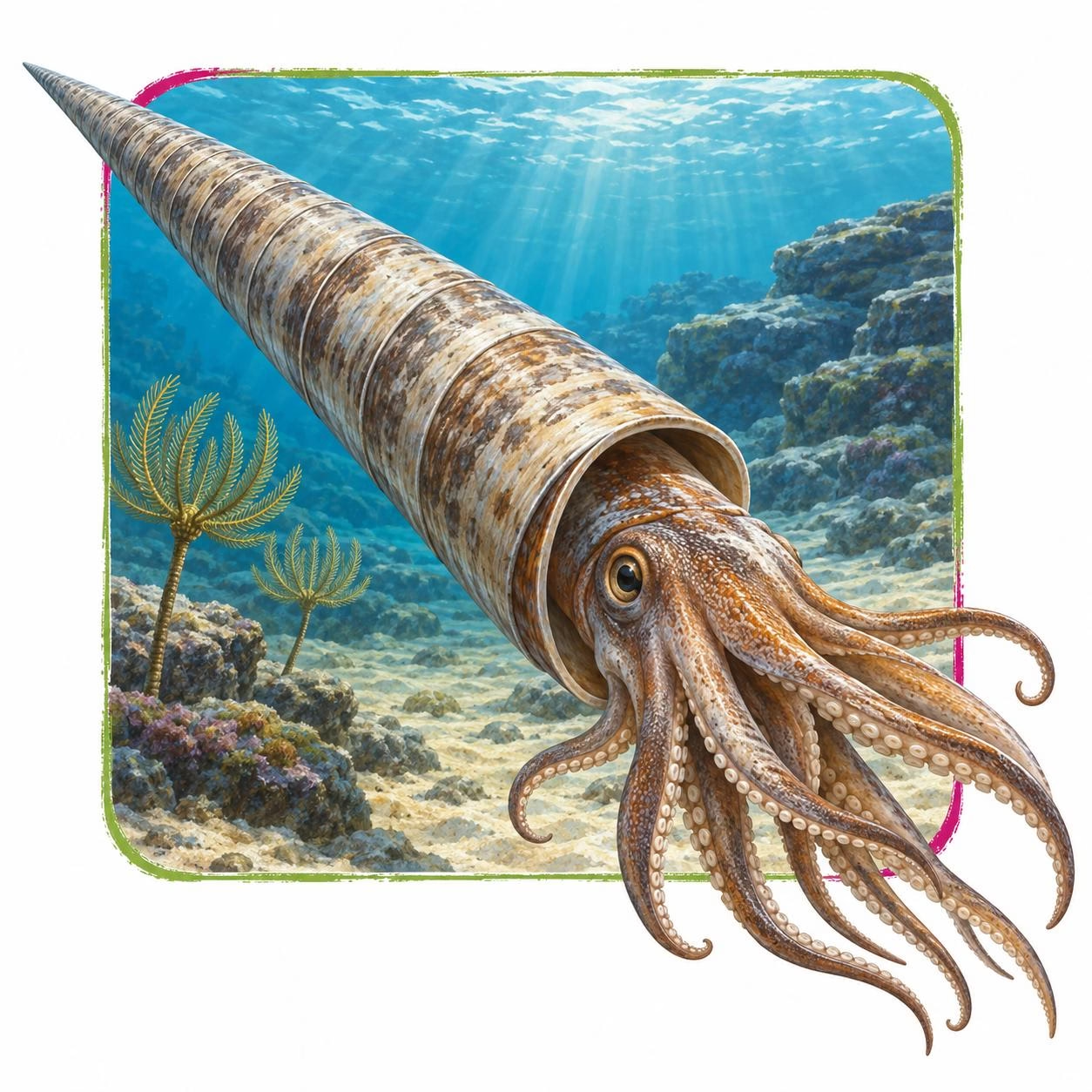
Cameroceras in its natural Middle to Late Ordovician tropical shallow seas, continental shelves, reef margins, open marine waters, and seafloors around Laurentia, Baltica, and Siberia habitat