
Carbonemys Facts for Kids
Carbonemys was a giant extinct freshwater turtle from Paleocene Colombia. It was not a dinosaur and not a sea turtle. Its name means coal turtle because the fossil was found in the Cerrejón coal mine, the same hot ancient rainforest world famous for Titanoboa and other giant reptiles.
Quick Carbonemys Facts
- Animal Type: Prehistoric reptile
- Group: Giant side-necked turtle and pelomedusoid
- Known For: Coal turtle name, Cerrejón coal mine discovery, huge skull, large shell, Paleocene rainforest, Titanoboa neighborhood, hatchlings, and giant reptile ecosystem
- Lived During: Paleocene, about 60 million years ago
- Diet: Fish, small reptiles, mollusks, carrion, aquatic plants, fruits, and other swamp foods
What You’ll Learn
Explore 10 fascinating carbonemys facts for kids about its giant shell, strong jaws, freshwater life, diet, and prehistoric Colombia, with a quiz, glossary, and activity
These easy facts are made for kids, parents, teachers, and curious young learners.
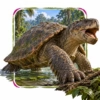
10 Fun Carbonemys Facts for Kids
1. Carbonemys Was a Turtle
Carbonemys was a giant freshwater turtle, not a dinosaur, crocodile, or giant tortoise.
Kid Decode: Turtle shell, swamp world, post-dinosaur reptile swagger.
2. Its Name Means Coal Turtle
Carbonemys was named coal turtle because its fossil was found in a Colombian coal mine.
Kid Decode: That is a fossil name with built-in miner’s helmet energy.
3. It Lived After the Dinosaurs
Carbonemys lived about 60 million years ago, after the non-bird dinosaurs had disappeared.
Kid Decode: Dinosaurs left, and giant reptiles still kept the ecosystem spicy.
4. It Was Found in Colombia
The known Carbonemys fossil came from the Cerrejón Formation in northeastern Colombia.
Kid Decode: Cerrejón was a rainforest treasure chest wearing a coal mine disguise.
5. It Had a Huge Skull
The skull of Carbonemys was about the size of a regulation American football.
Kid Decode: That is not a turtle head you would casually ignore.
6. It Had a Big Shell
A huge shell found near the skull measured around 1.7 metres long, suggesting a turtle roughly the size of a small car.
Kid Decode: This was not a bathtub turtle. This was parking-space turtle.
7. It Shared Habitat With Titanoboa
Carbonemys lived in the same ancient region as Titanoboa, the giant snake from Paleocene Colombia.
Kid Decode: Imagine a swamp where the turtle and snake sections both went gigantic.
8. It May Have Been a Strong Predator
Scientists suggest Carbonemys could have eaten animals such as small crocodile relatives, fish, and other wetland prey, while also possibly taking plant foods.
Kid Decode: Think giant snapping-turtle mood, but in a coal-swamp rainforest.
9. Baby Carbonemys Were Hatchlings
Baby turtles hatch from eggs, so baby Carbonemys can be called hatchlings.
Kid Decode: Even coal turtle giants began as tiny shell-babies.
10. It Shows a Reptile-Rich World
Carbonemys helps show that reptiles became huge and important in some tropical ecosystems after the dinosaur extinction.
Kid Decode: The dinosaur era ended, but the reptile weirdness absolutely did not retire.
The Weirdest Carbonemys Fact
Carbonemys lived in the same ancient Colombian rainforest system as Titanoboa, so one swamp had both a giant snake and a giant turtle.
Try This Carbonemys Activity
Carbonemys Drawing Activity
Draw Carbonemys in a Paleocene Colombian coal-swamp rainforest. Add a huge turtle shell, football-sized skull clue, hatchling eggs, rainforest water, fish, small croc relative, Titanoboa shadow, coal mine fossil tag, and a “coal turtle” label.
Quick Carbonemys Quiz
- Was Carbonemys a dinosaur? Answer: No, it was a giant turtle.
- What does Carbonemys mean? Answer: Coal turtle.
- Where was Carbonemys found? Answer: In Colombia’s Cerrejón coal mine region.
- What giant snake lived in the same ancient area? Answer: Titanoboa.
- What are baby turtles called? Answer: Hatchlings.
Mini Glossary
- Pelomedusoid: A group of side-necked turtles.
- Cerrejón Formation: A fossil-rich rock formation in Colombia known for ancient rainforest animals.
- Paleocene: A time period after the non-bird dinosaurs went extinct.
- Hatchling: A baby animal newly hatched from an egg.
- Carapace: The top part of a turtle shell.
 Seahorse Facts for Kids
 Possum Facts for Kids
 Gorilla Facts for Kids
 Cearadactylus Facts for Kids
More Animal Facts for Kids
Visit the full animal facts library or explore a focused animal group.
More Extinct Animal Facts for Kids
Discover dinosaurs, Ice Age giants, prehistoric sea creatures, recently extinct species, and other animals from the past.
Fact check note: Fact checked with Smithsonian Carbonemys release, Journal of Systematic Palaeontology Cerrejón turtle paper, EurekAlert discovery summary, and trusted prehistoric reptile education sources.

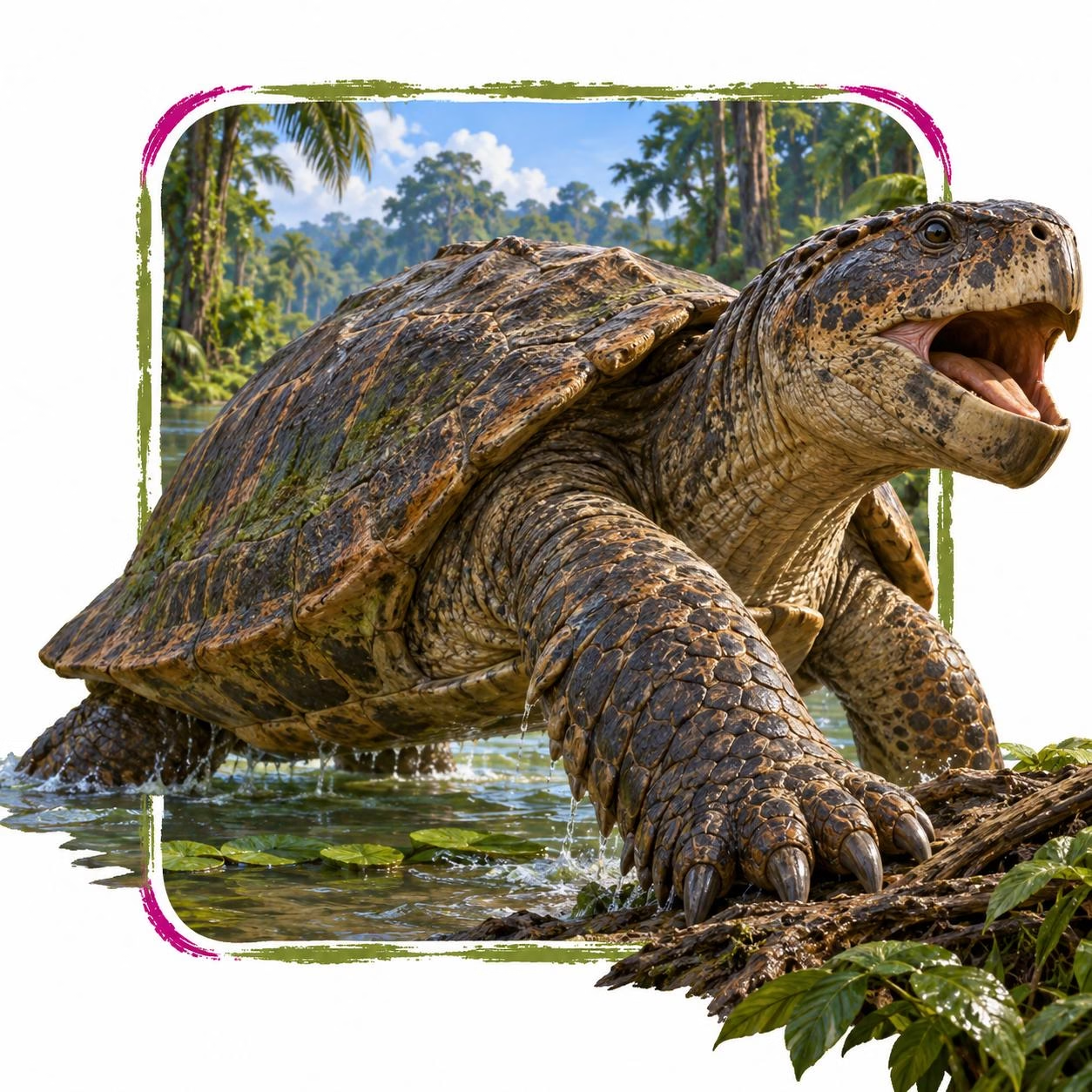
Carbonemys in its natural Paleocene Colombian tropical rainforest, Cerrejón Formation swamps, coal-swamp waterways, river channels, wetland forests, turtle nesting areas, and giant reptile habitats habitat