
Cearadactylus Facts for Kids
Cearadactylus is the historic name of a large toothed pterosaur from the Early Cretaceous Romualdo Formation of northeastern Brazil. It was not a dinosaur. Scientists know it mainly from an incomplete skull and lower jaw with a widened front and large grabbing teeth. Its family position has changed several times, and a 2025 study proposed that Cearadactylus atrox may be the same species as Brasileodactylus araripensis.
Quick Cearadactylus Facts
- Animal Type: Flying reptile
- Group: Anhanguerian pterosaur; recently proposed as a synonym of Brasileodactylus
- Known For: Widened jaw tip, differently sized teeth, incomplete Brazilian skull, fish-catching jaws, and changing scientific identity
- Lived During: Early Cretaceous, roughly 110 million years ago
- Diet: Probably fish and other small animals
What You’ll Learn
Discover 10 toothy cearadactylus facts for kids about long jaws, sharp teeth, broad wings, fishing, and Cretaceous Brazil, plus a quiz, glossary, and activity
These facts are explained simply for kids, parents, teachers, and curious little fact-finders.
10 Fun Cearadactylus Facts for Kids
1. Cearadactylus Was a Pterosaur
Cearadactylus was a flying reptile, not a dinosaur, although it lived during the age of dinosaurs.
Kid Decode: It flew through dinosaur skies with completely different family paperwork.
2. It Lived in Brazil
The known skull came from the Romualdo Formation of the Araripe Basin in northeastern Brazil.
Kid Decode: Its fossil story rose from rocks famous for preserving spectacular Cretaceous animals.
3. It Is Known Mainly From a Skull
Scientists reconstructed Cearadactylus from an incomplete skull and lower jaw rather than a complete skeleton.
Kid Decode: This pterosaur entered science as a toothy head with the rest of the puzzle missing.
4. Its Jaw Tip Was Widened
The front of the lower jaw expanded sideways into a broad, spoon-like shape that was wider than the tip of the upper jaw.
Kid Decode: Its mouth ended with a built-in prey-grabbing scoop.
5. It Had Large Front Teeth
Long, pointed teeth near the front of the jaws were suited to seizing slippery prey such as fish.
Kid Decode: A fish meeting those teeth faced a very unfriendly picket fence.
6. Its Teeth Were Different Sizes
Some front teeth were much larger than others; one diagnostic feature is an especially large third upper tooth compared with the fifth.
Kid Decode: This mouth did not order its teeth in matching-size rows.
7. Its Long Jaws Helped Catch Prey
The long snout and forward-pointing teeth suggest that Cearadactylus was a predator that grabbed animals rather than chewing plants.
Kid Decode: The jaws were a flying grabber, not a salad chopper.
8. Its Classification Has Changed
Researchers have placed Cearadactylus near different pterosaur groups, including ctenochasmatids and anhanguerians, as new studies re-examined its skull.
Kid Decode: Even its spot on the pterosaur family tree has gone sightseeing.
9. It May Have Another Scientific Name
A 2025 study proposed that Cearadactylus atrox is the same species as Brasileodactylus araripensis, but future researchers will continue testing that idea.
Kid Decode: This pterosaur may be carrying two name tags for one fossil animal.
10. Its Name Comes From Ceará
Cearadactylus combines Ceará, the Brazilian state, with a Greek word meaning finger, while atrox means frightful or fierce.
Kid Decode: Its name roughly packs Ceará, wing finger, and scary teeth into one label.
The Weirdest Cearadactylus Fact
After decades as its own famous pterosaur, Cearadactylus may eventually be renamed because a recent study argues that it is the same animal as Brasileodactylus.
Try This Cearadactylus Activity
Cearadactylus Drawing Activity
Draw Cearadactylus flying above an Early Cretaceous Brazilian lagoon. Add a long narrow skull, widened lower-jaw tip, large uneven front teeth, a fish below, folded rear legs, broad wings, coastal plants, a Romualdo fossil slab, and two scientific name tags showing the classification puzzle.
Quick Cearadactylus Quiz
- Was Cearadactylus a dinosaur? Answer: No, it was a pterosaur.
- Where was its skull found? Answer: Northeastern Brazil.
- What was unusual about the front of its lower jaw? Answer: It widened into a broad shape.
- What did it probably eat? Answer: Fish and other small animals.
- Why might its scientific name change? Answer: A recent study proposed that it was the same species as Brasileodactylus.
Mini Glossary
- Pterosaur: A flying reptile that lived during the age of dinosaurs.
- Rostrum: The snout or front portion of a skull.
- Spatulate: Broad and rounded like the end of a spoon.
- Piscivore: An animal that mainly eats fish.
- Synonym: In taxonomy, a different scientific name judged to refer to the same animal.
 Lemur Facts for Kids
 Rhesus Macaque Facts for Kids
 Booby Facts for Kids
 Pterodaustro Facts for Kids
More Animal Facts for Kids
Visit the full animal facts library or explore a focused animal group.
More Extinct Animal Facts for Kids
Discover dinosaurs, Ice Age giants, prehistoric sea creatures, recently extinct species, and other animals from the past.
Fact check note: Fact checked with Unwin’s 2002 systematic review, Vila Nova and colleagues’ 2014 redescription of Cearadactylus atrox, Romualdo Formation research, and Pêgas and colleagues’ 2025 proposal that Cearadactylus is a junior synonym of Brasileodactylus araripensis.

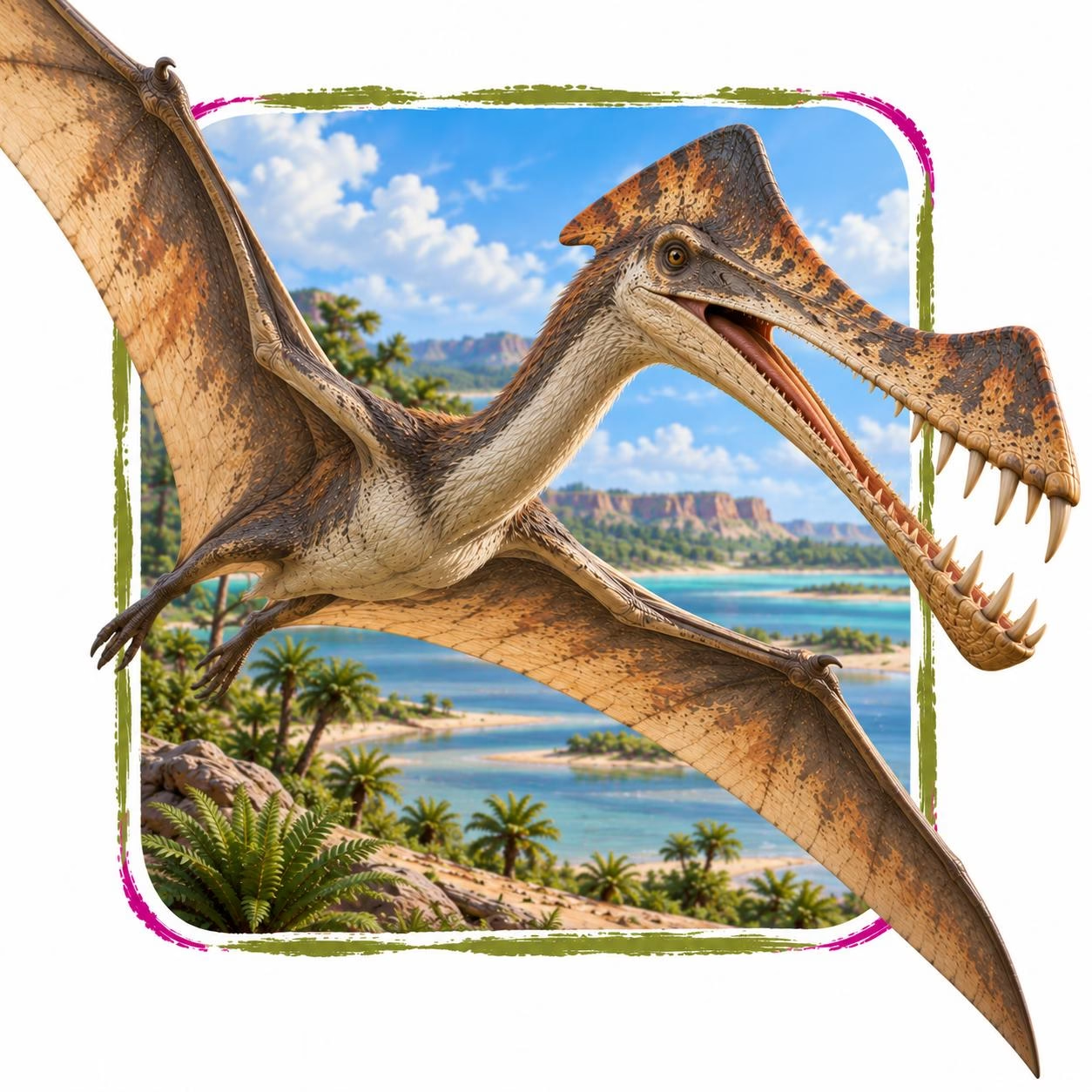
Cearadactylus in its natural Early Cretaceous coastal lagoons, shallow waterways, river mouths, warm lowlands, and shoreline habitats of the Romualdo Formation habitat