
Thalassodromeus Facts for Kids
Thalassodromeus was a large, toothless pterosaur from the Early Cretaceous of Brazil. Its skull carried an enormous sail-like crest crossed by grooves for blood vessels, while its strong, blade-shaped jaws could open widely. Its name means sea runner because scientists first imagined it skimming for fish, but later studies challenged that idea and suggest it may have hunted more generally on land or near water.
Quick Thalassodromeus Facts
- Animal Type: Flying reptile
- Group: Thalassodromine pterosaur
- Known For: Enormous bony head crest, toothless blade-like jaws, strong bite, Brazilian skull, sea-runner name, and debated feeding style
- Lived During: Early Cretaceous, roughly 110 million years ago
- Diet: Uncertain; probably small vertebrates, fish, carrion, and other animal food
What You’ll Learn
Learn 10 spectacular thalassodromeus facts for kids about its enormous head crest, large wings, long beak, flight, and Cretaceous Brazil, plus a quiz, glossary, and activity
These simple facts are written for kids, parents, teachers, and curious young minds.
10 Fun Thalassodromeus Facts for Kids
1. Thalassodromeus Was a Pterosaur
Thalassodromeus was a flying reptile rather than a dinosaur, although it lived in the same prehistoric world.
Kid Decode: It brought a sail-shaped head to the skies without becoming a dinosaur.
2. Its Crest Was Enormous
A huge bony crest dominated the skull and formed one of the largest proportionate head crests known among vertebrates.
Kid Decode: Its headgear made an ordinary hat look deeply underprepared.
3. The Crest Had Blood-Vessel Grooves
Channels across the crest show that it had a rich blood supply; scientists have suggested roles in display, species recognition, or heat control.
Kid Decode: The crest may have been billboard, identity badge, and radiator, but the fossils keep part of the answer secret.
4. Its Skull Was About 1.4 Metres Long
The known skull measured roughly 1.42 metres from the beak to the rear of the crest.
Kid Decode: Its head alone stretched about as long as a young child is tall.
5. It Had No Teeth
Thalassodromeus had strong, sharp-edged jaws covered by a beak instead of rows of teeth.
Kid Decode: No teeth did not mean no bite; the jaws still meant serious business.
6. Its Jaws Could Open Wide
Anatomical studies indicate that the jaw joint allowed a gape of around 50 degrees and supported powerful jaw muscles.
Kid Decode: It could open its beak wide enough to make snack time look dramatic.
7. Its Name Means Sea Runner
The genus name refers to an early idea that it flew low over water and skimmed prey with its lower jaw.
Kid Decode: Its name preserved a scientific hypothesis even after that hypothesis began wobbling.
8. It Probably Was Not a Surface Skimmer
Later aerodynamic and anatomical studies found that sustained skim feeding would have produced high drag and that its skull lacked key skimmer adaptations.
Kid Decode: The sea runner may have spent much less time running its beak through the sea.
9. It May Have Been a Strong-Biting Predator
Robust jaws and reconstructed jaw muscles suggest it could handle struggling prey, but its exact menu and hunting method remain debated.
Kid Decode: This crest carrier may have been more grab-and-bite than glide-and-skim.
10. It Is Known Mostly From Its Skull
The species is best known from a remarkable partial skull, so estimates of its wingspan and full body shape depend on comparisons with relatives.
Kid Decode: The most famous part survived, while much of the flying machine stayed offstage.
The Weirdest Thalassodromeus Fact
Thalassodromeus means sea runner because it was originally described as a water-skimming hunter, yet later research suggests that the behaviour behind its name was probably unlikely.
Try This Thalassodromeus Activity
Thalassodromeus Drawing Activity
Draw Thalassodromeus standing on an Early Cretaceous Brazilian floodplain. Add its enormous sail-like head crest, visible vessel grooves, long toothless blade-shaped beak, folded wings, strong four-limbed stance, small prey tracks, a lagoon in the distance, a crossed-out skimming diagram, and a “sea runner?” question label.
Quick Thalassodromeus Quiz
- Was Thalassodromeus a dinosaur? Answer: No, it was a pterosaur.
- Where was its fossil found? Answer: Brazil.
- What dominated its skull? Answer: An enormous bony crest.
- Did it have teeth? Answer: No, it had toothless beaked jaws.
- Why is its sea-runner name surprising? Answer: Later studies challenged the idea that it skim-fed over water.
Mini Glossary
- Thalassodromine: A member of a group of large-crested toothless pterosaurs.
- Cranial Crest: A raised structure made partly or entirely of skull bone.
- Edentulous: Having no teeth.
- Gape: How widely an animal can open its mouth or jaws.
- Skim Feeding: Catching food while moving the lower jaw through the water’s surface.
 Chinese Water Dragon Facts for Kids
 Squirrel Facts for Kids
 Walrus Facts for Kids
 Placodus Facts for Kids
More Animal Facts for Kids
Visit the full animal facts library or explore a focused animal group.
More Extinct Animal Facts for Kids
Discover dinosaurs, Ice Age giants, prehistoric sea creatures, recently extinct species, and other animals from the past.
Fact check note: Fact checked with Kellner and Campos’s 2002 original description, Humphries and colleagues’ 2007 skim-feeding tests, Pêgas, Costa and Kellner’s 2018 redescription, and Pêgas and colleagues’ 2021 jaw-muscle and bite-force study.

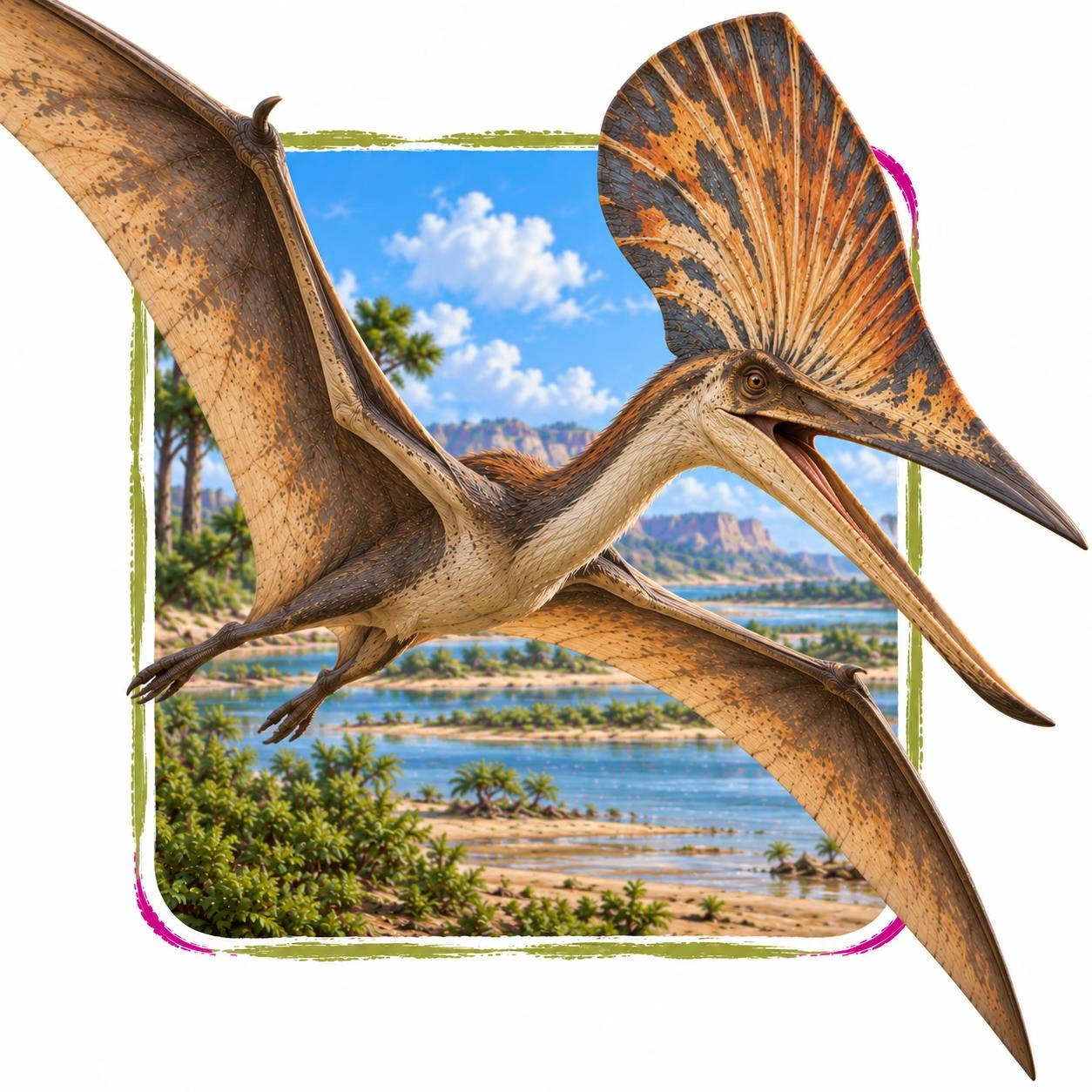
Thalassodromeus in its natural Early Cretaceous coastal plains, lagoons, river margins, warm floodplains, dry ground, and shoreline habitats of the Romualdo Formation habitat