
Cynognathus Facts for Kids
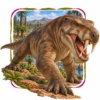
Cynognathus was a large meat-eating cynodont that lived across southern Pangaea during the Middle Triassic. It was not a dinosaur or a mammal, but it belonged to the therapsid branch that eventually produced mammals. Its enormous head carried specialised incisors, canines, and slicing postcanine teeth, while a secondary palate allowed it to breathe as food remained in its mouth.
Quick Cynognathus Facts
- Animal Type: Extinct predatory therapsid
- Group: Cynodont
- Known For: Dog-jaw name, differentiated teeth, secondary palate, large head, strong body, and Gondwana-wide fossils
- Lived During: Middle Triassic, roughly 247–237 million years ago
- Diet: Small and medium-sized terrestrial vertebrates
What You’ll Learn
Discover 10 fascinating cynognathus facts for kids about its dog-like jaws, sharp teeth, strong legs, and mammal-like features, plus a quiz, glossary, and activity
Clear explanations make these facts ideal for children, families, teachers, and little fact-hunters.
10 Fun Cynognathus Facts for Kids
1. Cynognathus Was a Cynodont
Cynognathus belonged to Cynodontia, the therapsid group that includes mammals and many extinct mammal-line relatives.
Kid Decode: It lived along a branch where jaws, teeth, and bodies were becoming increasingly mammal-like.
2. It Was Not a Mammal
Although Cynognathus shared several features with mammals, it remained a non-mammalian cynodont.
Kid Decode: Mammal-like clues do not turn a Triassic predator into a true mammal.
3. It Was Not a Dinosaur
Cynognathus lived alongside early dinosaurs and other archosaurs but belonged to the separate synapsid family tree.
Kid Decode: Same Triassic landscape, completely different evolutionary address.
4. Its Name Means Dog Jaw
The name Cynognathus comes from Greek words for dog and jaw, referring to its powerful, mammal-like-looking jaws.
Kid Decode: Its scientific name gives the dog-jawed headline before the facts even begin.
5. It Could Approach Two Metres Long
Large individuals may have reached around 2 metres in total length, although exact estimates vary among incomplete skeletons.
Kid Decode: It was a large ground predator rather than a tiny shrew-shaped mammal relative.
6. It Had Different Kinds of Teeth
Incisors gripped at the front, large canines pierced prey, and blade-like postcanines sliced food farther back.
Kid Decode: Its mouth assigned different jobs to different teeth instead of using one repeated design.
7. It Had a Secondary Palate
A bony secondary palate separated part of the breathing passage from the mouth, allowing airflow while food was being processed.
Kid Decode: It could keep the breathing hallway open while the dining room stayed busy.
8. Its Lower Jaw Was Enlarged
The dentary, the main tooth-bearing bone of the lower jaw, was much larger than the smaller rear jaw bones.
Kid Decode: Its jaw was moving toward the one-big-bone pattern seen in mammals.
9. It Had a Strong Land-Going Body
Cynognathus had a robust trunk and powerful limbs suited to active movement across Triassic floodplains, though its exact limb posture was not identical to that of modern running mammals.
Kid Decode: It was built for serious ground travel without needing a modern dog’s posture.
10. Its Fossils Helped Reveal Gondwana
Cynognathus fossils found in Africa, South America, and Antarctica became famous evidence that these southern lands were once connected.
Kid Decode: One predator left matching fossil puzzle pieces across three modern continents.
The Weirdest Cynognathus Fact
Matching Cynognathus fossils on continents now separated by oceans helped scientists show that the southern lands once formed the connected supercontinent Gondwana.
Try This Cynognathus Activity
Cynognathus Drawing Activity
Draw Cynognathus hunting across a Middle Triassic Gondwanan floodplain. Add a large head, strong lower jaw, incisors, long canines, blade-like postcanines, sturdy limbs, a long tail, small prey, seasonal plants, and a map connecting Africa, South America, and Antarctica.
Quick Cynognathus Quiz
- Was Cynognathus a dinosaur? Answer: No, it was a cynodont therapsid.
- What does Cynognathus mean? Answer: Dog jaw.
- What kinds of teeth did it have? Answer: Incisors, large canines, and slicing postcanines.
- What did its secondary palate help it do? Answer: Breathe while food remained in the mouth.
- On which modern continents are its fossils famous? Answer: Africa, South America, and Antarctica.
Mini Glossary
- Cynodont: A therapsid from the group containing mammals and their closest extinct relatives.
- Secondary Palate: A bony partition separating part of the nasal airway from the mouth.
- Dentary: The main tooth-bearing bone of the lower jaw.
- Postcanine: A tooth located behind the canine.
- Gondwana: The southern part of Pangaea that included Africa, South America, Antarctica, India, Australia, and nearby lands.
 Cricket Facts for Kids
 Condor Facts for Kids
 Impala Facts for Kids
 Socorro Dove Facts for Kids
More Animal Facts for Kids
Visit the full animal facts library or explore a focused animal group.
More Extinct Animal Facts for Kids
Discover dinosaurs, Ice Age giants, prehistoric sea creatures, recently extinct species, and other animals from the past.
Fact check note: Fact checked with Seeley’s original Cynognathus description, Wynd and colleagues’ 2018 Namibian occurrence study, modern cynodont evolutionary reviews, and Gondwanan fossil-distribution research.

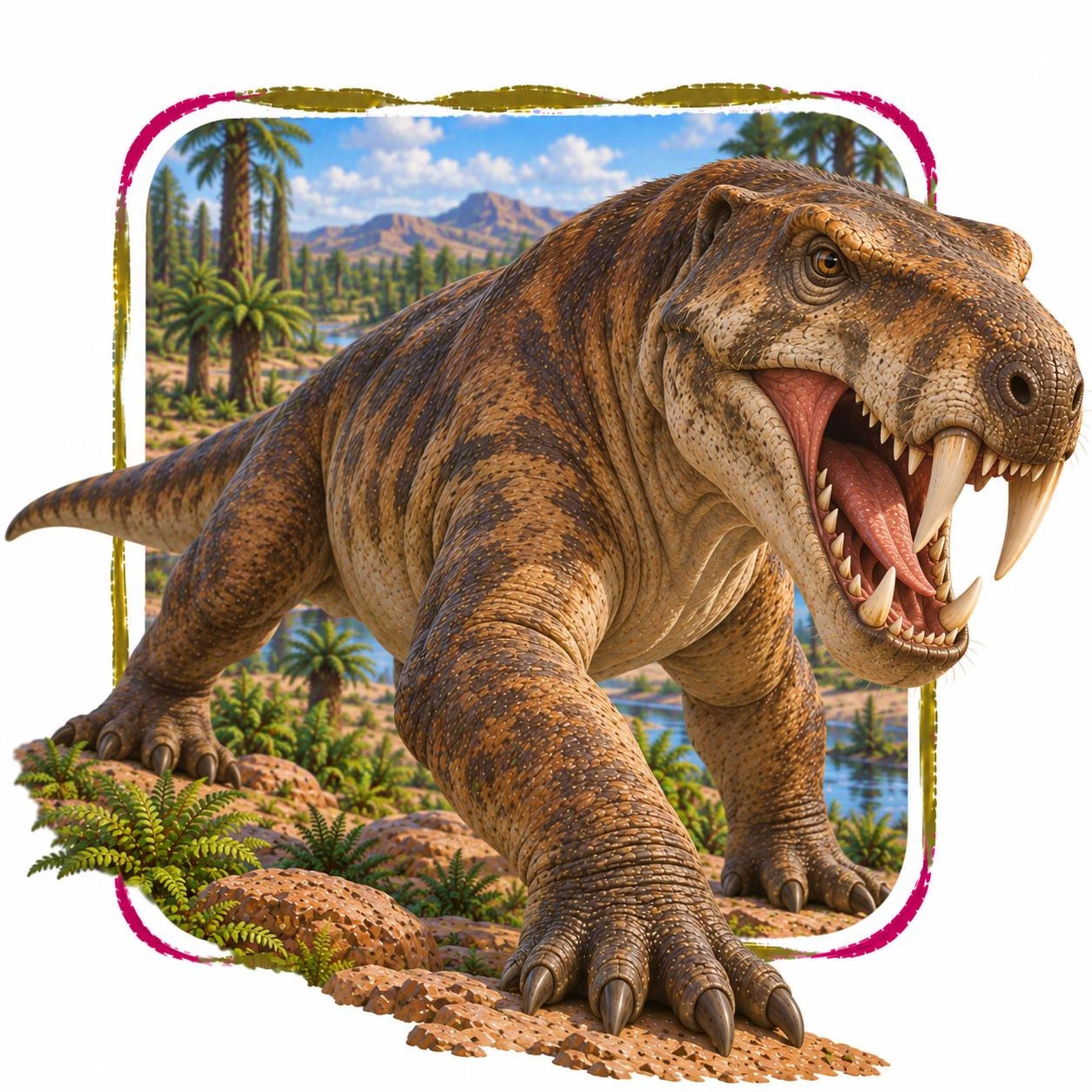
Cynognathus in its natural Middle Triassic river floodplains, seasonal dry plains, wooded valleys, stream margins, open terrestrial habitats, and cool southern environments across Gondwana habitat