
Desmostylus Facts for Kids
Desmostylus was a large aquatic mammal that lived around the North Pacific during the Late Oligocene and Miocene. It belonged to Desmostylia, an extinct order with no living members. A long skull, forward-pointing tusk-like teeth, stout limbs, and molars built from fused vertical columns gave it a body and mouth unlike those of any modern mammal.
Quick Desmostylus Facts
- Animal Type: Extinct aquatic mammal
- Group: Desmostylian
- Known For: Pillar-like molars, forward tusks, heavy body, active swimming, and North Pacific coastal fossils
- Lived During: Late Oligocene to Miocene, roughly 28–7 million years ago
- Diet: Probably aquatic plants; exact feeding method remains debated
What You’ll Learn
Discover 10 fascinating desmostylus facts for kids about pillar-shaped teeth, strong limbs, coastal life, and its unusual mammal relatives, with a quiz, glossary, and activity
These facts are explained simply for kids, parents, teachers, and curious little fact-finders.
10 Fun Desmostylus Facts for Kids
1. Desmostylus Was a Marine Mammal
Desmostylus belonged to an entirely extinct order of aquatic mammals called Desmostylia.
Kid Decode: It joined the marine-mammal world through a branch that left no living sequel.
2. Its Relatives Are Still Debated
Desmostylians are often placed near elephants and sea cows within the broader afrotherian branch, but their exact family position remains uncertain.
Kid Decode: Its family-tree chair keeps moving whenever scientists rearrange the mammal reunion.
3. It Grew Around Two to Three Metres Long
Adult Desmostylus were roughly 2.5 to 3 metres long, and large reconstructed individuals may have weighed more than one tonne.
Kid Decode: It carried small-car mass through the water on a body stranger than any hippo.
4. Its Molars Looked Like Bundled Pillars
Each cheek tooth was formed from several tall cylindrical columns fused together, creating the structure behind the name Desmostylus.
Kid Decode: Its back teeth looked like a bundle of tiny stone organ pipes.
5. It Had Forward-Pointing Tusks
Long incisors and canines projected from the front of the jaws and may have helped gather or loosen food.
Kid Decode: The front of its mouth brought a row of chunky tools before the pillar teeth began.
6. It Was Strongly Adapted to Water
Bone structure and body proportions indicate that Desmostylus spent most or perhaps all of its life in water rather than living like a mostly land-going hippopotamus.
Kid Decode: Older art parked it on shore; its bones keep steering the reconstruction back into the water.
7. It Was an Active Swimmer
Its relatively spongy bones and limb proportions suggest more active swimming than in several other desmostylians.
Kid Decode: This heavy mammal was not simply a seafloor boulder with teeth.
8. Its Forelimbs Helped Power Swimming
Comparisons of its skeleton with living mammals suggest that swimming relied strongly on the front limbs, with the hind limbs also helping control movement.
Kid Decode: It may have paddled with the front end doing much of the heavy water work.
9. It Probably Ate Aquatic Vegetation
Tooth wear and chemical evidence suggest a diet involving plants gathered in coastal, estuarine, or freshwater-influenced habitats, although suction feeding has also been proposed.
Kid Decode: The menu probably came from underwater gardens, but the exact table manners remain mysterious.
10. It Lived Around the North Pacific
Fossils are known from Japan, Russia, the western United States, Canada, and other areas bordering the ancient North Pacific.
Kid Decode: Its fossil trail forms a broad horseshoe around one enormous ocean.
The Weirdest Desmostylus Fact
Desmostylus had molars built from fused hollow-looking columns, so a worn tooth resembled a cluster of pipes or tiny volcanoes rather than an ordinary mammal molar.
Try This Desmostylus Activity
Desmostylus Drawing Activity
Draw Desmostylus swimming through a Miocene North Pacific estuary. Add a long skull, forward-pointing tusk-like teeth, pillar-shaped molars in a cutaway bubble, a heavy barrel body, four broad feet, strong forelimbs, a short tail, aquatic plants, river water mixing with the sea, and a map linking Japan with western North America.
Quick Desmostylus Quiz
- Was Desmostylus a dinosaur? Answer: No, it was an aquatic mammal.
- What extinct order did it belong to? Answer: Desmostylia.
- What did its molars resemble? Answer: Bundles of fused pillars or pipes.
- Where did it live? Answer: Around the North Pacific.
- What did it probably eat? Answer: Aquatic plants, although its exact feeding method is debated.
Mini Glossary
- Desmostylian: A member of an extinct order of large aquatic mammals from the North Pacific region.
- Molar: A back tooth used to process food.
- Estuary: A place where river water mixes with seawater.
- Bone Microanatomy: The internal structure of bone studied under magnification or with scans.
- Forelimb-Dominated Swimming: Swimming in which the front limbs provide much of the propulsion.
 Gopher Facts for Kids
 Colobus Monkey Facts for Kids
 Eurasian Lynx Facts for Kids
 Nasutoceratops Facts for Kids
More Animal Facts for Kids
Visit the full animal facts library or explore a focused animal group.
More Extinct Animal Facts for Kids
Discover dinosaurs, Ice Age giants, prehistoric sea creatures, recently extinct species, and other animals from the past.
Fact check note: Fact checked with Gingerich’s 2005 locomotor-proportion study, Hayashi and colleagues’ 2013 bone-microanatomy analysis, Matsui and colleagues’ habitat and antiquity studies, and classic Desmostylus body-size and dental research.

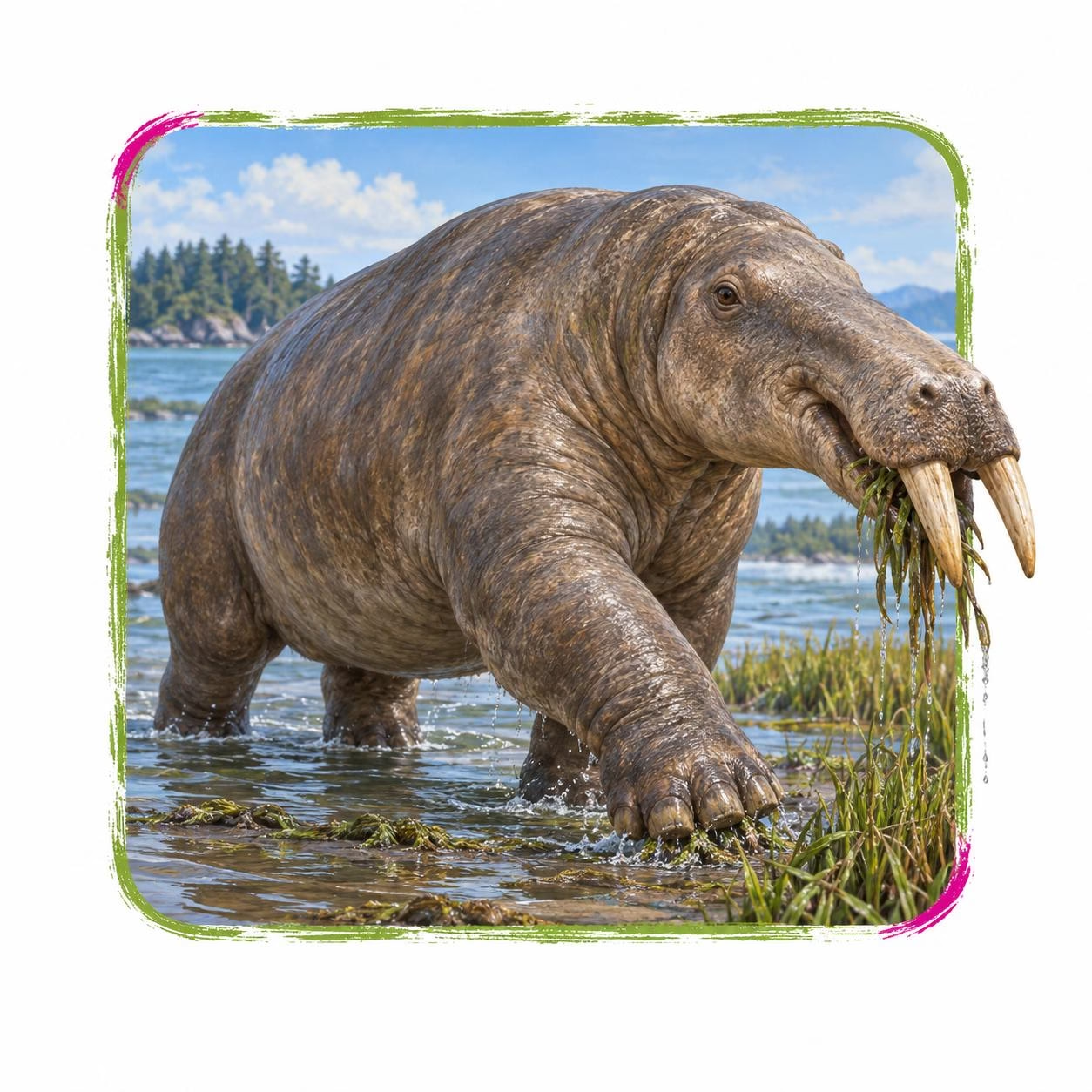
Desmostylus in its natural Late Oligocene and Miocene coastal seas, estuaries, river mouths, shallow marine waters, freshwater-influenced bays, and open North Pacific habitats habitat