
Edaphosaurus Facts for Kids
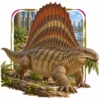
Edaphosaurus was a sail-backed plant-eating synapsid that lived from the Late Carboniferous into the Early Permian. It was not a dinosaur and was more closely related to mammals than to reptiles such as lizards. A tiny head, broad rib cage, specialised tooth plates, and a tall sail supported by crossbarred neural spines made it one of the strangest early land herbivores.
Quick Edaphosaurus Facts
- Animal Type: Extinct herbivorous synapsid
- Group: Edaphosaurid
- Known For: Crossbarred back sail, tiny head, dental pavement, broad body, and early large-herbivore lifestyle
- Lived During: Late Carboniferous to Early Permian, roughly 303–273 million years ago
- Diet: Tough terrestrial plants
What You’ll Learn
Discover 10 fascinating edaphosaurus facts for kids about its tall sail, small head, plant diet, sturdy body, and life before dinosaurs, with a quiz, glossary, and activity
These facts are explained simply for kids, parents, teachers, and curious little fact-finders.
10 Fun Edaphosaurus Facts for Kids
1. Edaphosaurus Was a Synapsid
Edaphosaurus belonged to Synapsida, the broad evolutionary branch that later produced mammals.
Kid Decode: It stood on the mammal side of the family tree long before anything looked remotely like a cat.
2. It Was Not a Dinosaur
Edaphosaurus lived tens of millions of years before the first dinosaurs appeared.
Kid Decode: The sail was ready long before dinosaur backs became fashionable.
3. It Was an Early Large Herbivore
Edaphosaurus was among the earliest known large land-living amniotes adapted mainly for eating plants.
Kid Decode: One of Earth’s first big plant eaters arrived with a tiny head and an enormous digestive department.
4. Some Species Approached 3.5 Metres
The largest species may have grown close to 3.5 metres long, although most individuals were smaller.
Kid Decode: A big adult stretched longer than many sofas while keeping a surprisingly modest head.
5. Its Head Was Tiny
The skull was very small compared with the broad trunk and deep rib cage.
Kid Decode: Evolution put the control room in a tiny box and gave the stomach most of the floor space.
6. It Had a Dental Pavement
Dense batteries of teeth on the palate and lower jaw formed broad grinding surfaces for processing plant material.
Kid Decode: Its mouth contained a built-in Permian food mill.
7. Front Teeth Cropped Plants
Small marginal teeth with pointed or serrated tips helped bite off pieces of vegetation before the inner tooth plates processed them.
Kid Decode: Clip at the edge, grind in the middle: a neat two-stage salad machine.
8. Its Sail Had Crossbars
Tall neural spines supported the back sail, and many spines carried distinctive sideways knobs or crossbars.
Kid Decode: The sail looked as though someone had added tiny yardarms to a row of masts.
9. The Sail’s Purpose Is Debated
Scientists have suggested display, species recognition, heat control, or a combination of functions for the sail and its crossbars.
Kid Decode: The sail may have been billboard, radiator, and identity badge, but the fossils keep the final vote.
10. It Was Very Different From Dimetrodon
Edaphosaurus was a plant eater with tooth plates, while its sail-backed contemporary Dimetrodon was a large predator with slicing teeth.
Kid Decode: Same dramatic back accessory, completely different dinner plans.
The Weirdest Edaphosaurus Fact
Its tall sail was supported by bony spines covered in unusual sideways crossbars, a feature not seen on Dimetrodon’s smoother sail supports.
Try This Edaphosaurus Activity
Edaphosaurus Drawing Activity
Draw Edaphosaurus walking across an Early Permian floodplain. Add a tiny head, huge barrel-shaped body, short sturdy limbs, long tail, a tall sail with sideways crossbars, small front teeth, a dental-pavement cutaway, tough plants, and a distant Dimetrodon for comparison.
Quick Edaphosaurus Quiz
- Was Edaphosaurus a dinosaur? Answer: No, it was an early synapsid.
- What did it eat? Answer: Terrestrial plants.
- What formed its dental pavement? Answer: Dense tooth plates on the palate and lower jaw.
- What unusual structures crossed many sail spines? Answer: Sideways knobs or crossbars.
- Which sail-backed predator lived around the same time? Answer: Dimetrodon.
Mini Glossary
- Synapsid: A member of the vertebrate branch containing mammals and their extinct relatives.
- Edaphosaurid: A member of the sail-backed synapsid family containing Edaphosaurus.
- Neural Spine: A bony projection rising from the top of a vertebra.
- Dental Battery: A tightly packed group of teeth working together to process food.
- Amniote: A vertebrate belonging to the group containing mammals, reptiles, and birds.
 Gar Facts for Kids
 Dhole Facts for Kids
 Maned Wolf Facts for Kids
 Daspletosaurus Facts for Kids
More Animal Facts for Kids
Visit the full animal facts library or explore a focused animal group.
More Extinct Animal Facts for Kids
Discover dinosaurs, Ice Age giants, prehistoric sea creatures, recently extinct species, and other animals from the past.
Fact check note: Fact checked with Mann and colleagues’ 2023 study of early edaphosaurid herbivory, Modesto’s Edaphosaurus skull research, Huttenlocker and colleagues’ neural-spine histology, and Bennett’s sail-function analysis.

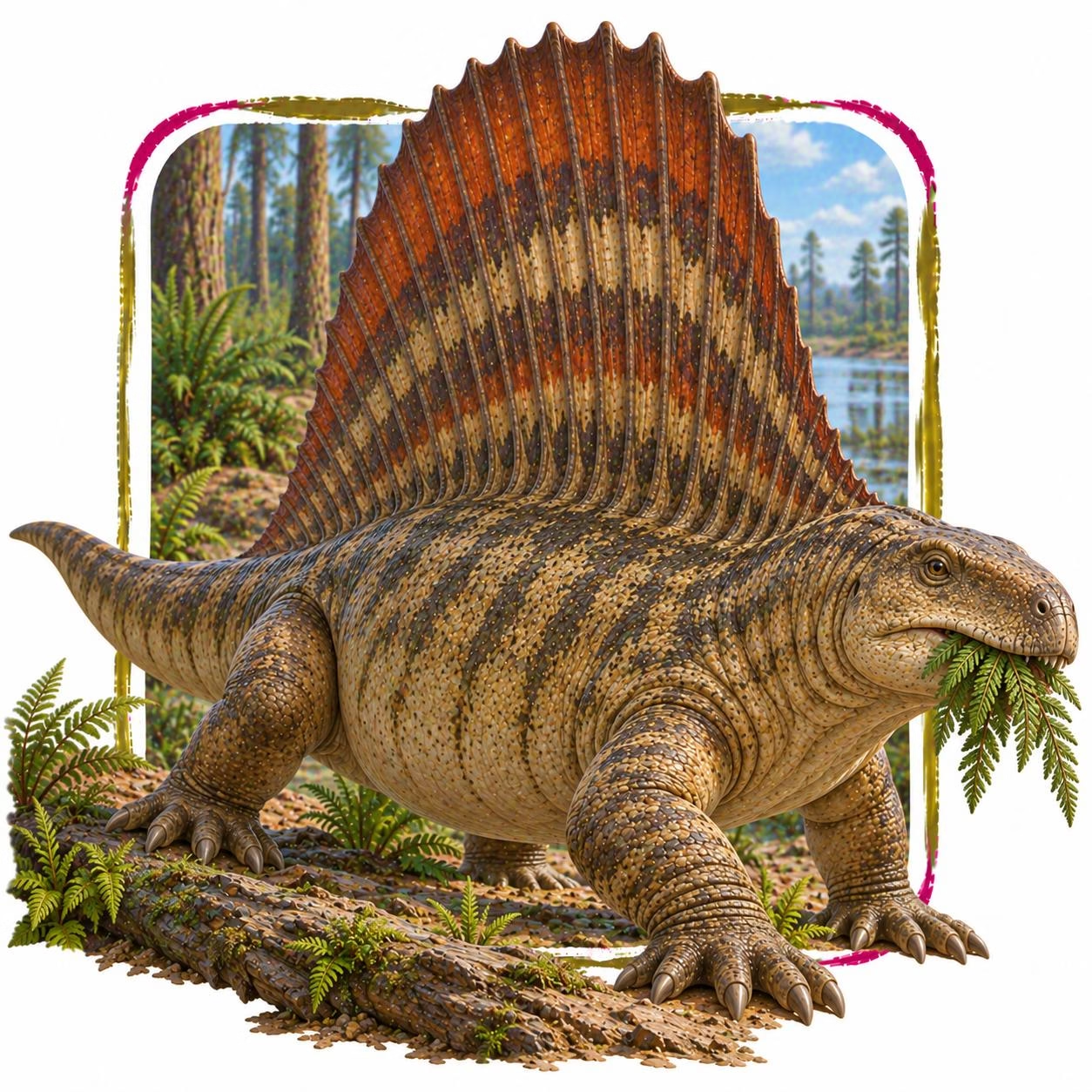
Edaphosaurus in its natural Late Carboniferous and Early Permian floodplains, river margins, seasonal wetlands, wooded lowlands, and plant-rich terrestrial habitats habitat