
Epicyon Facts for Kids
Epicyon was a giant bone-crushing dog that lived in North America during the Late Miocene and Early Pliocene. It was a true member of the dog family but was not a wolf, hyena, or direct ancestor of modern dogs. A broad skull, enlarged jaw muscles, strong premolars, and a massive body allowed the largest species to process flesh, hide, and bone.
Quick Epicyon Facts
- Animal Type: Extinct canid mammal
- Group: Borophagine bone-crushing dog
- Known For: Largest known canid species, massive skull, powerful jaw muscles, and bone-processing teeth
- Lived During: Late Miocene to Early Pliocene, roughly 12–5 million years ago
- Diet: Meat, carrion, bones, and marrow from large vertebrates
What You’ll Learn
Learn 10 powerful epicyon facts for kids about bone-crushing jaws, strong bodies, dog relatives, hunting, and prehistoric North America, plus a quiz, glossary, and activity
Clear explanations make them ideal for children, families, teachers, and young fact-hunters.
10 Fun Epicyon Facts for Kids
1. Epicyon Was a True Dog
Epicyon belonged to Canidae, the same mammal family that contains wolves, foxes, coyotes, and domestic dogs.
Kid Decode: It was a genuine dog relative with jaws that wandered into hyena territory.
2. It Was Not a Wolf
Epicyon belonged to the extinct borophagine branch and was not a giant species of Canis or a direct wolf ancestor.
Kid Decode: The body looked dog-like, but the family-tree address sat on a vanished side branch.
3. Epicyon haydeni Was the Largest Known Canid
Large individuals of Epicyon haydeni commonly produced estimates around 100 to 125 kilograms, while exceptionally large remains have inspired higher estimates.
Kid Decode: The biggest dog family member reached the weight class of a very large lioness.
4. Its Skull Was Broad and Deep
Epicyon had a short, robust face, wide cheek arches, and a deep skull that accommodated large jaw-closing muscles.
Kid Decode: Its head looked less like a narrow wolf wedge and more like a muscular bite fortress.
5. It Had Enlarged Crushing Premolars
Strong fourth premolars and other robust cheek teeth helped crack and process hard food, including bone.
Kid Decode: Its mouth included built-in tools for opening the marrow pantry.
6. Its Bite Strength Came Partly From Size
Biomechanical research suggests that Epicyon achieved powerful bone-crushing performance through its large body and robust skull rather than copying every specialised feature of a hyena.
Kid Decode: It solved the bone puzzle with size, muscle, and very sturdy teeth.
7. It Could Eat More of a Carcass
Bone-processing jaws allowed Epicyon to reach marrow and consume parts that many competing predators left behind.
Kid Decode: A picked-over skeleton could still contain an Epicyon-sized meal.
8. It Probably Hunted and Scavenged
Its size and teeth suited both killing large prey and taking over or recycling carcasses, although the balance between hunting and scavenging is unknown.
Kid Decode: It carried enough jaw power for fresh dinner and prehistoric leftovers alike.
9. Pack Hunting Is Not Proven
Epicyon was a canid, but fossils do not directly show whether it hunted in packs like wolves or lived more independently.
Kid Decode: The dog family connection does not automatically come with a fossilised team strategy.
10. Its Name Means More Than a Dog
The name Epicyon combines Greek words meaning upon or beyond and dog, often translated as more than a dog.
Kid Decode: The name arrives sounding like a prehistoric upgrade package.
The Weirdest Epicyon Fact
Epicyon was the largest known true canid and used a lion-sized body plus reinforced teeth to crack bones and reach energy-rich marrow.
Try This Epicyon Activity
Epicyon Drawing Activity
Draw Epicyon haydeni beside a Late Miocene North American carcass. Add a massive dog-like body, broad deep skull, short powerful muzzle, thick premolars, strong legs, a long tail, cracked bones exposing marrow, hoofed prey, open grassland, and a “pack hunting unknown” clue card.
Quick Epicyon Quiz
- Was Epicyon a true member of the dog family? Answer: Yes, it was an extinct borophagine canid.
- Was it a giant wolf? Answer: No, it belonged to a separate extinct dog branch.
- Which species was the largest? Answer: Epicyon haydeni.
- What did its enlarged premolars help it process? Answer: Hard food, including bone.
- Is pack hunting proven? Answer: No, its social behaviour remains unknown.
Mini Glossary
- Canid: A member of the dog family.
- Borophagine: A member of an extinct North American branch often called bone-crushing dogs.
- Durophagy: Feeding on hard materials such as bone or shell.
- Premolar: A tooth between the canine and molars that can cut or crush food.
- Marrow: Nutrient-rich tissue found inside many bones.
 Bilby Facts for Kids
 Earthworm Facts for Kids
 Kookaburra Facts for Kids
 Titanoboa Facts for Kids
More Animal Facts for Kids
Visit the full animal facts library or explore a focused animal group.
More Extinct Animal Facts for Kids
Discover dinosaurs, Ice Age giants, prehistoric sea creatures, recently extinct species, and other animals from the past.
Fact check note: Fact checked with Tseng and Wang’s 2010 cranial-functional study of Epicyon and Borophagus, Tseng’s 2013 convergence analysis, Hunt’s 2004 North American carnivore review, and Wang and colleagues’ borophagine canid research.

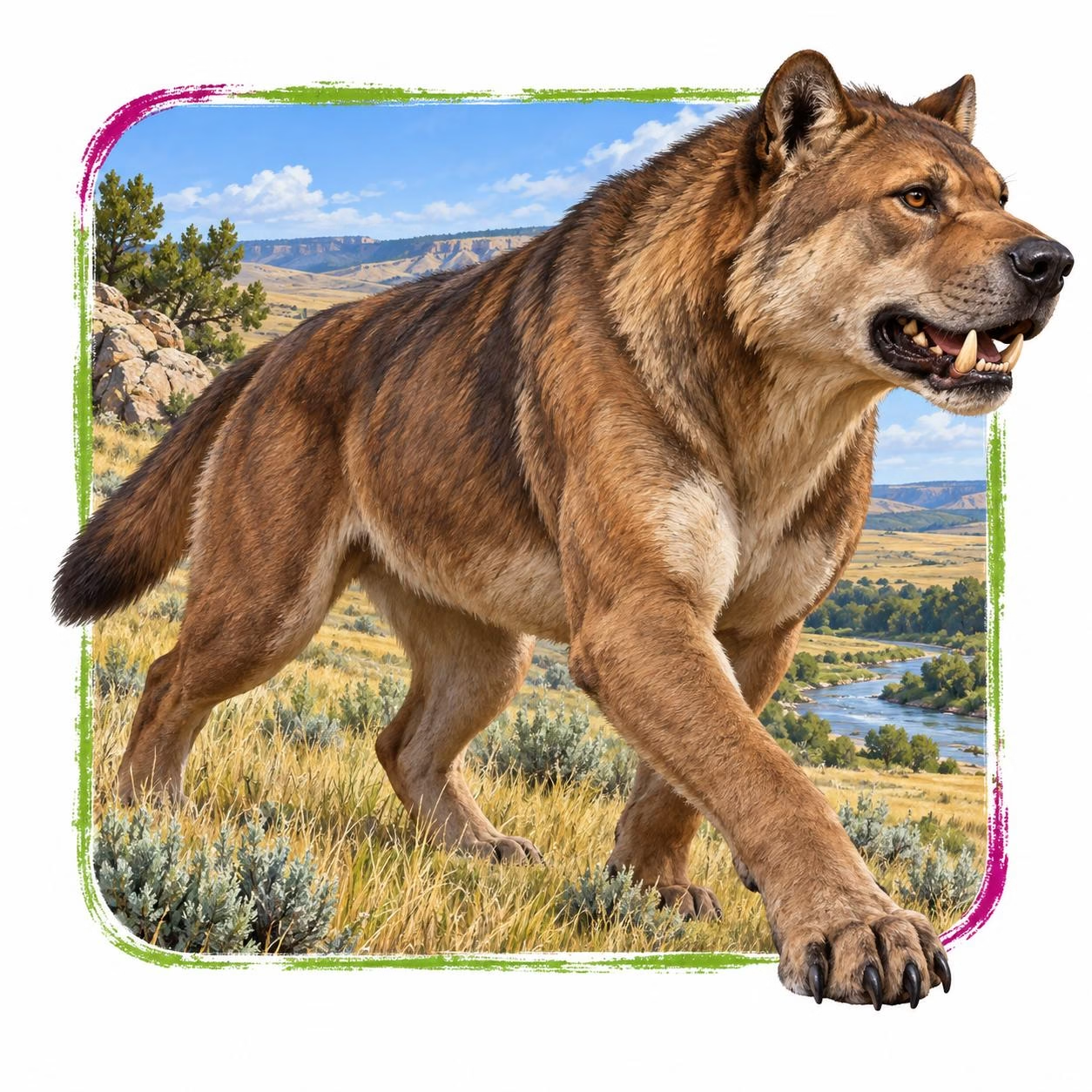
Epicyon in its natural Late Miocene and Early Pliocene grasslands, wooded plains, river valleys, open scrub, prairie habitats, and mixed terrestrial environments habitat