
Estemmenosuchus Facts for Kids
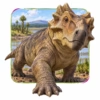
Estemmenosuchus was a large, heavily built dinocephalian therapsid from Middle Permian Russia. It was not a crocodile, dinosaur, or mammal. Its massive skull carried extraordinary bony projections above the eyes and along the cheeks, creating a crown-like outline. A deep barrel-shaped body and reduced back teeth suggest that it mainly ate plants, although occasional omnivory remains possible.
Quick Estemmenosuchus Facts
- Animal Type: Extinct herbivorous or omnivorous therapsid
- Group: Estemmenosuchid dinocephalian
- Known For: Crown-like skull horns, massive head, bulky body, large canine teeth, and Russian fossil beds
- Lived During: Middle Permian, about 267 million years ago
- Diet: Mainly plants, possibly with occasional animal food
What You’ll Learn
Discover 10 striking estemmenosuchus facts for kids about its crown-like horns, bulky body, diet, and Permian habitat, with a quiz, glossary, and activity
These easy facts are written for children, parents, teachers, and curious little fact-finders.
10 Fun Estemmenosuchus Facts for Kids
1. Estemmenosuchus Was a Therapsid
Estemmenosuchus belonged to Therapsida, the broad synapsid branch containing mammals and many extinct mammal-line relatives.
Kid Decode: It stood on the mammal side of the family tree while looking like a horned Permian puzzle.
2. It Was Not a Crocodile
Despite its crowned-crocodile name, Estemmenosuchus was a land-dwelling therapsid rather than a crocodilian or other true reptile.
Kid Decode: The name brought a crocodile; the skeleton brought completely different paperwork.
3. Its Skull Carried Bony Horns
Large projections grew upward and outward from bones above the eyes and along the sides of the skull.
Kid Decode: Its head looked as though a crown had sprouted directly from the bone.
4. The Horns Probably Helped With Display
The projections may have helped individuals recognise or impress one another, although their precise role is unknown.
Kid Decode: The crown may have advertised identity without needing a single word.
5. Two Species Had Different Headgear
Estemmenosuchus mirabilis and Estemmenosuchus uralensis differed in skull shape, body size, and the arrangement of their bony projections.
Kid Decode: The genus offered more than one crown design in the same Permian collection.
6. It Grew More Than Three Metres Long
Well-known species reached roughly 3 metres or more, while larger estimates for Estemmenosuchus uralensis remain less certain.
Kid Decode: It carried bull-sized bulk beneath one extremely decorated head.
7. Its Skull Could Be Very Large
Large Estemmenosuchus skulls approached about 60 to 65 centimetres in length.
Kid Decode: The head alone stretched about as long as a large suitcase.
8. It Had Large Canine Teeth
Long incisors and prominent canines remained in the jaws even though the animal’s bulky build and smaller back teeth suggest a mainly plant-based diet.
Kid Decode: The mouth kept several predator-looking teeth on an herbivore-shaped body.
9. It Probably Ate Mostly Plants
A deep trunk could house a large digestive system, while reduced serrated postcanine teeth may have helped process vegetation.
Kid Decode: Its enormous belly was better suited to leaf processing than high-speed chasing.
10. Its Fossils Come From Russia
Numerous skulls and skeletons were discovered near Ochyor in the Perm region west of the Ural Mountains.
Kid Decode: The Russian region called Perm helped lend its name to the entire Permian Period.
The Weirdest Estemmenosuchus Fact
Estemmenosuchus combined a bulky plant-eater body with giant canine teeth and a skull crowned by several bizarre bony horns.
Try This Estemmenosuchus Activity
Estemmenosuchus Drawing Activity
Draw Estemmenosuchus walking across a Middle Permian Russian floodplain. Add a huge skull, upward and outward bony horns, broad cheek projections, large canines, a deep barrel-shaped body, sturdy sprawling limbs, a long tail, tough vegetation, and two species with different crown shapes.
Quick Estemmenosuchus Quiz
- Was Estemmenosuchus a crocodile? Answer: No, it was a dinocephalian therapsid.
- Where were its fossils found? Answer: The Perm region of Russia.
- What grew from its skull? Answer: Large crown-like bony projections.
- What were the horns probably used for? Answer: Display or recognition, although their exact role is uncertain.
- What did it probably eat? Answer: Mainly plants, perhaps with occasional animal food.
Mini Glossary
- Therapsid: A synapsid from the broad evolutionary branch containing mammals.
- Dinocephalian: A member of a group of often large Middle Permian therapsids.
- Cranial Ornament: A raised horn, knob, crest, or other structure on the skull.
- Postcanine: A tooth positioned behind the canine tooth.
- Omnivore: An animal that eats both plant and animal food.
 Dormouse Facts for Kids
 Wombat Facts for Kids
 Toco Toucan Facts for Kids
 Tyrannosaurus Rex (T-Rex) Facts for Kids
More Animal Facts for Kids
Visit the full animal facts library or explore a focused animal group.
More Extinct Animal Facts for Kids
Discover dinosaurs, Ice Age giants, prehistoric sea creatures, recently extinct species, and other animals from the past.
Fact check note: Fact checked with Ivakhnenko’s revision of Estemmenosuchus and related Russian therapsids, cranial-display research on dinocephalians, and Middle Permian Ochyor fossil records.

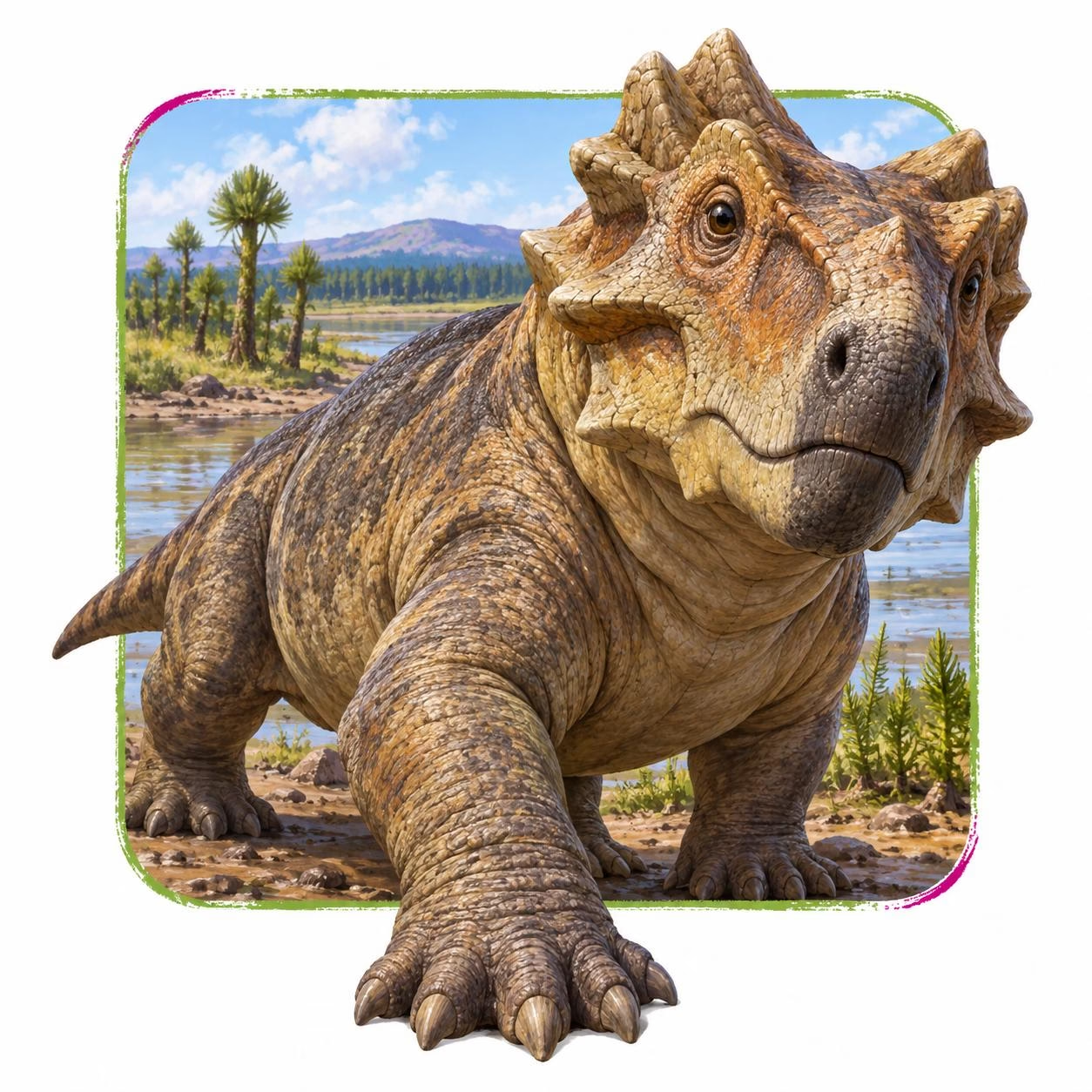
Estemmenosuchus in its natural Middle Permian river channels, flood deposits, wooded lowlands, seasonal plains, and terrestrial habitats near the ancient Ural region habitat