
Hallucigenia Facts for Kids
Hallucigenia was a tiny spiky animal from the Cambrian Period. It was not a dinosaur, fish, or reptile, but an extinct worm-like animal related to velvet worm relatives. Hallucigenia became famous because early scientists were not sure which side was up, which end was the head, or how its strange body worked.
Quick Hallucigenia Facts
- Animal Type: Extinct marine invertebrate
- Group: Lobopodian and stem onychophoran relative
- Known For: Long spines, clawed legs, tiny size, Cambrian fossils, upside-down reconstruction history, and Burgess Shale fame
- Lived During: Cambrian Period
- Diet: Possibly sponge material, tiny organic food, or small soft-bodied food
What You’ll Learn
Discover 10 weird hallucigenia facts for kids about spines, tiny legs, tube-like limbs, ocean-floor life, and the Cambrian period, plus a quiz, glossary, and activity
Clear explanations make them ideal for children, families, teachers, and little fact-hunters.
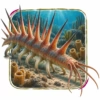
10 Fun Hallucigenia Facts for Kids
1. Hallucigenia Was Not a Dinosaur
Hallucigenia lived in Cambrian seas long before dinosaurs existed.
Kid Decode: It was already bizarre before dinosaurs even joined the planet’s cast list.
2. Its Name Sounds Dreamy
The name Hallucigenia comes from its strange appearance, which seemed almost dreamlike to scientists.
Kid Decode: A fossil so odd it basically got named “what am I looking at?”
3. It Had Long Spines
Hallucigenia had a row of stiff spines along its back, which may have helped protect it.
Kid Decode: It looked like a tiny walking cactus from the sea.
4. It Had Clawed Legs
Hallucigenia had several pairs of soft legs ending in little claws.
Kid Decode: Those tiny claws helped it grip like a miniature Cambrian mountaineer.
5. It Was Once Reconstructed Upside Down
Early interpretations placed Hallucigenia upside down, with the spines imagined as legs.
Kid Decode: For years, this fossil was literally seen from the wrong side.
6. Its Head Was Also Confusing
Scientists later worked out which end was the head, helping solve another part of the Hallucigenia puzzle.
Kid Decode: This animal made experts play “find the face” in stone.
7. It Was Tiny
Hallucigenia was small, only a few centimeters long, not a giant sea monster.
Kid Decode: Tiny body, huge fossil personality.
8. It May Have Fed Near Sponges
Hallucigenia fossils are often found near sponge fossils, so some scientists suggest it may have fed on sponges or nearby organic material.
Kid Decode: Its snack spot may have been the Cambrian sponge buffet.
9. It Was Related to Velvet Worm Relatives
Hallucigenia is often linked with early relatives of velvet worms and other molting animals.
Kid Decode: Today’s velvet worms have a strange little echo from this spiky fossil world.
10. It Lived in the Burgess Shale Sea
Famous Hallucigenia fossils come from the Burgess Shale of Canada, with related fossils known from other Cambrian sites.
Kid Decode: The Burgess Shale kept this tiny oddball safe like a stone scrapbook.
The Weirdest Hallucigenia Fact
Hallucigenia was once reconstructed upside down because its spines and legs were so confusing.
Try This Hallucigenia Activity
Hallucigenia Drawing Activity
Draw Hallucigenia crawling near Cambrian sponges. Add long back spines, soft clawed legs, tiny head, sponge forest, seafloor mud, fossil slab, bubbles, small organic food, and a “spiky fossil puzzle” label.
Quick Hallucigenia Quiz
- Was Hallucigenia a dinosaur? Answer: No, it lived long before dinosaurs.
- What covered Hallucigenia’s back? Answer: Long stiff spines.
- What was strange about early reconstructions? Answer: It was once shown upside down.
- What modern animals is Hallucigenia often linked with? Answer: Velvet worm relatives.
- During what period did Hallucigenia live? Answer: Cambrian Period.
Mini Glossary
- Lobopodian: A soft-bodied worm-like animal with simple legs.
- Onychophoran: The animal group that includes modern velvet worms.
- Spine: A stiff pointed body part used for protection or support.
- Burgess Shale: A Canadian fossil site famous for Cambrian soft-bodied animals.
- Cambrian: A period when many unusual early animals lived in the oceans.
 Halibut Facts for Kids
 Sea Slug Facts for Kids
 Civet Facts for Kids
 Megantereon Facts for Kids
More Animal Facts for Kids
Visit the full animal facts library or explore a focused animal group.
More Extinct Animal Facts for Kids
Discover dinosaurs, Ice Age giants, prehistoric sea creatures, recently extinct species, and other animals from the past.
Fact check note: Fact checked with Royal Ontario Museum Burgess Shale Hallucigenia resources, University of Cambridge Hallucigenia research summary, Cambrian fossil references, and trusted paleontology education sources.

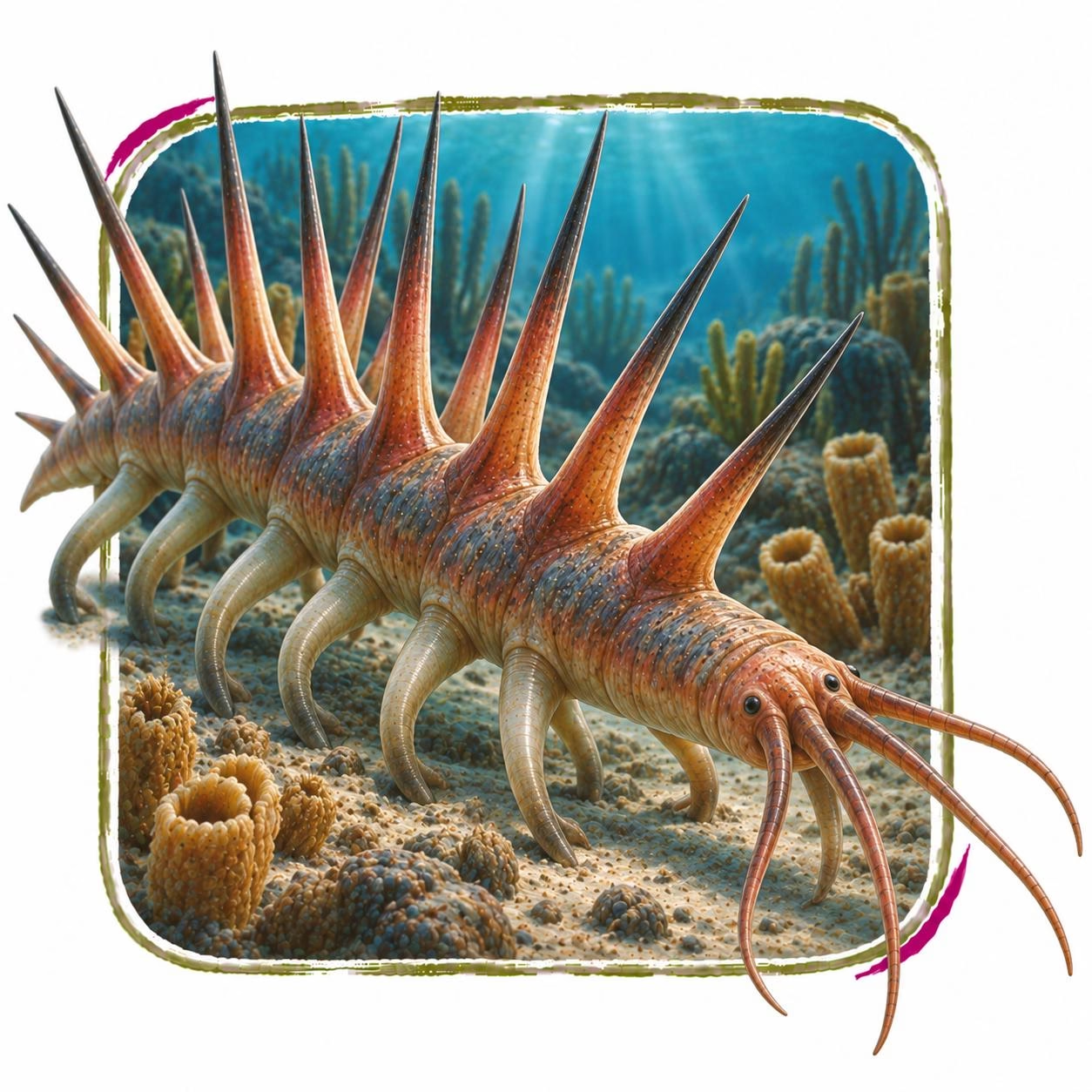
Hallucigenia in its natural Cambrian seafloors, sponge communities, shallow seas, and muddy ocean habitats habitat