
Machairodus Facts for Kids
Machairodus was a large saber-toothed cat that lived during the Late Miocene. It was a true member of the cat family but was not a tiger or the same animal as Smilodon. The well-known species Machairodus aphanistus combined long, flattened upper canines with a skull that was less extremely modified than those of later saber-toothed cats, while strong neck muscles helped control its dangerous bite.
Quick Machairodus Facts
- Animal Type: Extinct saber-toothed cat
- Group: Homotherin machairodont
- Known For: Flattened scimitar canines, tiger-sized body, strong neck, and abundant Batallones fossils
- Lived During: Late Miocene, especially about 11–8 million years ago
- Diet: Medium and large hoofed mammals and other vertebrate prey
What You’ll Learn
Discover 10 fascinating machairodus facts for kids about long canine teeth, powerful jaws, hunting, and prehistoric grasslands, plus a quiz, glossary, and activity
Easy explanations make these facts great for children, families, teachers, and little fact-finders.
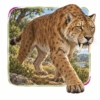
10 Fun Machairodus Facts for Kids
1. Machairodus Was a True Cat
Machairodus belonged to Felidae, the same mammal family that contains lions, tigers, leopards, and house cats.
Kid Decode: It was a genuine cat with a dental toolkit no living feline carries.
2. It Was Not a Tiger
Although it is sometimes called a saber-toothed tiger, Machairodus did not belong to the modern tiger lineage.
Kid Decode: The sabers were authentic; the tiger label wandered into the wrong family folder.
3. It Was About Tiger Size
Machairodus aphanistus was a large, tiger-sized cat, although body size varied among species and individuals.
Kid Decode: It brought big-cat bulk to Europe long before modern tigers appeared there.
4. Its Canines Were Long and Flat
The upper canine teeth were elongated and compressed from side to side, forming scimitar-like blades rather than round fangs.
Kid Decode: Each saber resembled a carefully shaped ivory knife more than a modern cat tooth.
5. Its Skull Kept Some Primitive Features
Machairodus aphanistus had highly specialised canines but lacked several extreme skull and jaw modifications seen in later Homotherium.
Kid Decode: The teeth raced ahead while the rest of the saber-tooth blueprint was still catching up.
6. Its Neck Was Strong and Flexible
Large muscle attachments on the neck vertebrae show that Machairodus could stabilise and precisely move its head during a killing bite.
Kid Decode: The neck acted like a muscular guidance system for two fragile blades.
7. It Probably Ambushed Prey
Its large body and saber-toothed anatomy fit a predator that approached from cover and overpowered prey rather than relying on cheetah-like endurance.
Kid Decode: One explosive attack mattered more than winning a marathon.
8. Batallones Preserved Many Individuals
The Batallones fossil sites near Madrid produced skulls, jaws, skeleton parts, and at least 14 individuals of Machairodus aphanistus.
Kid Decode: A natural trap assembled an extraordinary saber-cat archive beneath the Spanish ground.
9. Some Fossils Show Healed Injuries
Batallones bones preserve joint disease, foot injuries, and jaw damage that affected animals while they were alive.
Kid Decode: Even a top predator could collect a lifetime of aches, breaks, and worn-out parts.
10. Its Classification Has Changed
Several giant cats once placed in Machairodus are now often assigned to Amphimachairodus, so older books may use the name differently.
Kid Decode: The genus has lost a few oversized residents during scientific family-tree renovations.
The Weirdest Machairodus Fact
Machairodus evolved extremely flattened saber canines before its skull developed the full set of specialised features found in later scimitar-toothed cats.
Try This Machairodus Activity
Machairodus Drawing Activity
Draw Machairodus stalking through a Late Miocene woodland. Add a tiger-sized body, long flattened upper canines, powerful shoulders, a strong neck, a relatively long skull, hoofed prey, shrubs, and a fossil panel showing a healed foot or jaw injury from Batallones.
Quick Machairodus Quiz
- Was Machairodus a tiger? Answer: No, it was a saber-toothed cat from a different feline branch.
- What shape were its upper canines? Answer: Long, flattened, and scimitar-like.
- How large was Machairodus aphanistus? Answer: Roughly tiger-sized.
- What helped control its killing bite? Answer: A strong and flexible neck.
- Why may older books list different Machairodus species? Answer: Some species have been moved to other genera such as Amphimachairodus.
Mini Glossary
- Machairodont: A member of the extinct saber-toothed cat subfamily.
- Homotherin: A scimitar-toothed cat from the branch containing Machairodus and Homotherium.
- Laterally Compressed: Flattened from side to side.
- Canine Shear Bite: A specialised killing bite using long blade-like canine teeth.
- Palaeopathology: The study of disease and injury in ancient remains.
 Kudu Facts for Kids
 Leopard Gecko Facts for Kids
 American Bison Facts for Kids
 Styracosaurus Facts for Kids
More Animal Facts for Kids
Visit the full animal facts library or explore a focused animal group.
More Extinct Animal Facts for Kids
Discover dinosaurs, Ice Age giants, prehistoric sea creatures, recently extinct species, and other animals from the past.
Fact check note: Fact checked with Antón and colleagues’ 2004 description of complete Machairodus aphanistus skulls, Siliceo and colleagues’ 2020 cervical-anatomy study, Salesa and colleagues’ 2024 palaeopathology analysis, and Batallones fossil research.

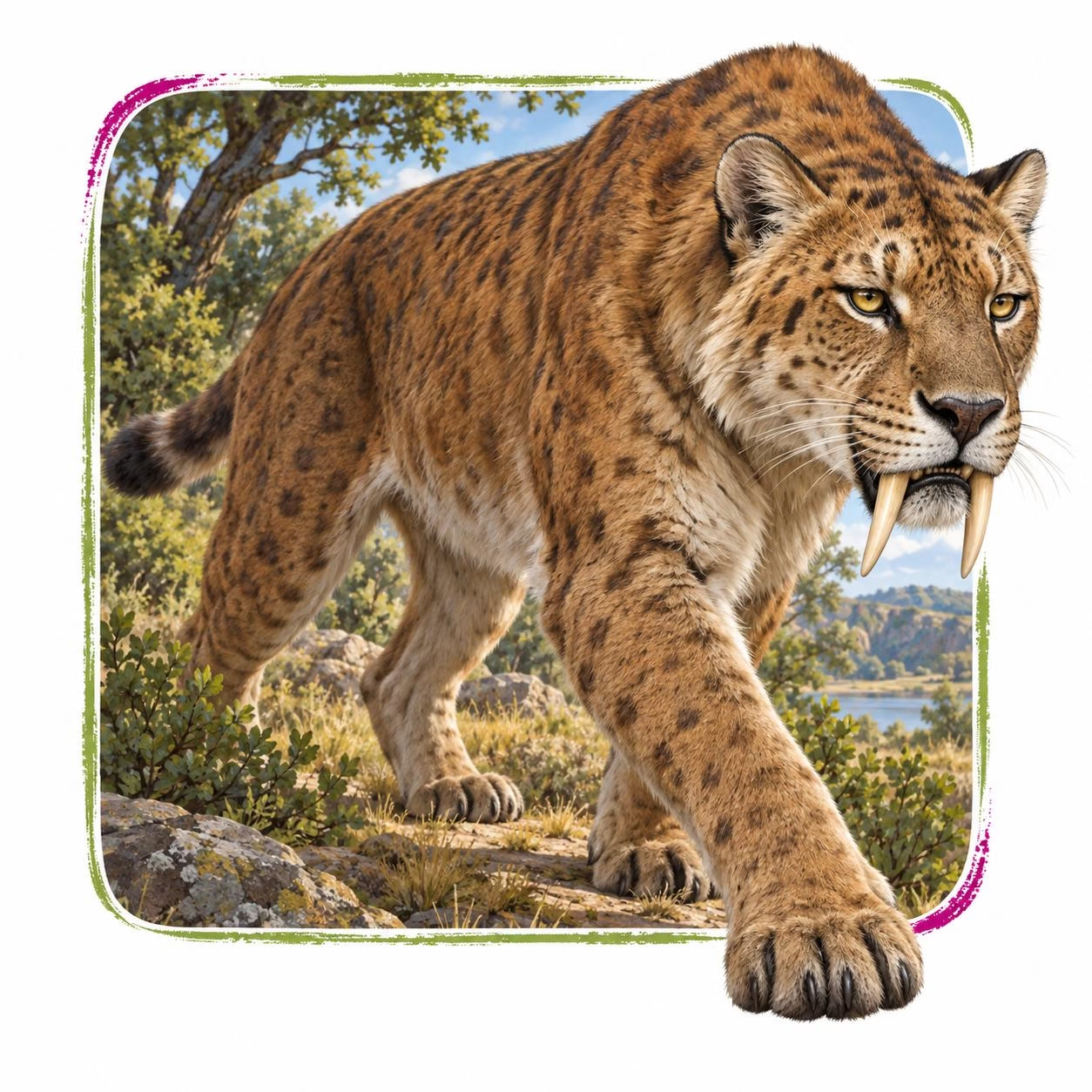
Machairodus in its natural Late Miocene woodlands, wooded grasslands, scrub, rocky valleys, seasonal lakeshores, and open terrestrial habitats habitat